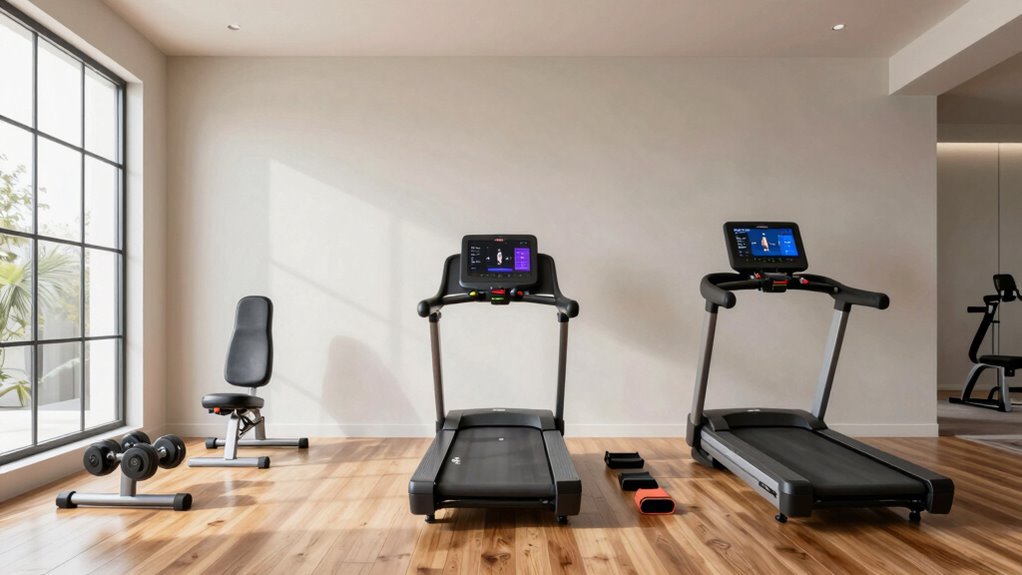

Smart home gyms use connected devices, wearable tech, and virtual coaching to deliver personalized workouts in small spaces. They sync with your gadgets, providing real-time performance data, so you can track progress easily. These setups often include virtual trainers, online community features, and smart automation to make workouts flexible and engaging. If you keep exploring, you’ll discover how these innovations can transform your fitness routine without the hype.

Get workout gear delivered free with Prime
- Fast, free delivery on millions of items
- Prime Video, Amazon Music and more included
- Member-only deals all year
Key Takeaways
- Smart home gyms use connected devices and technology to provide personalized workouts without bulky equipment.
- Virtual coaching offers flexible, guided sessions tailored to individual fitness levels, eliminating scheduling hassles.
- Wearable tech tracks performance data like heart rate and calories, integrating seamlessly with workout apps for personalized feedback.
- The system adapts to progress, offers community challenges, and tracks long-term improvements for sustained motivation.
- Smart features like automation and projection enhance the workout environment for efficiency and an engaging experience.
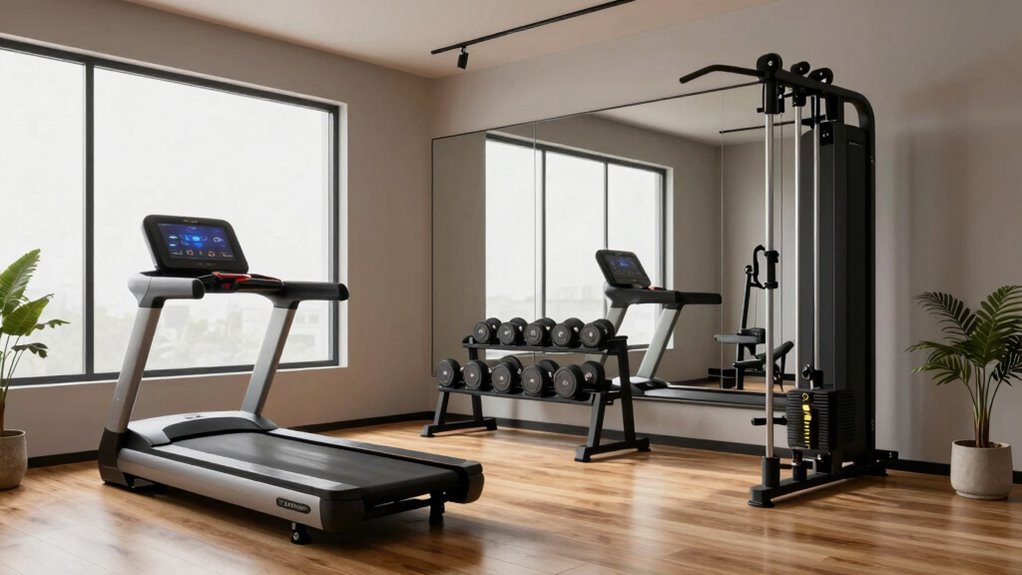
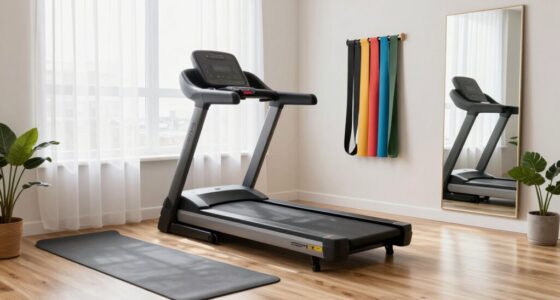
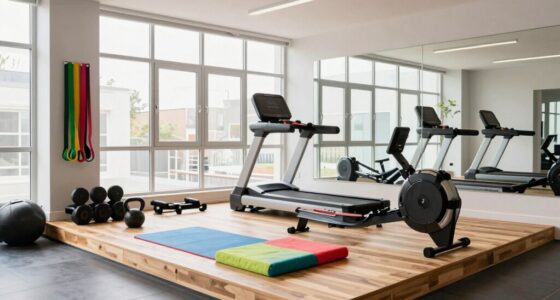
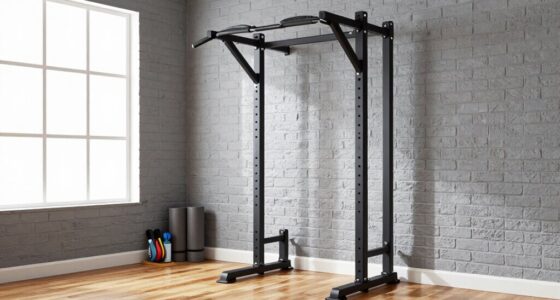
With busy schedules and limited space, more people are turning to smart home gyms to stay fit without leaving their houses. These setups combine technology and convenience to create a personalized workout environment that fits into your daily routine. Instead of bulky equipment taking up the entire room, smart home gyms often feature compact, connected devices that sync with your other gadgets. Wearable technology, such as fitness trackers and heart rate monitors, plays a key role here, providing real-time data on your performance. You can see your progress instantly and adjust your efforts accordingly, making workouts more targeted and effective.
Smart home gyms offer compact, connected devices and wearable tech for personalized, efficient workouts at home.
Virtual coaching is another major component of these gyms. Instead of hiring a personal trainer, you access guided sessions through apps or screens integrated into your equipment. This allows you to follow professional instructions at your own pace, whether you’re doing strength training, yoga, or cardio. Virtual coaching offers flexibility—you can choose the type of workout, duration, and intensity—without the need to schedule appointments or commute. It’s like having a personal trainer in your living room, but without the hefty fees.
The integration of wearable technology enhances this experience further. When you wear a fitness tracker during your workout, it gathers data such as heart rate, calories burned, and movement patterns. This information syncs with your virtual coaching app, giving tailored feedback and progress updates. As a result, your workouts become more personalized, helping you reach your goals faster. You can set targets, monitor your recovery, and even get suggestions for improvement—all from your device. This seamless connection between wearables and virtual coaching makes your fitness journey more engaging and data-driven.
Another advantage of smart home gyms is their adaptability. As you progress, the technology adjusts to your increasing fitness level, providing new challenges or modifying exercises. Many systems also offer community features, so you can join online groups or compete in challenges, adding a social element to your routine. Because the system records your data and tracks trends over time, you gain valuable insights into your long-term progress, which keeps you motivated. Additionally, understanding projector technology can help optimize your home workout space, especially if you use visual guides or virtual trainers displayed on a large screen. Incorporating smart home automation can further enhance the experience by seamlessly integrating your workout environment with other smart devices in your home. Moreover, ensuring your template compatibility setup is optimized can make managing your workout space more efficient and tailored to your needs.
Furthermore, leveraging smart lighting can create an energizing atmosphere that adapts to your workout intensity, boosting motivation.
As an affiliate, we earn on qualifying purchases.
Frequently Asked Questions
How Much Space Do Smart Home Gyms Typically Require?
Smart home gyms usually need about 50 to 200 square feet, depending on your equipment. To maximize space, focus on equipment storage and space optimization, choosing compact or foldable options. You can also install wall-mounted gear to save floor space. Planning carefully helps you fit your workout essentials without clutter, making your gym functional and comfortable, even in smaller rooms.
Are Smart Home Gyms Suitable for Beginners?
Yes, smart home gyms are suitable for beginners. They help boost your personal motivation through interactive features and guided workouts. The equipment variety caters to all fitness levels, allowing you to start simple and progress over time. Plus, the convenience of having everything at home makes it easier to stay consistent. As you grow more confident, you can explore more advanced exercises with the versatile equipment provided.
What Maintenance Do Smart Gym Devices Need?
Think of your smart gym devices as the steady heartbeat of your fitness journey. You’ll need to perform regular device calibration to keep the sensors precise and reliable, much like tuning a musical instrument. Additionally, software updates act as nourishing rain, ensuring your equipment stays current, secure, and functioning at its best. By maintaining these routines, your smart home gym remains a disciplined companion, ready to support your goals with unwavering accuracy.
Can Smart Gyms Be Customized for Different Fitness Levels?
Yes, smart gyms can be customized for different fitness levels. They offer personalized workouts that adapt to your progress, ensuring you stay challenged yet safe. With adaptive training features, the system modifies exercises based on your performance, making it suitable for beginners and advanced users alike. You can easily set your goals and let the smart gym tailor the routines, helping you achieve *best* results regardless of your fitness level.
Do Smart Gyms Support Multiple Users in a Household?
Imagine your smart gym as a welcoming house with multiple rooms—yes, it supports multiple users in your household. You can customize access, but keep in mind user privacy; each person’s data stays protected. Device compatibility guarantees everyone can connect seamlessly, regardless of their device. So, everyone can enjoy personalized workouts without intrusion, making your smart gym a shared sanctuary where privacy and convenience walk hand in hand.
As an affiliate, we earn on qualifying purchases.
Conclusion
Now that you’ve seen how smart home gyms can transform your workouts, think of them as your personal fitness orchestra—each device working in harmony to boost your health. With less hype and more substance, these systems turn your space into a powerhouse of progress. Embrace the technology, stay consistent, and watch your fitness journey unfold like a well-conducted symphony. Your future self will thank you for hitting the right notes today.
wearable fitness tracker for workouts
As an affiliate, we earn on qualifying purchases.
As an affiliate, we earn on qualifying purchases.
compact connected exercise devices
As an affiliate, we earn on qualifying purchases.
As an affiliate, we earn on qualifying purchases.
Halloween Picks
halloween
As an affiliate, we earn on qualifying purchases.