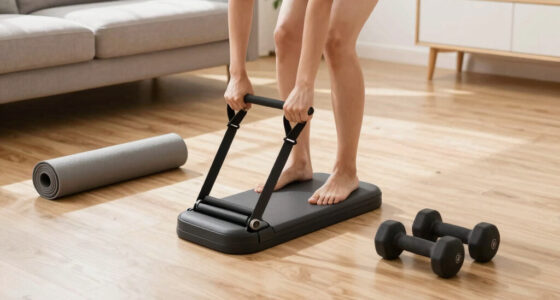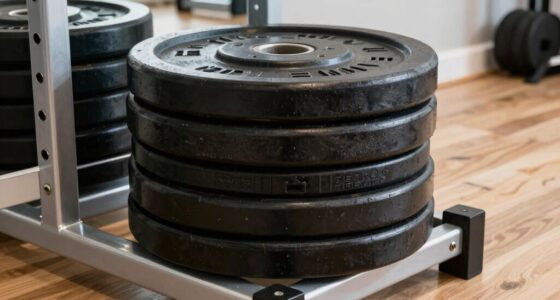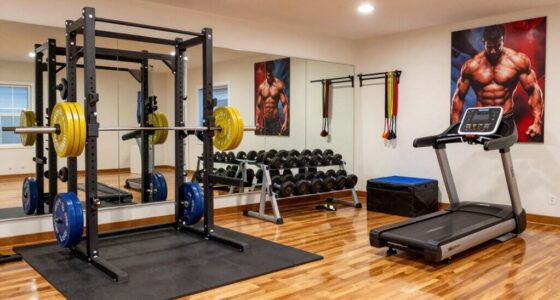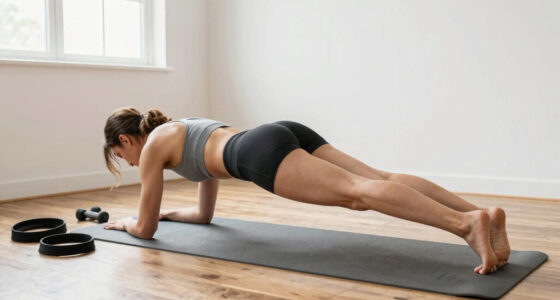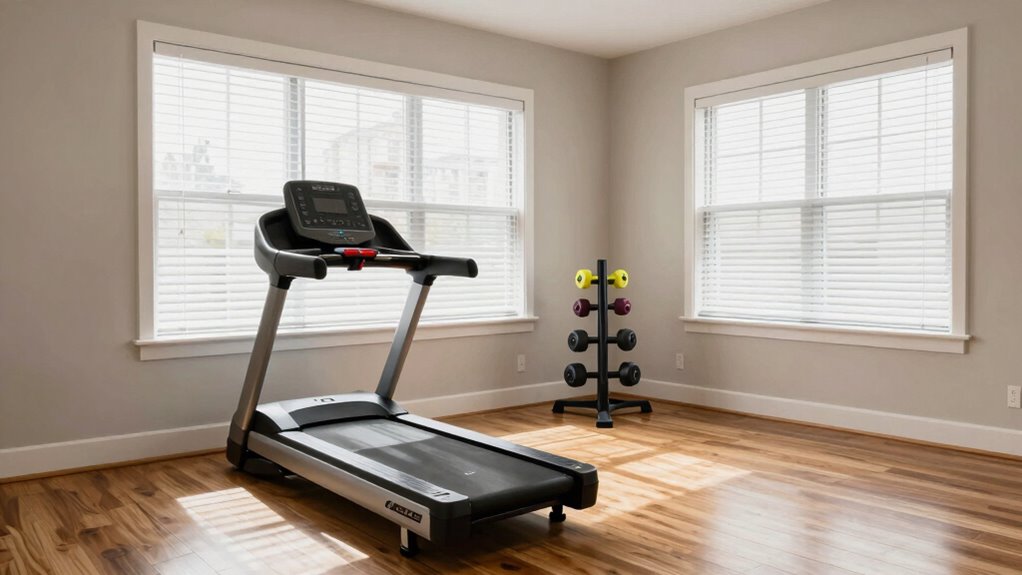
Before placing fitness equipment upstairs, consider soundproofing options like rubber mats and foam panels to reduce noise transfer and vibrations. Check your ceiling height to make certain there’s enough clearance for high-impact exercises, and verify your floor can support the weight to prevent damage. Good ventilation is essential, so plan for fans or airflow solutions. Also, think about easy access to avoid disrupting household traffic. Keep exploring to discover more tips for creating a safe, effective workout space upstairs.

Get workout gear delivered free — and shop member deals
- Fast, free delivery on millions of items
- Access to Prime Big Deal Days deals on October 6–7
- Prime Video, Amazon Music and more included
Key Takeaways
- Ensure the upstairs flooring can support the weight and vibrations of the fitness equipment safely.
- Measure ceiling height to accommodate equipment and high-impact exercises comfortably.
- Implement soundproofing measures like mats or panels to minimize noise transfer to lower floors.
- Confirm proper ventilation to handle increased heat and humidity from workouts.
- Choose a location with easy access, avoiding disruption to household traffic and daily activities.

If you’re thinking about placing fitness equipment upstairs, it’s vital to weigh several practical factors beforehand. One of the most important is understanding how noise levels will affect your living space. Exercise machines, especially treadmills, ellipticals, and weight benches, can generate a significant amount of sound during use. This noise can easily travel through floors and ceilings, disturbing neighbors or other members of your household. To prevent conflicts or complaints, consider investing in equipment that operates quietly or adding soundproofing measures like rubber mats, foam panels, or acoustic insulation. These steps can help dampen vibrations and reduce noise transmission, making your workout routine less disruptive. Additionally, soundproofing techniques can significantly improve the acoustic environment in your upstairs space. It’s also helpful to choose equipment with built-in noise-reduction features to further minimize disturbance.
Consider quiet equipment and soundproofing to minimize noise disruption upstairs.
Another critical factor is ceiling height. Not all upstairs spaces are built with generous ceilings, which can pose problems for taller individuals or certain types of exercise equipment. If your ceiling is too low, you might find it uncomfortable or even unsafe to perform high-impact workouts or use equipment that requires vertical clearance. Before purchasing or moving equipment upstairs, measure your ceiling height carefully. Confirm there’s enough room to move freely, especially if you plan to do jumping exercises or use machines with adjustable heights. Adequate ceiling clearance not only enhances safety but also makes your workout experience more comfortable and enjoyable. Considering floor load capacity is equally important to ensure your floor can handle the weight of your equipment and any additional dynamic forces during exercise.
Beyond noise levels and ceiling height, you should also evaluate the structural strength of the floor. Fitness equipment can be heavy and create vibrations, so it’s imperative to confirm that your upstairs floor can support the weight safely. If you’re unsure, consult with a structural engineer or a contractor to assess whether your flooring needs reinforcement. This step helps prevent any accidental damage to your home or potential safety hazards during intense workouts. Moreover, considering floor reinforcement can save you from costly repairs down the line. Additionally, understanding the building structure can help you identify any potential weaknesses that could impact your exercise setup or safety.
Ventilation and airflow are other considerations. Exercise increases body temperature and sweating, so good ventilation helps keep you comfortable and prevents moisture buildup that could damage flooring or promote mold. If your upstairs space lacks windows or an adequate HVAC system, consider adding fans or portable air purifiers to maintain a fresh environment.
Finally, think about accessibility and convenience. Placing exercise equipment upstairs might mean climbing stairs with weight plates or bulky machines, which can be cumbersome. Make sure the location allows easy access and doesn’t interfere with everyday activities or household traffic flow. Taking the time to evaluate these practical factors ensures your upstairs workout area remains functional, safe, and enjoyable, so you can stick with your fitness routine without unnecessary frustrations.
quiet treadmill for upstairs use
As an affiliate, we earn on qualifying purchases.
As an affiliate, we earn on qualifying purchases.
Frequently Asked Questions
How Do I Minimize Noise Transmission to Lower Floors?
To minimize noise transmission to lower floors, you should start by adding soundproofing materials like rubber mats or acoustic underlays beneath your equipment. Reinforcing your flooring with a sturdy, shock-absorbing surface can also help absorb impact sounds. Additionally, placing gym mats or carpets on top of the flooring can further reduce noise. Make sure to seal gaps and consider installing noise-dampening panels to keep sounds contained upstairs.
What Are the Best Types of Equipment for Upstairs Use?
Did you know that quieter equipment can reduce noise transmission by up to 50%? For your workout space upstairs, opt for compact, low-noise equipment like resistance bands, dumbbells, or a foldable treadmill with noise-reduction features. Proper equipment placement, such as away from shared walls and on sound-absorbing mats, helps minimize disruptions. These choices make your upstairs workout area effective without disturbing the lower floors.
How Much Weight Can My Upstairs Flooring Support?
Your upstairs flooring’s weight capacity depends on its construction and condition. To guarantee safety, consider floor reinforcement if you’re planning to use heavy equipment. Proper weight distribution is essential; spread out the load evenly to prevent damage. Check your joist specifications and consult a structural engineer if you’re unsure. Reinforcing your floor and managing weight distribution help protect your space and keep your workout safe.
Are There Specific Floor Preparations Needed for Fitness Equipment?
Did you know that improper equipment placement can increase your floor load by up to 50%? You should consider floor reinforcement before setting up your fitness gear upstairs. Proper floor preparation includes adding protective mats, reinforcing weak spots, and guaranteeing even weight distribution. This helps prevent damage and ensures safety. Plan your equipment placement carefully, and reinforce your flooring as needed to support the weight and minimize impact during workouts.
How Can I Prevent Vibrations From Damaging Upstairs Ceilings?
To prevent vibrations from damaging upstairs ceilings, you should focus on vibration dampening and smart equipment placement. Place your fitness equipment on vibration-absorbing mats or pads to reduce noise and impact. Position heavy or high-impact machines near load-bearing walls rather than in the center of the room. Additionally, make sure your equipment is stable and level, which helps minimize excessive vibrations that could harm your ceiling over time.
soundproof gym mats for home workout
As an affiliate, we earn on qualifying purchases.
As an affiliate, we earn on qualifying purchases.
Conclusion
So, before you turn your upstairs into a gym battlefield, remember—your fragile ceiling and fragile ego might thank you. Sure, you’ll get those gains, but at what cost? Maybe invest in some noise-canceling headphones or a prayer to the structural engineer. After all, nothing says “fitness fanatic” like explaining to your landlord why your new workout routine caused a minor earthquake. Happy lifting—just maybe not on the top floor!
As an affiliate, we earn on qualifying purchases.
As an affiliate, we earn on qualifying purchases.
Fall Picks
fall essentials
As an affiliate, we earn on qualifying purchases.