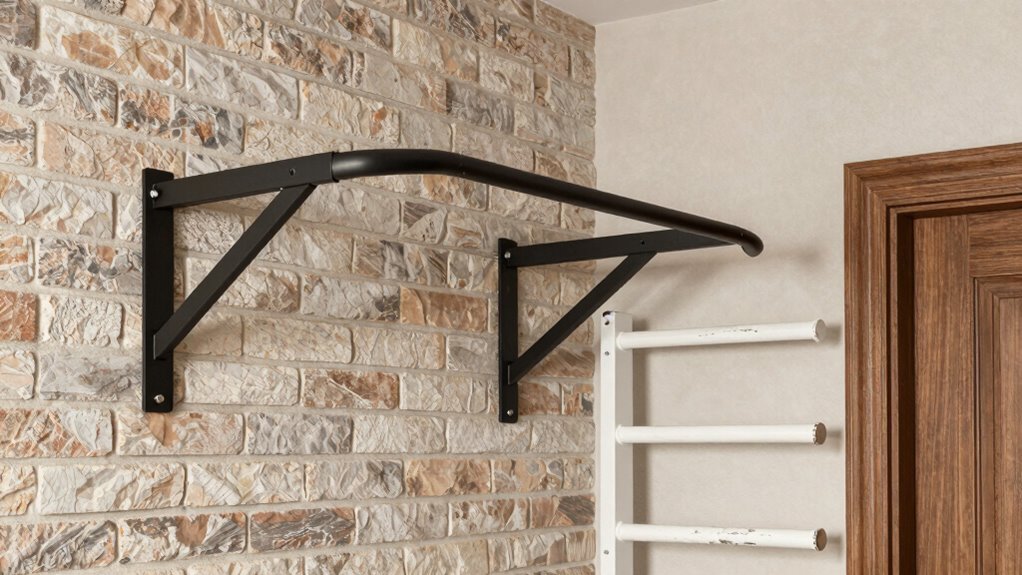

Wall-mounted pull-up bars offer greater stability, a full range of motion, and the ability to target more muscle groups with various grip options, but they require precise installation and are slightly intimidating to set up. Doorway bars are quick, tool-free, and easy to remove, making them ideal for temporary use or renters, but they can wobble during intense workouts. To make the best choice for your space and goals, keep exploring the key differences.

Get workout gear delivered free with Prime
- Fast, free delivery on millions of items
- Prime Video, Amazon Music and more included
- Member-only deals all year
Key Takeaways
- Wall-mounted bars offer greater stability and a full range of motion, suitable for intense workouts.
- Doorway bars are easier to install and remove, ideal for renters or temporary use.
- Wall-mounted options support multiple grip styles and targeted muscle exercises.
- Doorway bars may wobble or be less stable during dynamic movements.
- Installation complexity favors doorway bars for quick setup, while wall-mounted bars require precise anchoring.
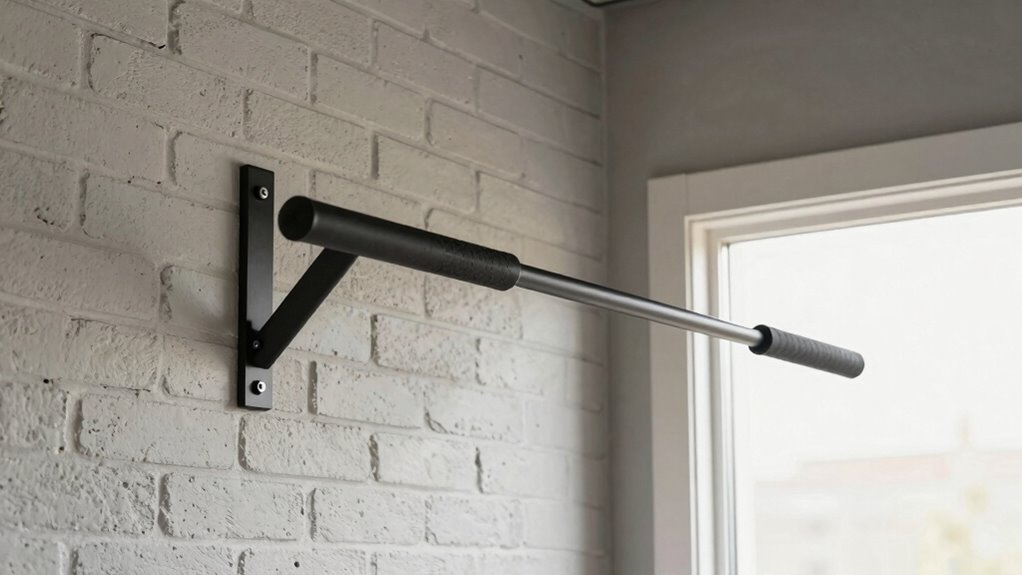
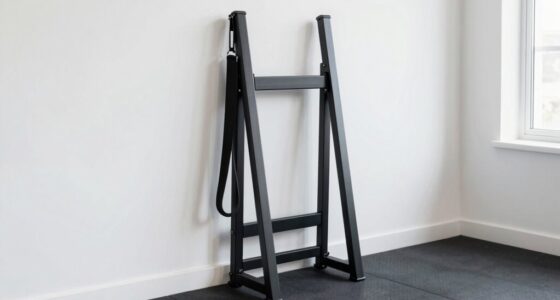
When it comes to choosing a pull-up bar, your options typically boil down to wall-mounted models and doorway bars. Each has its advantages and drawbacks, especially when it comes to muscle engagement and installation complexity. Wall-mounted pull-up bars generally allow for a more natural, full range of motion, which means you can target more muscle groups effectively. Because they’re securely fixed to a wall, they often provide greater stability, enabling you to perform more advanced movements without worrying about wobbling or slipping. This stability helps maximize muscle engagement because you can focus on proper form and controlled movements. It also often means you can do different grip styles—overhand, underhand, or neutral—each activating different muscles, especially in your back, shoulders, and arms. Additionally, wall-mounted bars can support multi-grip setups that enhance your workout variety and muscle activation. Some models even feature fold-away or retractable designs for convenient storage when not in use.
Wall-mounted pull-up bars offer better stability, full range of motion, and versatile grip options for effective muscle engagement.
On the other hand, doorway bars are usually much simpler to install. They typically don’t require any drilling or permanent fixtures; instead, they use leverage or pressure to stay in place. This means you can set them up quickly and remove them easily when you’re done, making them ideal if you’re renting or prefer a less invasive option. However, this ease of installation comes with some trade-offs. Because doorway bars rely on tension and the frame’s structure, they might not be as stable during intense or dynamic workouts. If your movements involve swinging or kipping, a doorway bar might wobble or shift, reducing the intensity of your workout and possibly affecting your muscle engagement. Moreover, the structural integrity of your doorway frame can influence the safety of using such bars. In addition, the weight capacity of doorway bars varies, which can impact how challenging or safe your workouts are. It’s also important to check that the frame can handle the forces exerted during your exercises to prevent accidents.
Installation complexity is a vital factor in your decision. Wall-mounted bars demand more time and effort upfront. You’ll need to measure precisely and drill into the wall, ensuring the mounting brackets are securely anchored into studs or suitable anchors. This process can be intimidating if you’re not comfortable with tools or if you’re renting and worried about damaging your walls. Conversely, doorway bars require minimal setup—often just a quick adjustment of tension or placement in the doorframe—and can be removed without leaving marks or holes. For those who prioritize home safety and minimal disruption, this ease of setup can be a significant advantage. Furthermore, the stability of a pull-up bar can influence your overall safety and effectiveness during workouts. A stable setup ensures you can push your limits safely. In the end, your choice depends on your workout goals, space, and willingness to undertake installation. If you prioritize maximum muscle engagement and a versatile workout, investing in a wall-mounted pull-up bar is worth the effort. But if convenience, portability, and ease of installation are more important, a doorway bar might serve you better, even if it means sacrificing some stability and range of motion.
wall-mounted pull-up bar with multiple grip options
As an affiliate, we earn on qualifying purchases.
As an affiliate, we earn on qualifying purchases.
Frequently Asked Questions
Are Wall-Mounted Bars Suitable for Outdoor Use?
Yes, wall-mounted bars can be suitable for outdoor use if they’re made of durable materials like stainless steel or coated with weather-resistant finishes. You need to take into account outdoor durability and material resistance to prevent rust and corrosion caused by weather elements. Make sure the installation is secure and the materials are designed to withstand outdoor conditions, so your pull-up bar stays safe and functional over time.
Can Doorway Bars Be Installed in Any Door Frame?
You might think doorway bars fit any door frame, but that’s not entirely true. Investigating their installation requirements shows they only work with standard, sturdy door frames. Door frame compatibility varies, especially with thinner or non-wooden frames. So, before installing, check your door’s dimensions and material. If your door meets these criteria, installation is straightforward; if not, you might need a different pull-up solution.
How Much Weight Can Each Type Support?
Wall-mounted pull-up bars typically support between 250 to 600 pounds, depending on the model and installation quality, while doorway bars usually support around 300 pounds. Your choice depends on installation requirements; wall-mounted bars need secure mounting into studs or concrete, offering higher weight capacity. Doorway bars are easier to install but may have lower support limits. Always check the manufacturer’s weight capacity before use to guarantee safety.
Do Wall-Mounted Bars Require Professional Installation?
In the days of dial-up internet, wall-mounted bars don’t typically require professional installation, but mounting challenges can arise if you’re not handy. You’ll need to carefully consider aesthetic considerations, like how the bar fits with your decor. If you’re unsure about drilling into walls or securing anchors properly, hiring a professional can guarantee safety and a clean look. Otherwise, with some tools and patience, you can usually install it yourself.
Are There Portability Options for Either Bar Type?
You’ll find that doorway bars often offer better portability options, making them easy to move and store without much hassle. Wall-mounted pull-up bars generally lack portability due to their installation requirements, but some models feature quick-release or foldable designs for added flexibility. If installation flexibility and portability are priorities, doorway bars are typically more convenient, allowing you to set up your workout space wherever suits you best.
As an affiliate, we earn on qualifying purchases.
Conclusion
Choosing between wall-mounted pull-up bars and doorway bars depends on your space and goals. Wall-mounted options offer stability and more exercise variety, but require more installation space. Doorway bars are portable and easy to set up but may limit your grip positions. Did you know that 65% of users find wall-mounted bars more comfortable for intense workouts? Consider your space and workout needs to pick the best fit, and you’ll stay motivated to reach your fitness goals.
fold-away wall-mounted pull-up bar
As an affiliate, we earn on qualifying purchases.
As an affiliate, we earn on qualifying purchases.
As an affiliate, we earn on qualifying purchases.
Halloween Picks
halloween
As an affiliate, we earn on qualifying purchases.