Focusing on body positivity in fitness means prioritizing your health and well-being instead of just looks. Embrace your unique body, celebrate small wins, and choose workouts that suit your comfort and preferences. Shift your mindset from appearance to feeling strong and capable, which helps build confidence and enjoyment. By honoring your fitness journey and avoiding societal standards, you create a sustainable routine. Keep going, and you’ll discover more ways to foster self-love and lasting health.
Key Takeaways
- Emphasize health and well-being over appearance to foster sustainable and enjoyable fitness routines.
- Promote self-acceptance and kindness to build confidence regardless of body size or shape.
- Choose inclusive workouts tailored to individual fitness levels to support long-term motivation.
- Shift focus from societal beauty standards to personal health goals for a more positive mindset.
- Create a supportive environment that values diverse bodies and encourages mental and physical wellness.
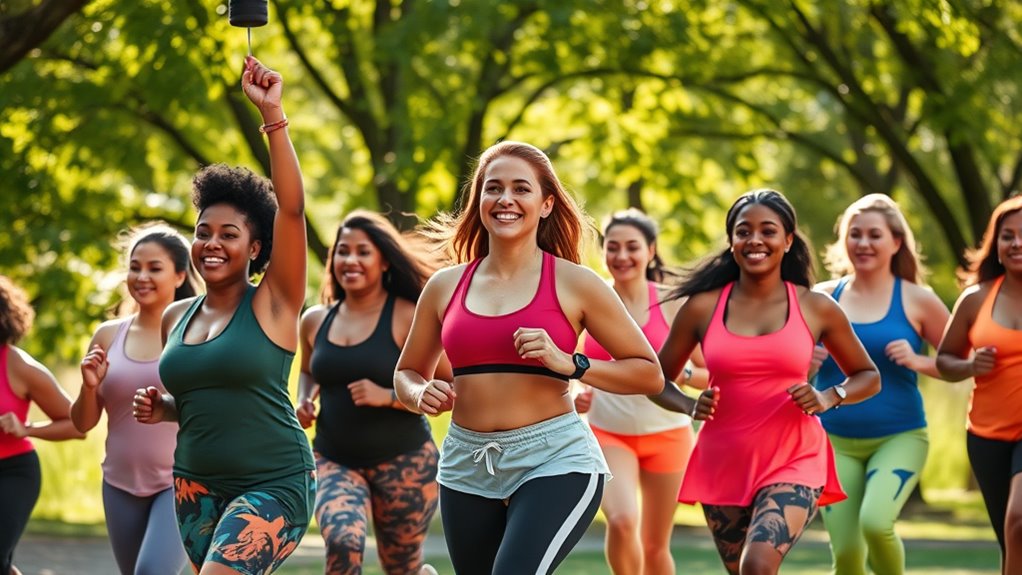
In recent years, body positivity has become a vital part of the fitness community, encouraging people to embrace their bodies regardless of size or shape. It’s no longer just about achieving a certain look but about fostering a healthier relationship with your body and mind. When you focus on inclusive training, you create a space where everyone feels welcome and supported, no matter their starting point. Instead of comparing yourself to others or aspiring to an idealized image, you learn to appreciate what your body can do. This shift in perspective helps you prioritize health and well-being over societal standards of beauty, making workouts more enjoyable and sustainable.
Embrace your body and focus on what it can do for a healthier, more sustainable fitness journey.
Adopting self-love strategies is essential in this journey. Instead of punishing yourself for not meeting certain expectations, you practice kindness and acceptance. Celebrate small victories, whether that’s completing a challenging workout or simply showing up for yourself. Recognize that your worth isn’t tied to your weight or appearance but to your effort and consistency. Incorporating mindfulness into your routine can also reinforce this mindset. Pay attention to how your body feels during exercise, rather than obsessing over how it looks. This awareness encourages a more positive outlook and reduces feelings of shame or inadequacy. Additionally, understanding the importance of contrast ratio in projectors can inspire you to see your progress in a clearer, more vibrant light, much like how contrast enhances image quality.
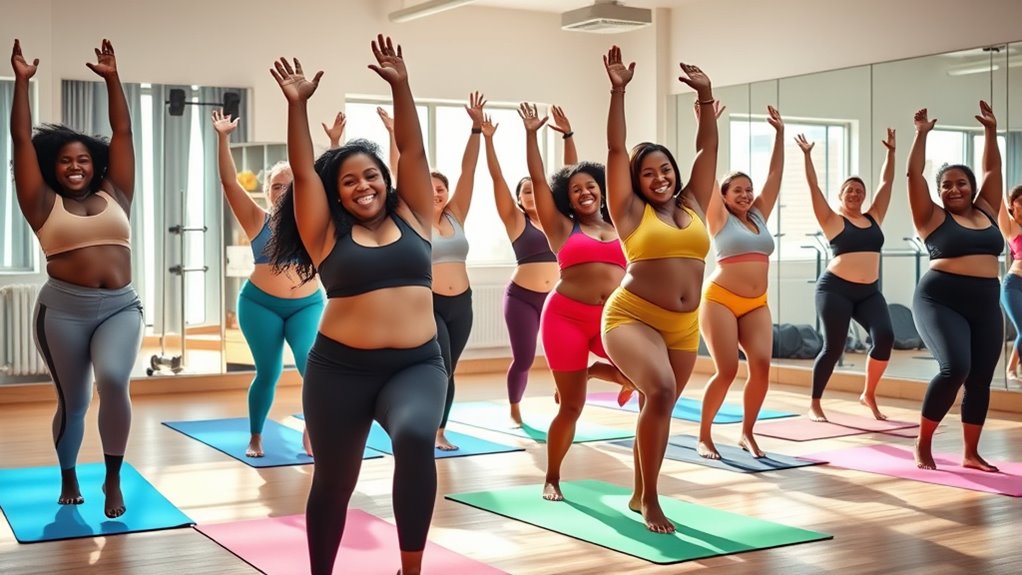
Inclusive training plays a key role in supporting your body positivity goals. It involves choosing workouts that suit your current fitness level and preferences, rather than trying to fit into a one-size-fits-all approach. Whether you prefer gentle yoga, strength training, or dance, the focus should be on what makes you feel good and healthy. This approach helps you build confidence and creates a sense of empowerment. When your workouts are tailored to your needs and interests, you’re more likely to stick with them long-term. Remember, fitness isn’t about punishing your body but nurturing it. By embracing inclusive training, you foster a supportive environment where your progress is measured by your personal growth, not by comparison to others.
Ultimately, body positivity in fitness centers around shifting your mindset from appearance-driven goals to health-centered ones. It’s about respecting your body’s unique journey and recognizing that every step forward is an achievement. With self-love strategies and inclusive training, you can cultivate a sustainable, joyful fitness practice that enhances your overall quality of life. The focus becomes less about how you look and more about how you feel—strong, capable, and confident in your own skin. That’s the true essence of body positivity in fitness.
inclusive yoga mats for beginners
As an affiliate, we earn on qualifying purchases.
As an affiliate, we earn on qualifying purchases.
Frequently Asked Questions
How Can I Stay Motivated Without Focusing on Appearance?
You can stay motivated by focusing on mindful motivation and intrinsic rewards. Celebrate your progress, like increased strength or improved mood, rather than appearance. Set goals that matter to you, such as better energy or stress relief, and remind yourself of these benefits regularly. By connecting your workouts to what truly makes you feel good, you’ll maintain motivation without fixating on looks, making fitness a sustainable, joyful part of your life.
What Are Some Inclusive Fitness Communities to Join?
Looking for inclusive fitness communities? Immerse yourself in groups that celebrate every body! Seek out gyms with adaptive gear and accessible facilities—no fancy credentials needed. Online communities like Body Positive Fitness and local meetups focus on health and fun, not aesthetics. Join these spaces to find support, motivation, and friends who get that fitness is about feeling good, not fitting a mold. Because everyone deserves to move and thrive.
How Do I Handle Negative Comments About My Body?
When facing negative comments about your body, respond with confidence and remember to practice self-compassion. Don’t let body shaming define you; instead, focus on your health and progress. You can calmly address the comment or choose to ignore it, knowing your worth isn’t determined by others’ opinions. Cultivating self-love helps you stay resilient, empowering you to continue your fitness journey without letting negativity hold you back.
Can Body Positivity Improve My Mental Health During Workouts?
Imagine your mind as a garden; body positivity acts like nourishing sunlight, helping mental health support flourish. Embracing self-acceptance benefits your workouts by reducing anxiety and boosting confidence. When you focus on loving your body, you create a positive environment that encourages resilience and joy. This mindset shift makes your exercise routine more enjoyable and empowering, ultimately strengthening both your mental health and your connection to your body.
How Do I Set Realistic Fitness Goals Without Body Shaming?
To set realistic fitness goals without body shaming, focus on self-acceptance strategies that emphasize progress over perfection. Celebrate small achievements and avoid comparing yourself to others. Use realistic goal setting by defining specific, achievable targets based on your current fitness level. Remember, your journey is unique, so be kind to yourself and prioritize health and well-being over appearance. This approach keeps you motivated and fosters a positive mindset.
body positivity workout gear
As an affiliate, we earn on qualifying purchases.
As an affiliate, we earn on qualifying purchases.
Conclusion
Remember, your fitness journey is about feeling good and staying healthy, not fitting some outdated mold. Embrace your body, just like you’d welcome a trusty steed on a quest—warts and all. Focus on progress, not perfection, and celebrate every victory, big or small. After all, it’s your adventure, and as they say in the land of chivalry, “Fortune favors the bold.” Keep moving forward, and enjoy the ride!
mindfulness exercise tools
As an affiliate, we earn on qualifying purchases.
As an affiliate, we earn on qualifying purchases.
adaptive strength training equipment
As an affiliate, we earn on qualifying purchases.
As an affiliate, we earn on qualifying purchases.