
To keep your bones strong, focus on getting enough calcium and vitamin D, which work together to enhance calcium absorption and support bone density. Include leafy greens, dairy products, nuts, and fortified foods in your diet, while also engaging in weight-bearing exercises. Avoid excessive caffeine and salt, as they can deplete calcium. Maintaining a nutrient-rich diet and active lifestyle is key—discover more ways to protect your bones by exploring further tips.
Key Takeaways
- Adequate calcium intake is essential for strong bones, especially when paired with sufficient vitamin D for optimal absorption.
- Vitamin D acts as a “key” that unlocks calcium’s benefits, improving bone mineralization.
- Nutrients like magnesium and phosphorus support bone structure and density alongside calcium.
- Consuming leafy greens, nuts, seeds, and fortified foods provides vital minerals for bone health.
- Limiting caffeine, alcohol, and high salt intake helps prevent calcium loss and maintains bone strength.
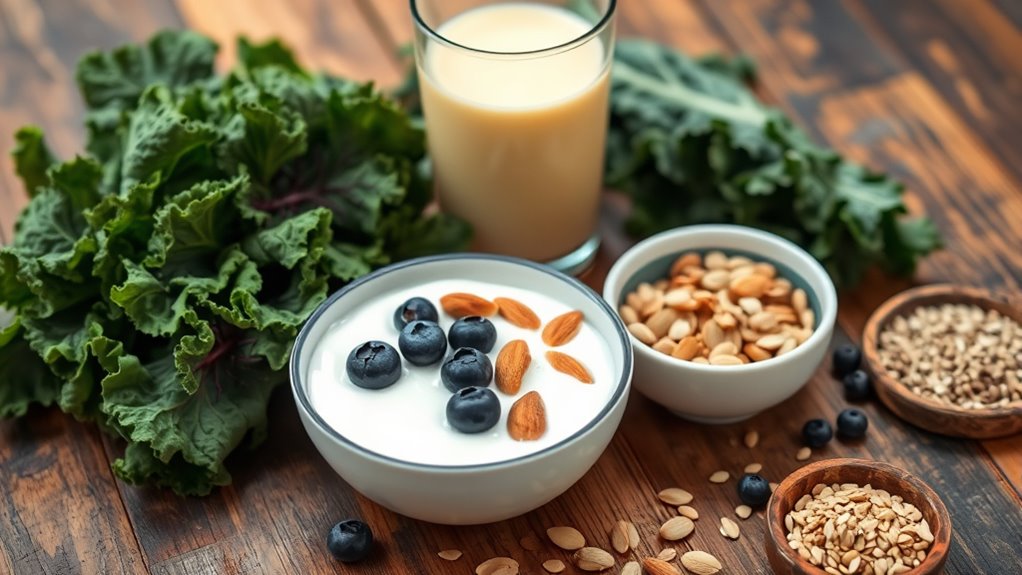
Have you ever wondered what you can do today to strengthen your bones for the future? The key lies in understanding how your body absorbs essential nutrients and maintains bone health over time. One of the most vital nutrients for your bones is calcium, but it’s not just about consuming enough calcium; it’s about how well your body absorbs it. Calcium absorption is crucial because if your body can’t effectively take in calcium from your diet, your bones won’t get the support they need to stay strong. To optimize calcium absorption, you should pair calcium-rich foods with vitamin D, which helps your body utilize calcium more efficiently. Think of vitamin D as the facilitator that *unlocks* calcium’s potential, making sure it gets into your bloodstream and reaches your bones. Without enough vitamin D, even a diet high in calcium won’t translate into stronger bones.
Maintaining bone density is another important aspect of bone health. Bone density maintenance involves keeping the balance between bone formation and bone resorption. When you’re young, your body naturally builds more bone than it breaks down, ensuring healthy, dense bones. As you age, this balance can shift, leading to decreased bone density and increased fragility. To counteract this, you need to consume nutrients that promote bone strength, such as magnesium and phosphorus, which work alongside calcium to build a sturdy matrix. Regular weight-bearing exercises also stimulate your bones, encouraging them to maintain or even increase their density. Remember, it’s not just about what you eat but how you incorporate these activities into your routine.
Diets rich in leafy greens like kale and spinach, nuts, seeds, and fortified foods can provide these essential minerals. However, it’s equally important to limit factors that impair calcium absorption, such as excessive caffeine or alcohol intake and high salt consumption, which can lead to calcium loss. Ensuring a balanced diet that includes these nutrients, along with regular physical activity, creates a strong foundation for long-term bone health. Keep in mind that your bones are living tissues that require consistent care, and making mindful choices today can prevent issues like osteoporosis later on. By focusing on how your body absorbs calcium and how you maintain bone density, you’re taking proactive steps toward stronger, healthier bones for years to come.
best calcium supplements for bone health
As an affiliate, we earn on qualifying purchases.
As an affiliate, we earn on qualifying purchases.
Frequently Asked Questions
How Does Vitamin D Influence Calcium Absorption?
Vitamin D boosts calcium absorption by helping your body regulate hormones involved in bone health. When you get sun exposure, your skin produces vitamin D, which then signals your intestines to absorb calcium more efficiently. Without enough vitamin D, calcium absorption drops, weakening your bones. So, making sure you get enough sun and maintaining proper hormone regulation keeps your calcium levels balanced, supporting strong, healthy bones.
Can Plant-Based Diets Provide Enough Nutrients for Strong Bones?
Yes, plant-based diets can provide enough nutrients for strong bones if you include a variety of plant sources like leafy greens, nuts, seeds, and fortified foods. However, you might need nutrient supplementation, especially for vitamin D and calcium, since some plant sources may not meet your needs alone. Be mindful of absorbing these nutrients effectively, and consider consulting a healthcare professional to optimize your diet for bone health.
Are There Any Risks Associated With Excessive Calcium Intake?
Excessive calcium intake can lead to calcium overdose, increasing your risk of kidney stones and impaired bone mineralization. Too much calcium may cause your body to deposit calcium in soft tissues or arteries, risking cardiovascular issues. To keep your bones healthy without these risks, stick to recommended calcium levels, and consult a healthcare professional before taking high-dose supplements. Balance and moderation are key for ideal bone health.
How Does Aging Affect Nutrient Absorption for Bone Health?
Oh, aging loves to play tricks on you, doesn’t it? It reduces your body’s ability to absorb nutrients, making it harder to maintain healthy bone density. Instead of fighting nutrient deficiencies, your body becomes less efficient at gathering essential minerals like calcium and vitamin D. So, even if you eat well, aging might still sneak in and weaken your bones, reminding you that staying proactive is key.
What Lifestyle Changes Enhance Nutrient Effectiveness for Bones?
You can enhance nutrient effectiveness for your bones by adopting regular exercise routines like weight-bearing and strength training, which stimulate bone growth. Prioritize quality sleep, as it helps your body absorb nutrients better and repair tissues. Avoid smoking and excessive alcohol, which hinder absorption. Eating a balanced diet rich in calcium and vitamin D also supports bone health. These lifestyle changes work together to strengthen your bones and improve overall wellness.
vitamin D3 supplements for absorption
As an affiliate, we earn on qualifying purchases.
As an affiliate, we earn on qualifying purchases.
Conclusion
To build strong bones, you need to nourish them with the right nutrients, to support their strength, and to fuel their growth. Embrace calcium-rich foods, optimize vitamin D levels, and incorporate magnesium and other essential minerals into your diet. Prioritize balanced meals, stay consistent, and listen to your body’s needs. By doing so, you empower yourself to maintain bone health, prevent future issues, and enjoy a vibrant, active life with bones that are resilient, robust, and strong.
magnesium and phosphorus supplements
As an affiliate, we earn on qualifying purchases.
As an affiliate, we earn on qualifying purchases.
As an affiliate, we earn on qualifying purchases.