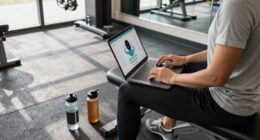

To track your workout progress effectively, use apps that sync with wearables to automatically log your activity and provide visual charts, or keep a journal for personalized notes on exercises, weights, reps, and how you feel. Combining both methods can keep you motivated and help identify patterns. Regularly review your logs to adapt your routines and guarantee continuous improvement. Keep going, and you’ll discover even more tips to optimize your fitness journey.

Get workout gear delivered free — and shop member deals
- Fast, free delivery on millions of items
- Access to Prime Big Deal Days deals on October 6–7
- Prime Video, Amazon Music and more included
Key Takeaways
- Use apps to automate data collection, visualize progress, and sync with wearables for comprehensive tracking.
- Keep a workout journal to record exercises, sets, reps, and personal feelings for detailed insights.
- Log nutrition alongside workouts to understand its impact on performance and recovery.
- Regularly review your records to identify effective routines and adjust your plan accordingly.
- Combine digital tools and manual journals for a personalized, consistent approach to tracking progress.
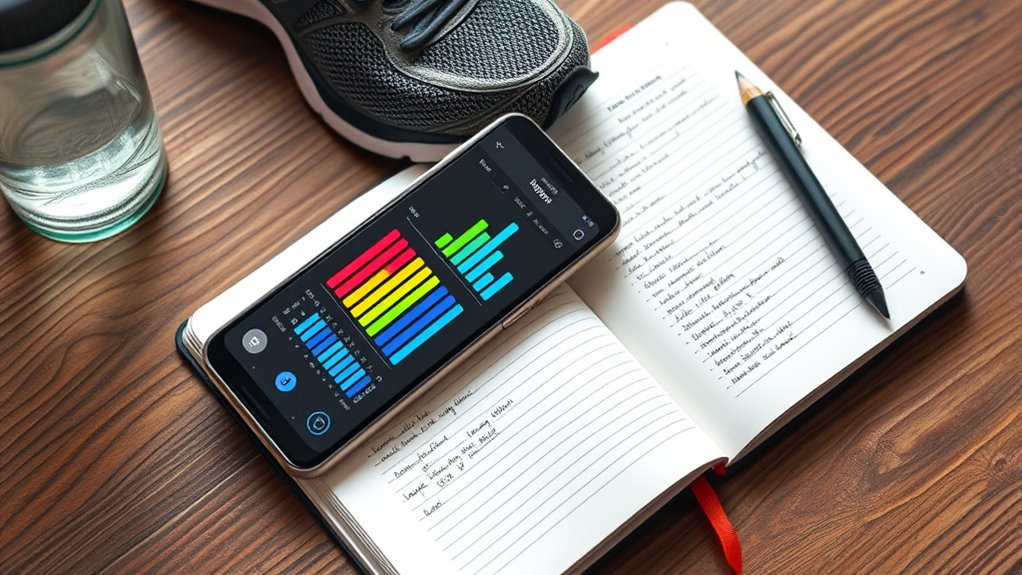
Tracking your workout progress is essential for staying motivated and ensuring you’re moving toward your fitness goals. When you keep a clear record of your efforts, it’s easier to see how far you’ve come and identify what areas need adjustment. To do this effectively, you should consider various methods such as apps, journals, and specific techniques that fit your style. One of the first steps is understanding how nutrition tips and equipment choices can influence your progress tracking. Proper nutrition fuels your workouts and helps you recover faster, so tracking your food intake alongside your physical activity provides a detailed view of your progress. Incorporating nutrition tips into your routine allows you to see how your diet impacts your performance and results, making adjustments easier and more targeted.
Choosing the right equipment is equally important. Whether you’re using a simple pen and notebook or a more advanced fitness app, the tools you select should match your goals and preferences. For example, if you prefer detailed data, a device with sensors to track heart rate, calories, and steps can give you precise insights. On the other hand, if you like to keep things straightforward, a journal where you jot down workout details and feelings can work just as well. The key is consistency—whatever equipment choices you make, stick with them so your records remain accurate and useful. When you log your workouts, include exercises performed, sets, reps, weights used, and how you felt during the session. This detailed info helps you identify patterns, such as which activities yield better results or when you need more recovery.
Apps are a popular choice because they automate much of the process. They often sync with wearable devices, track your progress over time, and provide visual charts that motivate you. Many apps also allow you to log nutrition tips, sleep, and hydration, giving you a holistic view of your fitness journey. Incorporating tracking methods such as apps and journals can improve consistency and accountability. Journals, however, offer flexibility and a personal touch. Writing by hand lets you reflect on your emotional state, injury concerns, or motivation levels, which can be overlooked in digital logs. Whichever method you choose, setting goals and regularly reviewing your data keeps you accountable. It’s about creating a feedback loop: record, analyze, adjust, and repeat. This cycle ensures continuous improvement and prevents plateaus.
In the end, tracking your workout progress isn’t just about numbers; it’s about understanding how your body responds to various factors like nutrition tips and equipment choices. By staying consistent and honest with your records, you’ll develop a clearer picture of what works best for you, making it easier to stay motivated and reach your goals efficiently.
fitness tracking app with wearable sync
As an affiliate, we earn on qualifying purchases.
As an affiliate, we earn on qualifying purchases.
Frequently Asked Questions
How Often Should I Update My Workout Logs?
You should update your workout logs after every session to maintain exercise consistency and accurately track your progress visualization. Regular updates help you spot patterns, adjust routines, and stay motivated. Whether you use apps or journals, making consistent entries guarantees you see improvements over time. Don’t wait too long—updating frequently keeps your goals clear and your motivation high, making it easier to stay committed to your fitness journey.
What Metrics Are Most Important to Track?
Did you know consistent exercisers see a 50% faster progress rate? Focus on metrics like workout frequency, intensity, and duration to boost exercise consistency. Track your nutrition impact by noting calorie intake, macronutrients, and hydration. These metrics reveal how your habits influence results. By monitoring these key areas, you can identify patterns, stay motivated, and adjust your plan for ideal gains.
Can Tracking Improve My Workout Motivation?
Yes, tracking your workouts can boost your motivation by giving you tangible proof of progress, serving as a motivation booster. When you see improvements, you’re more likely to stay committed. Plus, sharing your goals with accountability partners can enhance your dedication, making it easier to stick with your routine. Consistent tracking creates a sense of accomplishment, fueling your desire to push harder and reach new fitness milestones.
How Do I Set Realistic Fitness Goals?
To set realistic fitness goals, focus on goal setting by making them specific, measurable, achievable, relevant, and time-bound (SMART). Start with small progress benchmarks to keep yourself motivated and track improvements over time. Be honest about your current abilities and avoid setting goals that are too ambitious. Adjust your goals as you progress, ensuring they remain challenging yet attainable, helping you stay committed and avoid frustration.
Are There Privacy Concerns With Fitness Tracking Apps?
Yes, there are privacy concerns with fitness tracking apps. You should be aware of data security risks and carefully review app permissions before downloading. Many apps collect sensitive information like location, health data, and personal details. To safeguard yourself, choose reputable apps with strong privacy policies, limit permissions to only what’s necessary, and regularly update your app to ensure security features are current.
workout journal for exercise logging
As an affiliate, we earn on qualifying purchases.
As an affiliate, we earn on qualifying purchases.
Conclusion
So, after all this talk about tracking, you might think it’s just extra work. But ironically, the real magic happens when you stop guessing and start recording. Whether it’s an app, journal, or technique, tracking keeps you honest and motivated—without the mystery. So go ahead, embrace the data. Who knew that the secret to progress is just a little effort in keeping tabs? Turns out, the only thing you’re avoiding is your own potential.
nutrition tracking app for workouts
As an affiliate, we earn on qualifying purchases.
As an affiliate, we earn on qualifying purchases.
heart rate monitor fitness device
As an affiliate, we earn on qualifying purchases.
As an affiliate, we earn on qualifying purchases.
Fall Picks
fall essentials
As an affiliate, we earn on qualifying purchases.