To stay safe during winter workouts, dress in layered clothing: a moisture-wicking base layer, an insulating middle layer, and a waterproof outer shell. Pay close attention to your body signals—if you feel numb or sweaty, adjust your layers or seek shelter. Keep extremities warm with hats and gloves, and change into dry clothes if needed. Proper hydration and layering help you enjoy outdoor exercise safely—discover more tips by exploring further.

Get workout gear delivered free with Prime
- Fast, free delivery on millions of items
- Prime Video, Amazon Music and more included
- Member-only deals all year
Key Takeaways
- Dress in moisture-wicking base layers, insulating mid-layers, and windproof outerwear to stay warm and dry.
- Layer clothing to easily adjust temperature during activity, preventing overheating and excessive sweating.
- Monitor body signals like numbness or sweating; change to dry clothes promptly if outerwear becomes soaked.
- Cover extremities with hats, gloves, and thermal socks to reduce heat loss and maintain warmth.
- Stay hydrated, be prepared, and choose layered clothing suited for weather conditions to ensure safe winter workouts.
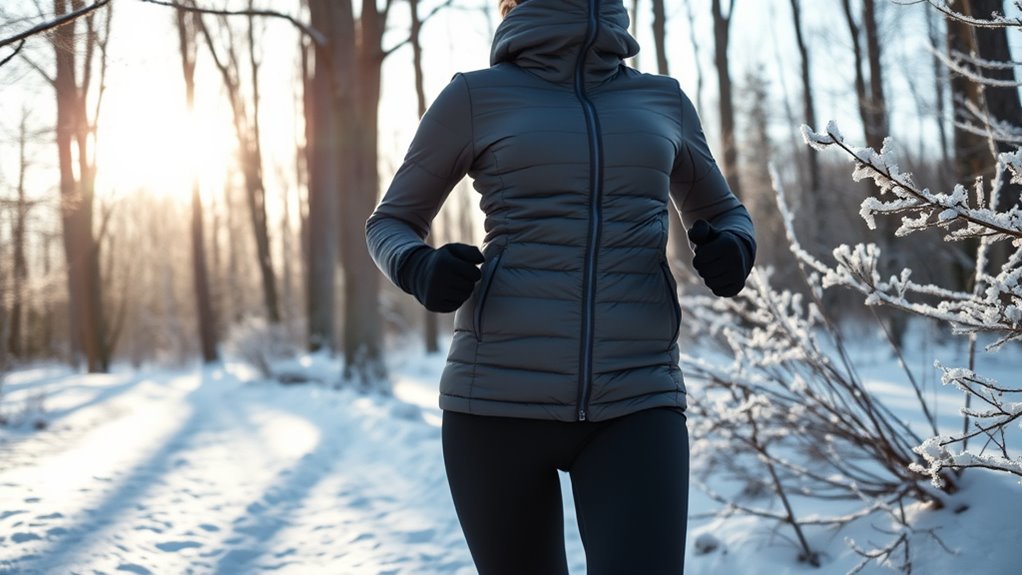
Clothing layers are just as essential as hydration strategies when it comes to winter workouts. You want to dress smartly to stay warm without overheating or getting soaked in sweat. Start with a moisture-wicking base layer to draw sweat away from your skin, which keeps you dry and prevents chills. Over that, add an insulating layer like fleece or a thermal shirt to trap body heat. The outer layer should be windproof and waterproof to shield you from the elements, especially if it’s snowy or windy. Don’t forget to cover extremities—wear a hat, gloves, and thermal socks—since heat loss occurs rapidly through your head and hands. Layering also allows you to adjust your clothing as your body warms up during activity, preventing overheating and excessive sweating, which can make you cold once you stop moving. Incorporating Free Floating techniques like adjusting your layers can help you stay comfortable throughout your workout. Another tip is to keep an eye on your body’s signals. If you start feeling numbness or tingling, it’s time to add a layer or seek shelter. Likewise, if you sweat excessively and the outer layer gets soaked, change into dry clothes as soon as possible to avoid getting chilled. Proper hydration and clothing layers work together to help you regulate your body temperature and stay comfortable during winter workouts. Remember, it’s better to be slightly overdressed than underdressed; you can always remove a layer if you get too warm. By taking these precautions, you’ll be able to enjoy outdoor activities safely, even when the weather is less than ideal. Winter workouts are not only doable but can be incredibly rewarding if you prepare properly.
moisture-wicking base layer for winter workouts
As an affiliate, we earn on qualifying purchases.
As an affiliate, we earn on qualifying purchases.
Frequently Asked Questions
How Can I Prevent Frostbite During Outdoor Workouts?
To prevent frostbite during outdoor workouts, you should wear proper skin coverage, including insulated gloves, hats, and layered clothing to keep your skin warm. Avoid exposing yourself to strong winds, as wind chill increases frostbite risk. Keep moving to boost circulation, but take breaks in sheltered areas if needed. Staying dry and monitoring your skin for early signs of frostbite are key to staying safe in cold weather.
What Are the Best Clothing Layers for Winter Exercise?
Imagine wrapping yourself in a cozy, yet breathable cocoon. You should layer with moisture-wicking fabrics close to your skin to keep sweat away, then add an insulating layer like fleece for warmth, and top with a waterproof shell if needed. This layered combination traps heat, manages moisture, and protects you from the cold, ensuring comfort and safety during winter workouts.
How Do I Stay Motivated to Exercise in Cold Weather?
To stay motivated in cold weather, set clear, achievable winter motivation goals that keep you focused. Remind yourself of the benefits of cold weather fitness, like improved resilience and mood. Find a workout buddy to add accountability and make exercising more fun. Dress appropriately and plan your outdoor sessions during the warmest parts of the day. Celebrate small wins to keep your momentum and make cold weather workouts a rewarding habit.
Are Indoor Workouts Effective Substitutes for Outdoor Winter Exercises?
Indoor workouts are absolutely as effective as outdoor winter exercises—you won’t miss a thing! You can crush indoor cardio sessions that get your heart pounding and nail strength training to build muscle and boost endurance. With the right motivation, your living room can turn into a powerhouse of fitness. Plus, no frostbite or icy sidewalks to worry about—just pure, sweat-dripping, calorie-burning fun right inside your home!
How Can I Avoid Slipping on Icy Surfaces While Exercising Outside?
To avoid slipping on icy surfaces while exercising outside, wear proper winter footwear with good traction. Consider using traction devices like slip-on grips or spikes that attach to your shoes for extra stability. Walk slowly, take short steps, and stay alert to your surroundings. Avoid icy patches when possible, and keep your hands free for balance. These precautions help you stay safe and maintain your workout during winter conditions.
As an affiliate, we earn on qualifying purchases.
Conclusion
Don’t let the cold freeze your fitness goals. Embrace winter workouts as an opportunity to challenge yourself and grow stronger—like a phoenix rising from the ashes. With the right gear, warm-up, and mindset, you can conquer icy mornings and snowy trails. Remember, every step you take in the cold is a victory over hesitation. So gear up, stay motivated, and prove that even winter’s chill can’t break your spirit. Your best winter workout awaits!
waterproof windproof winter jacket
As an affiliate, we earn on qualifying purchases.
As an affiliate, we earn on qualifying purchases.
As an affiliate, we earn on qualifying purchases.
Halloween Picks
halloween
As an affiliate, we earn on qualifying purchases.