
TL;DR

Get workout gear delivered free with Prime
- Fast, free delivery on millions of items
- Prime Video, Amazon Music and more included
- Member-only deals all year
A Fit&Well report describes how a trainer incorporates three coordination exercises into sessions with older adults: opposite-arm movements, side steps with an opposite-arm reach, and a ball toss and catch. The exercises can be adapted for seated or standing practice, but the report does not establish that these specific routines extend life or prevent falls.
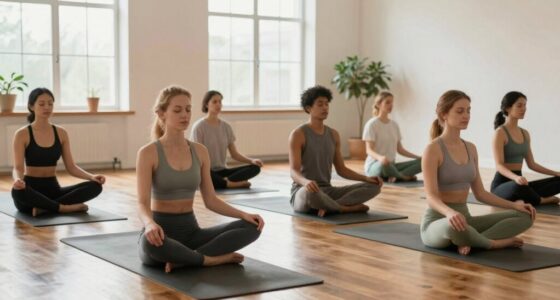
A trainer who works with older adults says they regularly include three coordination exercises in chair-based yoga classes and personal training sessions, describing them as a way to practise controlled, cross-body movement. The Fit&Well report presents the exercises as adaptable for standing or seated participants; it does not provide evidence that this particular routine extends lifespan or prevents falls.
The exercises pair movements on opposite sides of the body: raising one knee while moving the opposite arm, stepping out to the side while reaching with the other arm, and throwing and catching a ball while balancing. The trainer recommends five to six repetitions per side for each of the first two moves and five to 10 catches for the ball exercise. These are recommendations in the report, not a universally tested prescription.
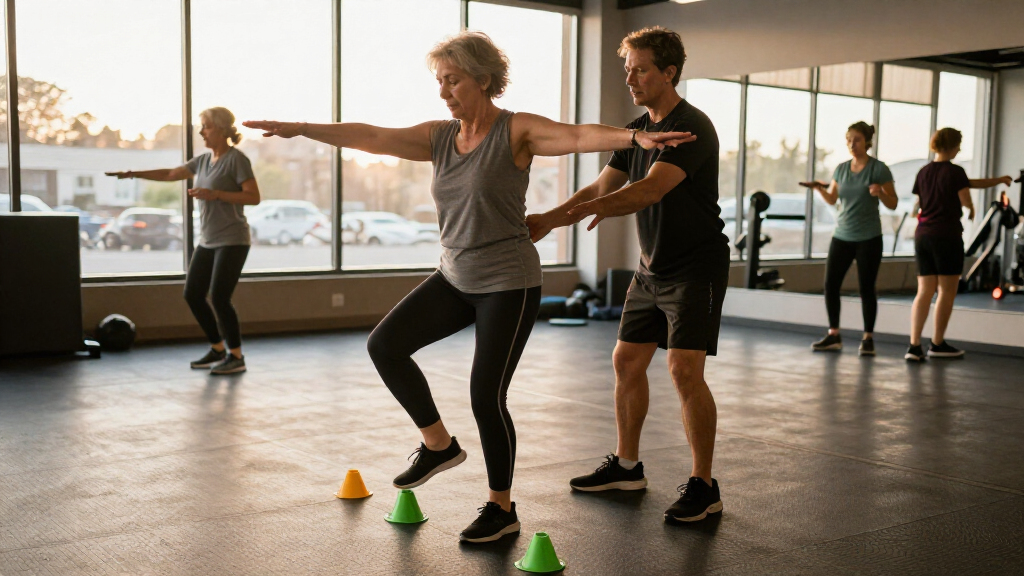
For the knee-and-arm move, a standing participant starts with feet hip-width apart and arms at shoulder height, then slowly raises one knee as the opposite arm moves forward. The side-step exercise uses a lateral step and opposite-arm reach; the trainer says participants can add a side lunge if comfortable or remain upright. Seated alternatives include a controlled march with an opposite-arm raise and a seated side step-out with an arm opening to the opposite side.
The ball drill calls for a participant to stand several steps from a wall, balance on one foot and lightly bounce a ball off the wall before catching it. The report suggests using one or two hands and changing the ball’s direction, but also describes easier options: stand on both feet or practise seated. It does not specify a ball weight, session frequency or a clinical screening process.
Practising Movement in Daily Life
The report’s practical point is that coordination work can be adjusted to a person’s mobility rather than treated as an all-or-nothing standing workout. The trainer links cross-body movement and catching practice to everyday tasks such as moving around other people or managing more than one activity at home. Those are the trainer’s reasons for including the drills, not measured outcomes reported for these clients.
The distinction matters for readers weighing exercise claims. The source says coordination practice may support skills relevant to movement and balance, but it does not show that these three drills alone improve independence, reduce falls or increase longevity. A chair-based option may make a movement more accessible, but it does not automatically make every exercise suitable for every person. Anyone with pain, significant balance difficulty or a health condition that affects movement should seek individualized guidance from a qualified health professional or exercise specialist before attempting standing balance work.
lightweight soft exercise ball for seniors hand eye coordination
As an affiliate, we earn on qualifying purchases.
As an affiliate, we earn on qualifying purchases.
How the Exercises Are Adapted
The trainer describes using coordination movements alongside strength training, rather than presenting them as a replacement. In the report, the rationale is to practise the connection between thinking about a movement and carrying it out with controlled limbs. Participants who can work standing may combine coordination with balance challenges; others can do modified versions seated.
The article also cites a 2019 review of balance and coordination exercises in older adults. According to Fit&Well’s summary, the review found improvements in cognitive processes such as spatial awareness, as well as postural control and stability in distracting environments. The supplied material does not provide the review’s title, authors, study count, effect sizes or details about the exercises evaluated. It therefore cannot establish that the three moves in this report produced those findings, or that the reported benefits apply equally to all older adults.
“I always incorporate coordination training into my chair-based yoga classes and personal training sessions with older adults, to fire up the mind-to-muscle connection.”
— The trainer, as quoted in the Fit&Well report
non-slip sturdy chair for seated exercises older adults
As an affiliate, we earn on qualifying purchases.
As an affiliate, we earn on qualifying purchases.
Evidence and Safety Questions
The supplied report does not identify the trainer by name or include responses from researchers, clinicians or participants. It also does not say when the article was published, how often the trainer recommends doing the exercises, or whether clients experienced measurable changes. The cited review is summarized rather than presented with enough information to assess its methods or conclusions directly.
It remains unclear whether the specific drills described have been tested as a programme, what level of supervision is appropriate for people with balance concerns, and how best to select seated or standing versions for an individual. The article gives modifications but does not provide a full safety assessment or claim that the movements prevent injury.
resistance-free balance and coordination exercise equipment for seniors
As an affiliate, we earn on qualifying purchases.
As an affiliate, we earn on qualifying purchases.
Choosing a Suitable Starting Version
The report does not announce a study, public programme or follow-up milestone. For readers interested in the routine, the immediate next step is to choose a version that matches their current ability, begin with controlled movements and use support or professional supervision where appropriate. Standing single-leg balance and ball-catching drills may be unsuitable without modification for someone who feels unsteady.
Any broader claims about long-term health would require research that measures outcomes in older adults and specifies how the exercises were performed. Until such evidence is supplied for this routine, it is best understood as a trainer’s practical set of adaptable movement ideas, not a proven longevity programme.
Key Questions
What coordination exercises does the report describe?
It lists a knee raise with the opposite arm, a side step with an opposite-arm reach, and a ball toss and catch while balancing. The first two are suggested for five to six repetitions per side; the ball drill for five to 10 catches.
Can the movements be done seated?
Yes. The report suggests a seated march with an opposite-arm raise for the first move and a seated side step-out with an arm opening for the second. For the ball drill, it suggests practising seated or standing on both feet.
Does the report show that these exercises extend lifespan?
No. It describes a trainer’s practice and summarizes a 2019 review of balance and coordination exercises. It does not show that these three specific drills extend life or prevent falls.
What should someone do if they feel unsteady?
They can avoid unsupported standing balance work and ask a qualified health professional or exercise specialist about suitable modifications. The report offers seated versions, but does not replace individualized advice.
Source: rss
Halloween Picks
halloween
As an affiliate, we earn on qualifying purchases.