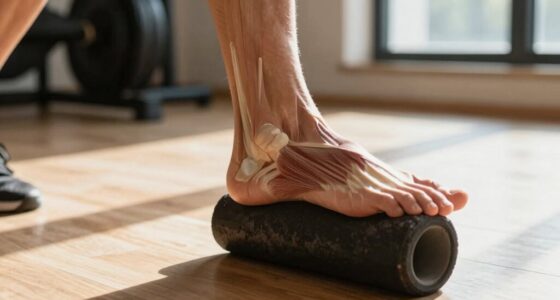
Mobility and stretching are different but both important for your fitness. Mobility involves dynamic movements that improve joint control, stability, and overall movement efficiency. Stretching mainly focuses on lengthening muscles to increase flexibility. While stretching can be part of warm-up or cool-down routines, mobility prepares your joints for active movement and reduces injury risk. Understanding these differences helps you create a balanced routine — if you want to learn more, keep exploring how to optimize your training.
Key Takeaways
- Mobility involves dynamic joint movements and muscle activation, while stretching focuses on static muscle elongation.
- Mobility enhances joint stability and control, whereas stretching alone doesn’t improve joint function.
- Mobility exercises require active muscle engagement, unlike passive stretching.
- Proper mobility training reduces injury risk more effectively than stretching alone.
- Combining mobility work with stretching optimizes overall movement, flexibility, and joint health.

Many people confuse mobility and stretching, but they serve different purposes in your fitness routine. While stretching mainly aims to improve flexibility by lengthening muscles, mobility focuses on how well your joints move through their full range of motion. Understanding this difference is key to avoiding injuries and enhancing your overall movement. When you work on mobility, you’re actively training your joints to move smoothly and efficiently, which directly impacts your joint stability. Good joint stability means your joints can handle daily movements and physical stresses without wobbling or risking injury. It’s about training your body to control and stabilize its movements, so when you perform activities like squatting or reaching overhead, your joints remain secure. Stretching alone might loosen muscles, but it doesn’t necessarily improve how well your joints function or how stable they are during movement.
Mobility exercises involve dynamic movements that require muscle activation. You engage multiple muscles around your joints, strengthening the neural pathways that coordinate movement. This muscle activation is vital because it helps your body develop better control over joint motion, preventing excessive or awkward movements that could cause injury. For example, a mobility drill might involve controlled hip circles or shoulder rotations that challenge your muscles to work together, improving both flexibility and stability. These exercises prepare your muscles and joints to work in harmony, which is especially important for athletes or anyone aiming to perform at a higher level. When you neglect mobility training and focus only on stretching, you risk missing out on strengthening the stabilizing muscles that keep your joints safe during movement.
Incorporating mobility work into your routine doesn’t mean sacrificing stretching; rather, it complements it. Stretching can still be part of your warm-up or cool-down, but mobility exercises should be integrated into your training to ensure your joints move freely and confidently. You’ll notice better posture, increased strength, and reduced discomfort when your joints are properly mobile. Remember, flexibility without stability can lead to injuries, while good mobility ensures your joints are resilient and your muscles are activated to support safe, efficient movement. So, next time you plan your workout, focus on mobility drills that challenge your joint stability and muscle activation, and understand that these are essential components for a balanced, effective fitness routine.
As an affiliate, we earn on qualifying purchases.
Frequently Asked Questions
How Does Mobility Training Impact Athletic Performance?
Mobility training boosts your athletic performance by enhancing joint stability and muscle coordination. As you improve your mobility, you move more efficiently, reducing injury risks and increasing power during movements. Better joint stability allows for safer, more controlled actions, while improved muscle coordination ensures your muscles work harmoniously. This combination helps you perform at your best, whether running, jumping, or lifting, giving you a competitive edge and greater overall athletic ability.
Can Stretching Improve Joint Health Long-Term?
Stretching can improve joint flexibility, which is essential for maintaining movement and reducing injury risk. Studies show that regular stretching may contribute to longevity benefits by keeping joints healthier longer. While it’s not a cure-all, consistent stretching can support long-term joint health, making daily activities easier and less painful. So, yes, incorporating stretching into your routine can positively impact your joint health over time.
What Are Common Mistakes in Mobility Exercises?
You often make mistakes in mobility exercises by using incorrect form, which can lead to injury or ineffective results. Overstretching is another common mistake; pushing too hard can strain your joints and muscles. To avoid these issues, focus on controlled, deliberate movements, maintain proper posture, and listen to your body. Consistent, safe practice helps improve your mobility without risking harm or setbacks.
Is Mobility Training Suitable for All Age Groups?
Mobility training is suitable for all age groups because it promotes age-specific adaptations, improving movement and reducing injury risk. For seniors, it enhances flexibility and balance, supporting daily activities. Young people benefit from increased range of motion and injury prevention. You should tailor mobility exercises to your age and ability, ensuring safety and effectiveness. Embracing mobility practice at any age helps you maintain independence and overall well-being.
How Often Should I Incorporate Mobility Exercises Into My Routine?
You should incorporate mobility exercises into your routine at least 3-4 times a week. Don’t fall for mobility myths that it’s only for athletes — everyone benefits. Remember, stretching versus mobility isn’t the same; mobility exercises improve your joint function, not just flexibility. Regular sessions help prevent injuries and enhance movement. Consistency is key, so make mobility work a part of your daily or weekly fitness plan for best results.

Pull Up Bands, Resistance Bands, Pull Up Assistance Band Exercise Bands for Men & Women Working Out, Body Stretching, Physical Therapy, Muscle Training – Black
- Material: 100% Natural Latex Rubber
- Durability: Green, Soft, Odorless, Long-lasting Elasticity
- Versatile Use: Suitable for Warm-ups, Strength, Yoga, Pilates
As an affiliate, we earn on qualifying purchases.
As an affiliate, we earn on qualifying purchases.
Conclusion
Remember, mobility isn’t just about stretching your muscles; it’s the secret weapon that keeps your body moving like a well-oiled machine. If you ignore this distinction, you risk turning your flexibility goals into a total disaster, with stiffness that’s almost impossible to conquer. Embrace the difference, focus on functional movement, and unleash your full potential. Otherwise, you might find yourself stuck in a world of inflexibility, feeling like a rusty robot rather than a smooth-moving powerhouse.
As an affiliate, we earn on qualifying purchases.
muscle activation resistance bands
As an affiliate, we earn on qualifying purchases.
As an affiliate, we earn on qualifying purchases.