
Both low-carb and low-fat diets can help you lose weight when you focus on controlling calories. Low-carb plans boost fat burning and can suppress appetite, making them easier to stick with for some people. Low-fat diets prioritize nutrient-rich foods and may be more satisfying if you prefer fruits and grains. Your choice depends on your preferences and lifestyle—you’ll find more about which approach suits you best by exploring further.
Key Takeaways
- Both diets can promote weight loss through calorie deficits, but adherence and personal preference often determine long-term success.
- Low-carb diets may lead to faster initial weight loss and better appetite control due to ketosis.
- Low-fat diets emphasize nutrient-rich, low-calorie foods like fruits and vegetables, supporting sustainable calorie reduction.
- The effectiveness of either diet depends on consistent calorie management rather than specific macronutrient ratios.
- Personal lifestyle, food preferences, and sustainability influence which diet is more effective for an individual.
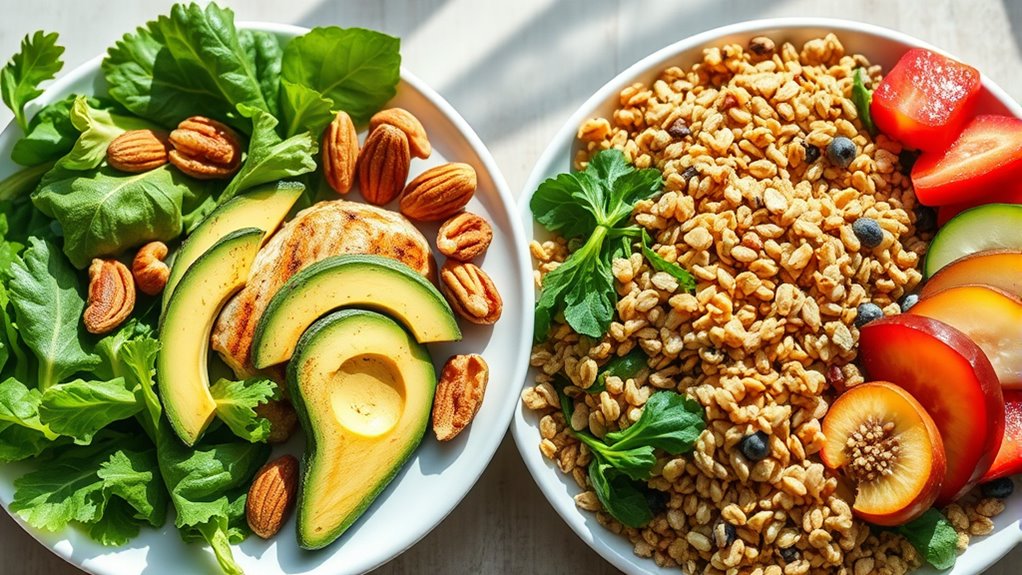
When choosing between low-carb and low-fat diets, many people wonder which approach is more effective for weight loss and overall health. Both strategies have their merits, but understanding their differences can help you make an informed decision. Low-carb diets, like the ketogenic diet, focus on reducing carbohydrate intake to shift your body into a state of ketosis. This metabolic state offers several ketogenic benefits, including increased fat burning and suppressed appetite, which can make weight loss feel more manageable. Because your body relies less on carbs for energy, you often find yourself naturally eating less, reducing calorie intake without feeling deprived. This can simplify calorie counting since you’re less likely to overconsume calories from processed carbs and sugars. On the other hand, low-fat diets emphasize reducing fat consumption, often advocating for more fruits, vegetables, and whole grains. These foods tend to be lower in calories per volume, which can help you maintain a calorie deficit. However, some low-fat foods can be highly processed and contain added sugars, which may inadvertently increase your calorie intake and hinder weight loss efforts. When considering which diet suits you best, it’s essential to think about sustainability. Many people find low-carb diets easier to stick with because they can enjoy satisfying, high-fat foods like nuts, cheese, and avocados, which help curb hunger. Conversely, others prefer low-fat diets because they include more fruits and vegetables, which are nutrient-dense and filling. The key lies in your personal preferences and lifestyle. Both approaches can be effective if you maintain a calorie deficit, but they do so in different ways. With low-carb diets, the emphasis is on controlling carbohydrate sources and leveraging the ketogenic benefits, which can lead to rapid initial weight loss and improved metabolic health. With low-fat diets, the focus is on reducing calorie-dense fats and increasing consumption of low-calorie, nutrient-rich foods. Additionally, choosing a diet that supports a balanced intake of nutrients, including the importance of projector image quality, can contribute to overall well-being. Ultimately, success depends on your ability to adhere to the chosen plan long-term. Whichever route you take, it’s important to remain mindful of overall calorie consumption and nutritional balance. Combining these principles with regular physical activity will give you the best chance at sustainable weight loss and better health.
Frequently Asked Questions
Can I Combine Low-Carb and Low-Fat Diets Effectively?
Yes, you can combine low-carb and low-fat diets effectively by focusing on meal planning and maintaining dietary flexibility. You might choose specific days or meals to reduce carbs and fats while keeping a balanced intake overall. This approach allows you to enjoy variety, stay motivated, and customize your plan to fit your preferences and goals. Just guarantee you’re meeting your nutritional needs and not overly restricting any food group.
Which Diet Is Better for Long-Term Weight Maintenance?
You’ll find that neither diet is a magical long-term solution, but focusing on sustainable meal planning makes the biggest difference. Both low-carb and low-fat diets can work, but the key is sticking with what you can maintain forever. Choose a diet that fits your lifestyle, preferences, and allows you to enjoy delicious meals. When you prioritize diet sustainability, you’re more likely to keep the weight off for good.
Are There Health Risks Associated With Low-Carb or Low-Fat Diets?
You should be aware that both low-carb and low-fat diets can pose health risks if not properly managed. You might develop nutrient deficiencies if your diet lacks essential vitamins and minerals. Additionally, you could experience hormonal imbalances that affect your energy and overall health. To stay safe, it’s best to consult with a healthcare professional or dietitian to make sure your diet meets your nutritional needs while minimizing these risks.
How Do These Diets Impact Energy Levels and Athletic Performance?
Did you know that after just two weeks of a low-carb diet, many people experience fat adaptation, boosting energy levels? These diets impact your athletic performance by reducing carbohydrate dependency, which can initially cause fatigue but eventually enhance endurance. With proper adjustment, you might find sustained energy without spikes and crashes. Your body learns to burn fat more efficiently, potentially improving both your energy levels and overall workout stamina over time.
What Are the Psychological Effects of Restricting Carbs or Fats?
Restricting carbs or fats can lead to increased carb cravings or fat anxiety. You might feel frustrated or deprived, which can make sticking to your diet harder. These psychological effects can cause mood swings or emotional eating. You often think about forbidden foods more, undermining your motivation. Recognizing these feelings helps you develop healthier habits and reduces the mental stress tied to dietary restrictions.
Conclusion
Ultimately, choosing between low-carb and low-fat diets is like picking a path through a forest—each guides you toward your goal, but only you can decide which feels right. Think of your diet as a compass, pointing toward balance and sustainability. Neither path is inherently better; it’s about finding what aligns with your journey. Trust your instincts, stay committed, and remember that true transformation begins with the choices you make today.