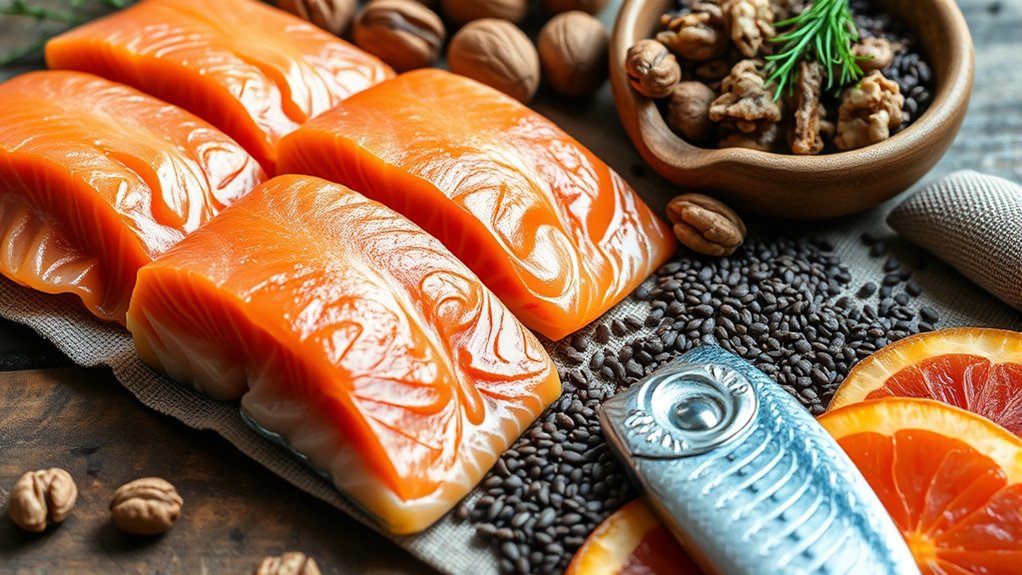

To support your joints and heart, include omega-3-rich foods like fatty fish—salmon, mackerel, sardines, and herring—in your diet a few times a week. Plant sources like flaxseeds, chia seeds, walnuts, and algae oils also boost your intake with beneficial ALA and DHA. Combining these foods helps reduce inflammation, improve mobility, and enhance cardiovascular health. Keep going, and you’ll discover how to optimize your nutrition for better fitness and well-being.
Key Takeaways
- Fatty fish like salmon, mackerel, sardines, and herring are top sources of EPA and DHA for joint and heart health.
- Plant-based foods such as flaxseeds, chia seeds, walnuts, and algae oils provide ALA, supporting overall omega-3 intake.
- Combining fish and plant sources offers comprehensive anti-inflammatory benefits for joints and cardiovascular health.
- Regular consumption of omega-3-rich foods helps reduce inflammation, improve mobility, and support athletic performance.
- Incorporating diverse omega-3 sources promotes faster recovery, reduces soreness, and enhances overall fitness and well-being.
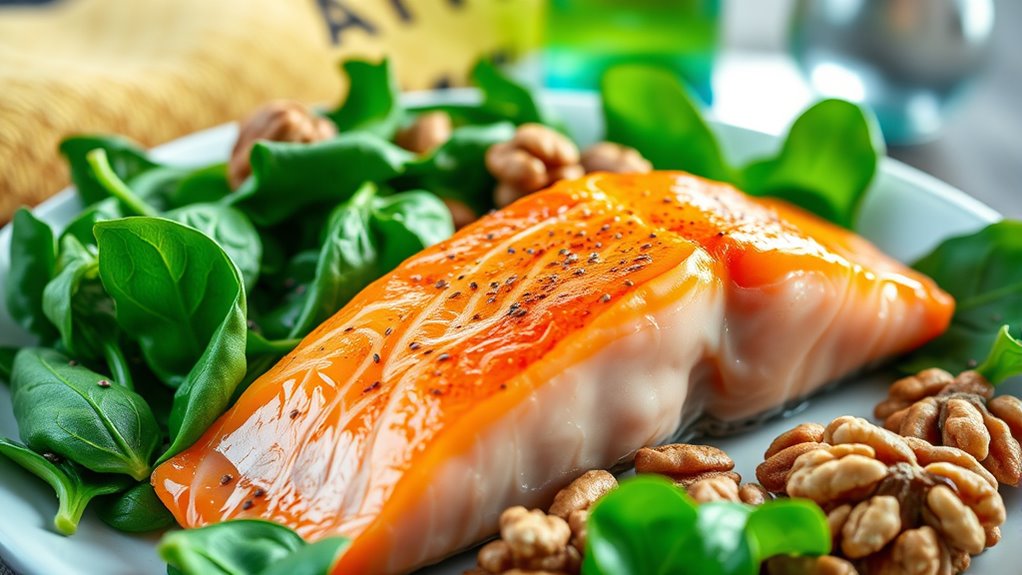
Omega-3 fatty acids are essential nutrients that can substantially boost your fitness routine. These healthy fats support your joint health, improve heart function, and enhance overall performance. Incorporating omega-3s into your diet isn’t complicated; you just need to know where to find them. Fish oils are among the most concentrated sources, offering high levels of EPA and DHA—two key omega-3s that reduce inflammation and support cardiovascular health. If you prefer plant sources, you can still get your omega-3s from foods like flaxseeds, chia seeds, walnuts, and algae oils. Both options provide valuable benefits, but understanding the differences helps you make the best choice for your needs.
Omega-3s boost joint health, heart function, and athletic performance through diverse food sources.
Fish oils are a straightforward way to boost your omega-3 intake. They’re rich in EPA and DHA, which are known to fight inflammation that can cause joint pain and stiffness. Regular consumption of fish oils can help you recover faster from workouts, reduce soreness, and improve mobility over time. Many athletes and fitness enthusiasts take fish oil supplements, but you can also get these fats from fatty fish like salmon, mackerel, sardines, and herring. Incorporating fish into your diet a few times a week ensures you’re getting enough omega-3s to support your joint and heart health, especially during intense training periods.
Plant sources of omega-3s are a great alternative or supplement to fish oils, especially if you’re vegetarian or allergic to fish. Flaxseeds, chia seeds, and walnuts contain ALA, a type of omega-3 that your body can convert into EPA and DHA, though the conversion isn’t very efficient. Algae oils are gaining popularity because they provide direct sources of DHA without the fishy taste or odor. Including these foods in your daily diet not only supplies omega-3s but also adds fiber, antioxidants, and other nutrients that support your overall health and athletic performance.
Achieving a balanced intake of omega-3s from both fish oils and plant sources can also be beneficial in supporting overall health, as these nutrients are crucial for reducing inflammation and promoting cardiovascular well-being. Balancing your intake of fish oils and plant sources ensures you get a broad spectrum of omega-3s to benefit your joints and heart. While fish oils are more potent in EPA and DHA, plant sources contribute other beneficial compounds that support your wellness goals. Whether you prefer seafood, plant-based options, or a combination of both, making omega-3-rich foods part of your daily routine can lead to better joint flexibility, reduced inflammation, and a healthier heart. These nutrients are crucial, especially as your training intensifies, helping you stay active, recover faster, and improve your overall fitness.
Frequently Asked Questions
Can Omega-3s Improve Athletic Performance?
Yes, omega-3s can improve your athletic performance by enhancing muscle recovery and boosting endurance. When you include omega-3-rich foods in your diet, you reduce inflammation and support faster healing after workouts. This allows you to train more consistently and with less soreness. Plus, omega-3s help maintain cardiovascular health, which is essential for sustained athletic endurance. Incorporate fatty fish, flaxseeds, or walnuts to optimize your performance naturally.
Are Plant-Based Omega-3 Sources as Effective as Fish?
Ever notice how plant-based omega-3s, like flaxseeds and chia, often seem to sneak into your diet? They can be effective, but a fish oil comparison shows they provide ALA, which your body converts quite slowly into the more beneficial EPA and DHA. So, while plant sources help, fish oil offers a more direct, potent boost for your joints and heart. Consider combining both for ideal health benefits.
How Much Omega-3 Should I Consume Daily for Fitness?
You should aim for an Omega-3 dosage of about 250–500 mg of combined EPA and DHA daily for fitness. This daily intake helps support joint health, cardiovascular function, and overall well-being. To meet this, include fatty fish like salmon or supplements if needed. Remember, consistent intake is key, so incorporate omega-3-rich foods into your diet regularly to maximize their benefits for your fitness goals.
Do Omega-3 Supplements Have Any Side Effects?
Omega-3 supplements can be a double-edged sword if you’re not careful. They might cause side effects like fishy aftertaste, gastrointestinal discomfort, or increased bleeding risk if taken in high doses. To stay safe, focus on supplement safety and stick to recommended dosages. Always consult your healthcare provider before starting, especially if you’re on blood thinners or have other health conditions. Moderation keeps the benefits sailing smoothly.
Can Omega-3s Help With Recovery After Workouts?
Yes, omega-3s can help with recovery after workouts by reducing inflammation and supporting muscle repair. When you include omega-3-rich foods like fatty fish or take supplements, you promote faster healing, lessen soreness, and improve overall recovery. These healthy fats help your body manage exercise-induced inflammation, allowing you to get back to training sooner and perform better in your next workout.
Conclusion
Incorporating omega-3-rich foods into your diet is like giving your joints and heart a superhero cape—ready to conquer anything. Whether you choose salmon, walnuts, or chia seeds, these powerful fats boost your fitness game and keep you moving like a well-oiled machine. Don’t underestimate their impact; omega-3s are truly the secret weapon your body’s been waiting for. Start today, and watch your health soar to heights you never thought possible—this is one upgrade you can’t afford to skip!