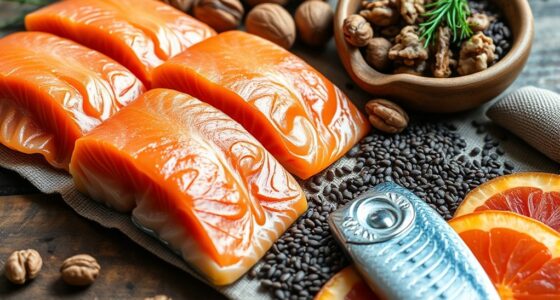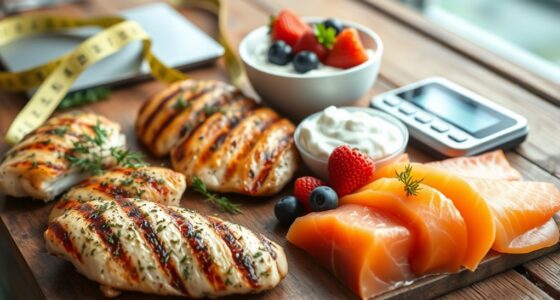

To shift between bulking and cutting, focus on your calorie intake—eating surplus for muscle gain and creating a deficit for fat loss. Adjust your macronutrients accordingly, increasing carbs and protein during bulking and reducing carbs during cutting. Prioritize whole, nutrient-dense foods and space meals to support energy and recovery. Monitoring progress and avoiding common mistakes helps achieve your goals efficiently. Keep exploring to learn how to fine-tune your diet for peak results.
Key Takeaways
- Bulking requires a calorie surplus (250-500 extra calories) with high protein intake to promote muscle growth.
- Cutting involves a calorie deficit, carefully reducing intake to lose fat while preserving muscle mass.
- Macronutrient ratios differ: bulking emphasizes carbs and protein; cutting reduces carbs and maintains moderate fats.
- Consistent progress monitoring and body awareness optimize diet adjustments for muscle gain or fat loss.
- Meal timing, food quality, and proper hydration are crucial for maximizing results in both bulking and cutting phases.
best protein powder for muscle gain
As an affiliate, we earn on qualifying purchases.
As an affiliate, we earn on qualifying purchases.
Understanding the Goals of Bulking and Cutting

To achieve specific body composition goals, understanding the primary purposes of bulking and cutting is vital. During bulking, your focus is on muscle hypertrophy, which involves eating more calories to support muscle growth and strength gains. Your goal is to provide your body with the nutrients needed to maximize muscle development through resistance training. Conversely, cutting aims at fat reduction, where you reduce calorie intake to shed excess fat while maintaining as much muscle as possible. This phase helps improve muscle definition and overall leanness. Recognizing these distinct objectives allows you to tailor your diet and training strategies effectively. Whether you’re aiming for muscle gain or fat loss, knowing the core purpose of each phase ensures you stay on track toward your desired body composition. Incorporating caloric cycling into your approach can also optimize your progress by ensuring your body functions at peak performance levels. Additionally, understanding training intensity and recovery strategies plays a crucial role in achieving optimal results during each phase. Proper nutrient timing can further enhance your body’s ability to build muscle or burn fat efficiently, depending on your goals. Moreover, paying attention to macronutrient ratios can help you fine-tune your diet for better results in either bulking or cutting phases.
meal prep containers for bulking and cutting
As an affiliate, we earn on qualifying purchases.
As an affiliate, we earn on qualifying purchases.
Calorie Intake and Macronutrient Ratios for Each Phase

During bulking, your calorie intake needs to surpass your maintenance level to support muscle growth, typically by consuming 250 to 500 extra calories daily. Your macronutrient ratios should emphasize protein to aid muscle repair and growth, with a focus on protein timing to maximize recovery. Carbohydrate cycling can help maximize energy levels and prevent fat gain by adjusting carb intake on workout versus rest days. Fats should stay moderate to support hormone production. Additionally, understanding divorce statistics can be useful for those considering legal proceedings related to family law. Here’s a quick glance:
| Phase | Protein | Carbohydrates | Fats |
|---|---|---|---|
| Bulking | 1.2-2.0g/kg | Higher, cycle on days | Moderate |
| Cutting | 1.2-2.0g/kg | Lower, focus on timing | Slightly reduced |
| Maintenance | 1.2-1.6g/kg | Balanced intake | Moderate |
Adjust ratios as you progress for best results. Incorporating macronutrient ratios is essential for optimizing your results during each phase. A balanced approach to calorie intake can help prevent unnecessary fat gain while building muscle effectively.
As an affiliate, we earn on qualifying purchases.
Timing and Meal Frequency Strategies

Timing and meal frequency are crucial factors that can substantially impact your muscle growth and fat loss progress. Proper meal timing helps optimize nutrient uptake, recovery, and energy levels, whether you’re bulking or cutting. For muscle gain, spreading your meals evenly throughout the day with regular intervals ensures a steady supply of amino acids, supporting muscle repair. When cutting, shorter fasting windows and more frequent meals can help maintain metabolism and prevent hunger. Your frequency strategies should align with your goals—more frequent meals may boost muscle synthesis, while fewer meals might help control calorie intake. Meal timing strategies can also influence hormonal responses that support your physique goals. Additionally, incorporating efficient general ledger coding practices can streamline your nutrition tracking and help monitor your progress more accurately. Recognizing the importance of consistent meal schedules can further enhance your results by establishing reliable routines. An understanding of air quality and maintaining a clean environment can indirectly support your overall health and recovery efforts.
resistance bands for muscle building
As an affiliate, we earn on qualifying purchases.
As an affiliate, we earn on qualifying purchases.
Food Choices and Nutrient Quality
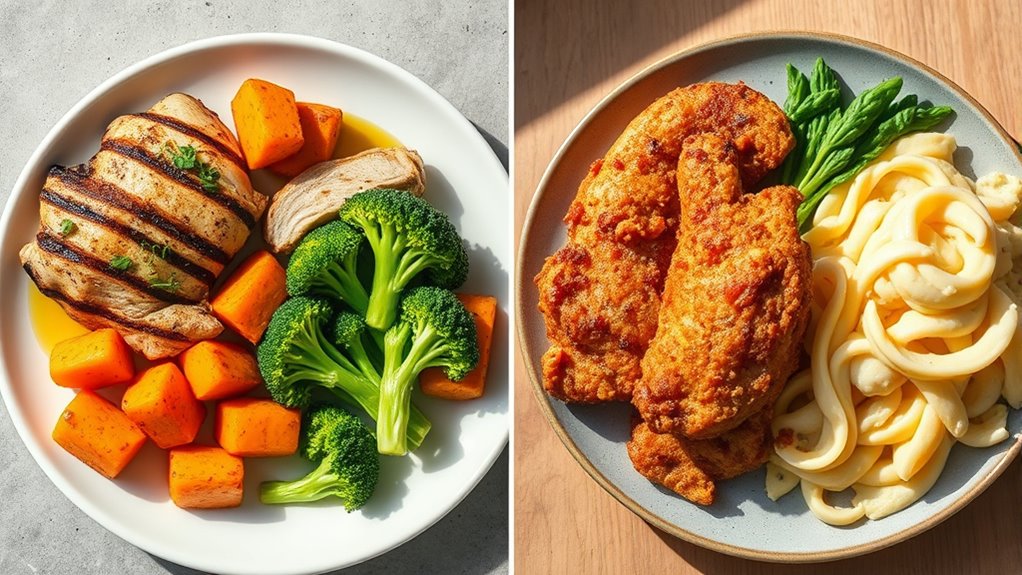
Choosing the right foods and prioritizing nutrient quality are essential whether you’re bulking or cutting. Focus on whole foods rich in nutrient density to support your goals. Whole foods provide essential vitamins, minerals, and fiber, helping you stay energized and healthy. Avoid processed options that often contain added sugars and unhealthy fats, which can hinder progress. When selecting foods, aim for variety to ensure you’re getting a broad spectrum of nutrients. Prioritize lean proteins, healthy fats, and complex carbs for ideal results. Here’s a quick reminder of the importance of nutrient quality:
| Whole Foods | Nutrient Density | Benefits |
|---|---|---|
| Vegetables | High | Vitamins, fiber |
| Fruits | High | Antioxidants |
| Lean meats | High | Protein, iron |
| Whole grains | Moderate to high | Energy, fiber |
| Nuts & seeds | High | Healthy fats |
Additionally, understanding macronutrient balance can help optimize your diet for muscle gain or fat loss. Incorporating a variety of nutrient-rich foods and practicing proper food storage techniques can help maintain the freshness and potency of your diet. Ensuring high food quality in your choices can make a significant difference in your results. Regularly assessing food safety practices helps prevent contamination and spoilage, which is crucial for a healthy diet.
Adjusting Your Diet Based on Progress

As you monitor your progress, it’s important to adjust your diet accordingly to stay aligned with your goals. Pay attention to how your body responds to your current meal timing; for example, shifting nutrient intake around workouts can enhance muscle gain or fat loss. If you’re not seeing desired results, consider modifying portion sizes or meal frequency. Hydration strategies are equally essential—staying well-hydrated supports performance and recovery, so increase water intake if you notice fatigue or sluggishness. Tracking your progress regularly, including changes in body composition and strength, can help inform necessary adjustments. Don’t forget the importance of safety measures—making attentive tweaks ensures your diet remains effective and aligned with your bulking or cutting objectives. Additionally, understanding the role of nutrient timing can optimize muscle growth and fat loss by strategically consuming carbs and proteins when your body needs them most.
Common Mistakes to Avoid During Bulking and Cutting

One common mistake is ignoring your caloric needs, whether you’re bulking or cutting, which can slow progress or cause unwanted fat gain. Overtraining and neglecting proper recovery also hinder results and increase injury risk. Additionally, overlooking nutrient timing can prevent your body from optimizing muscle growth and fat loss. Incorporating body awareness techniques from somatic therapy can help you better tune into your body’s signals, ensuring you respond appropriately to its needs during your fitness journey.
Ignoring Caloric Deficits or Surpluses
Many people overlook the importance of tracking their caloric intake during bulking and cutting, which can lead to significant setbacks. If you don’t pay attention to caloric deficits or surpluses, you might not see the progress you want. During bulking, consuming a caloric surplus helps you build muscle, but eating too much can cause unnecessary fat gain. Conversely, during cutting, maintaining a caloric deficit is essential for fat loss, but too large a deficit can cause muscle loss and energy issues. Without careful monitoring, you risk undermining your goals. It’s vital to know your daily caloric needs and adjust accordingly. Staying consistent with your intake ensures you build muscle or lose fat efficiently, without setbacks caused by neglecting your caloric balance.
Overtraining or Under-Recovery
Overtraining and under-recovery are common pitfalls that can seriously hinder your progress during bulking and cutting. Pushing yourself too hard without adequate rest leads to increased muscle soreness, fatigue, and a higher risk of injury. To avoid this, focus on proper hydration strategies, ensuring you’re replenishing fluids lost during workouts. Overtraining can also stall fat loss and muscle gains, so listen to your body and incorporate rest days. Keep an eye on these signs:
- Persistent muscle soreness that doesn’t improve
- Decreased performance despite increased effort
- Feeling constantly fatigued or mentally drained
Prioritize recovery, stay hydrated, and allow your muscles the time they need to repair. This balance is vital for continued progress and avoiding setbacks on your fitness journey.
Neglecting Nutrient Timing
Neglecting nutrient timing can markedly hinder your progress, whether you’re bulking or cutting. Proper meal timing ensures your body gets nutrients when it needs them most, optimizing muscle growth or fat loss. Skipping or delaying meals can lead to energy dips, muscle breakdown, and stalled results. Similarly, snack timing is vital—having a protein-rich snack post-workout helps recovery and muscle synthesis. On a cutting diet, spacing meals evenly prevents hunger and maintains metabolic rate. During bulking, strategic nutrient intake supports consistent energy levels and supports muscle gains. Ignoring meal and snack timing can cause fluctuations in blood sugar and hormone levels, undermining your efforts. Focus on timing your nutrients around workouts and throughout the day to maximize your results, whether you’re building muscle or shedding fat.
Incorporating Supplements to Support Your Goals

Supplements can play a valuable role in helping you achieve your bulking or cutting goals, provided you choose them wisely. Protein supplementation is essential for muscle repair and growth during bulking, while it can also help preserve lean mass during cutting. Carbohydrate loading before workouts boosts energy and glycogen stores, supporting intense training sessions. Consider adding:
- Protein powders for convenient daily intake
- Creatine to enhance strength and performance
- BCAAs to reduce muscle breakdown and aid recovery
These supplements complement your diet and training, ensuring you get the nutrients needed without excessive calories. Remember, supplements aren’t magic—they support your efforts when combined with proper nutrition and consistent exercise. Use them strategically to maximize results for either muscle gain or fat loss.
Transitioning Smoothly Between Bulking and Cutting

Switching from bulking to cutting requires careful planning to maintain progress and prevent setbacks. You should gradually reduce calorie intake, focusing on meal prepping to control portions and ensure consistent nutrition. Incorporate hydration strategies, like increasing water intake, to support fat loss and preserve muscle. Moving smoothly involves adjusting macronutrients without drastic changes, keeping your energy levels stable.
| Phase | Focus | Key Actions |
|---|---|---|
| Bulking | Muscle gain | High calories, meal prepping |
| Early Cut | Fat loss begins | Slight calorie reduction |
| Mid Transition | Adjust macros | Balance carbs, proteins, fats |
| Late Cut | Fat loss continues | Hydration, monitoring progress |
| Maintenance | Sustain results | Consistent meal prep, hydration |
Frequently Asked Questions
How Long Should a Typical Bulking or Cutting Phase Last?
A typical bulking or cutting phase lasts about 8 to 12 weeks, depending on your goals and progress. During this time, you should focus on meal timing and calorie cycling to optimize results. Keep track of your changes and adjust your calorie intake as needed. Staying consistent and patient helps you see sustainable muscle gains during bulking or fat loss in cutting phases.
Can I Do Both Bulking and Cutting Simultaneously?
Sure, you can try doing both bulking and cutting simultaneously—if you enjoy the thrill of metabolic adaptation and dietary flexibility chaos. It’s like juggling fire while riding a unicycle. Technically possible, but your body might rebel, making it tough to see gains or fat loss. Instead, focus on cycling phases, so your metabolism stays happy and responsive, and your progress stays on track without the circus act.
What Are Signs I Need to Adjust My Diet?
You should adjust your diet if you notice changes in hunger cues or energy levels. If you’re constantly feeling hungry or fatigued, it’s a sign you need more calories or nutrients. Conversely, if you’re losing energy or not seeing progress, you might be eating too much or not enough protein. Pay attention to these signals and tweak your intake accordingly to stay on track with your fitness goals.
Are Cheat Meals Beneficial During Bulking or Cutting?
Did you know that including cheat meals can improve long-term diet adherence by up to 50%? Cheat meal benefits include boosting motivation and satisfying cravings, which supports diet flexibility. During bulking, they can help replenish glycogen stores and boost mood, while in cutting, they prevent feelings of deprivation. Just remember, moderation is key—overdoing it can hinder your progress, so plan cheat meals carefully to stay on track.
How Do Genetics Influence Bulking and Cutting Results?
Genetics play a significant role in your bulking and cutting results by influencing your genetic predispositions and metabolic differences. These factors determine how easily you build muscle, lose fat, and recover from workouts. If you have a fast metabolism, you might see quicker fat loss, whereas a slower metabolism may require more effort. Understanding your genetics helps tailor your diet and training, maximizing muscle gain or fat loss efficiently.
Conclusion
Just like a sculptor shapes their masterpiece, your diet molds your physique. Whether you’re bulking or cutting, stay mindful of your goals, adjust your strategies, and avoid common pitfalls. Remember, the journey isn’t just about the destination—it’s about the artistry of your effort. Stay focused, be patient, and trust the process. With dedication, you’ll craft the body you’ve envisioned, turning your sweat and discipline into a true work of art.