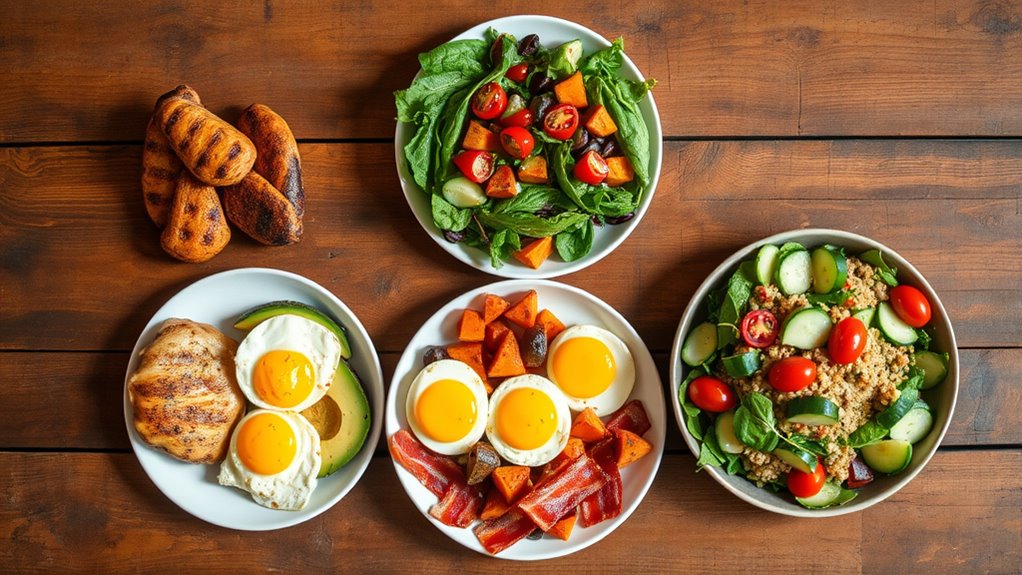

Choosing between paleo, keto, and vegan depends on your fitness goals and lifestyle. If you want steady energy and focus on whole, unprocessed foods, paleo might suit you best. For fat-burning and rapid weight loss, keto’s high fat and low carbs are effective, especially with proper meal timing and supplements. If muscle recovery and sustainable nutrition matter most, a vegan diet with well-planned meals and supplements can work. Explore further to find which diet aligns with your goals.
Key Takeaways
- Paleo suits those seeking whole foods, steady energy, and minimal supplements, ideal for general fitness and balanced nutrition.
- Keto benefits individuals aiming for fat loss and improved metabolic health through ketosis, requiring precise meal timing and electrolyte management.
- Vegan supports plant-based lifestyles, emphasizing nutrient timing to prevent deficiencies in B12, iron, and omega-3s for overall wellness.
- Proper supplement use varies: omega-3s and vitamin D for Paleo, electrolytes for Keto, and B12 or iron for Vegan diets.
- Aligning meal timing with specific diet strategies enhances energy, recovery, and supports fitness goals effectively.
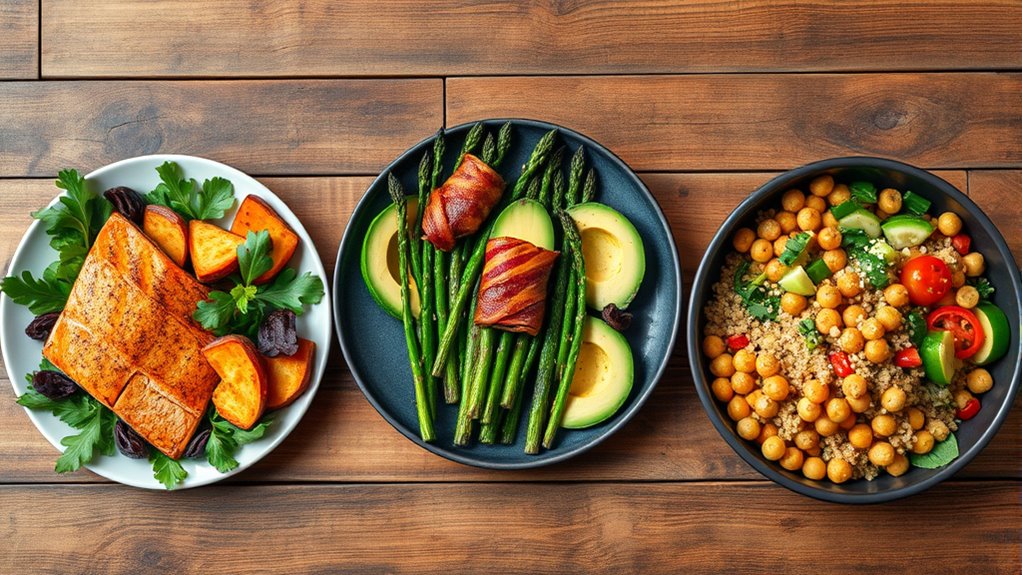
Have you ever wondered how the Paleo, Keto, and Vegan diets compare? When choosing a diet that aligns with your fitness goals, understanding the nuances of meal timing and supplement needs can make all the difference. Each diet has its unique approach to fueling your body, and how you time your meals plays a vital role in optimizing results. For Paleo enthusiasts, meal timing tends to follow a more traditional pattern, emphasizing whole, unprocessed foods consumed at regular intervals to maintain steady energy levels. Since Paleo focuses on natural foods like meats, nuts, and vegetables, you might not need many supplements if your diet is well-rounded, but some people choose to add omega-3s or vitamin D to fill nutritional gaps.
On the other hand, the Keto diet requires careful attention to meal timing, especially because it involves maintaining a state of ketosis. You’ll want to space out your meals to stabilize blood sugar levels and prevent dips that could lead to cravings or fatigue. Ketogenic diets often call for higher fat intake, so some individuals find that supplement needs include magnesium, electrolytes, or exogenous ketones to support energy and hydration. Proper meal timing helps keep your body in ketosis, ensuring maximum fat-burning efficiency, and supplements can help fill nutritional voids that might occur due to restricted fruit and carbohydrate intake.
Timing meals carefully supports ketosis and boosts fat burning; supplements like magnesium and electrolytes fill nutritional gaps.
Vegan diets, which exclude all animal products, have their own set of considerations. Meal timing is flexible but essential for ensuring consistent nutrient intake throughout the day. Since plant-based diets can sometimes lack certain nutrients like vitamin B12, iron, or omega-3 fatty acids, you may need to incorporate supplements into your routine. Timing your meals to include fortified foods or supplements can help prevent deficiencies and sustain energy levels. Vegans often find that spreading their protein sources and nutrient-rich foods evenly across meals maintains steady blood sugar and supports muscle recovery, especially if you’re active.
Ultimately, the key to making any of these diets work for your fitness goals lies in understanding how meal timing affects your energy and recovery, as well as recognizing your supplement needs. Whether you prefer the simplicity of Paleo, the fat-focused approach of Keto, or the plant-based versatility of Vegan, tailoring your meal schedule and supplement intake can profoundly enhance your results. Consider your lifestyle, activity level, and nutritional preferences to craft a plan that keeps you energized, balanced, and aligned with your fitness ambitions.
Keto electrolyte supplements
As an affiliate, we earn on qualifying purchases.
As an affiliate, we earn on qualifying purchases.
Frequently Asked Questions
Can I Combine Elements From Different Diets Effectively?
Yes, you can effectively combine elements from different diets through diet crossover and diet synergy. By thoughtfully selecting compatible foods, you can tailor your plan to meet your fitness goals while maintaining variety and nutritional balance. Focus on blending principles that support your needs, such as incorporating plant-based proteins with low-carb ingredients or emphasizing whole foods from multiple diet styles. This approach helps optimize benefits and keeps your diet sustainable.
How Do These Diets Impact Long-Term Health Risks?
You might lower your risk of heart disease by choosing diets rich in healthy fats, fiber, and antioxidants, like the vegan or Mediterranean approach. However, long-term adherence to keto or paleo can lead to nutrient gaps, especially in fiber, vitamins, and minerals. These gaps can increase health risks over time. To minimize long-term health issues, focus on balanced nutrition and regular health check-ups regardless of your chosen diet.
Are There Specific Fitness Goals Suited to Each Diet?
If you aim for weight loss, keto’s high-fat, low-carb approach can boost fat burning. For muscle building, paleo’s focus on whole foods and lean proteins supports your goals. If you prioritize ethical choices and dietary flexibility, vegan diets align well. Meal planning becomes essential to meet your fitness goals by ensuring balanced nutrient intake. Matching your fitness aspirations with your diet’s structure helps you stay consistent and achieve meaningful results.
What Are Common Nutritional Deficiencies in These Diets?
You might face nutritional gaps or mineral deficiencies in these diets. Paleo can lack calcium and vitamin D due to limited dairy, keto may cause magnesium and potassium shortages from reduced fruits and vegetables, and vegan diets often miss B12 and iron sources. To avoid these mineral deficiencies, supplement wisely and include diverse, nutrient-rich foods tailored to your diet. Regularly monitoring your nutrient levels helps ensure you’re meeting your body’s needs.
How Do These Diets Affect Mental Clarity and Mood?
You’ll likely notice improvements in mental sharpness and emotional stability with these diets. Paleo and keto can boost mental clarity by stabilizing blood sugar levels and reducing inflammation, which helps your focus. Vegan diets, rich in antioxidants and plant nutrients, support mood and emotional health. However, if you’re deficient in certain nutrients, you might experience mood swings or fog. Proper planning guarantees you enjoy better mental clarity and emotional stability on any of these diets.
Vegan B12 vitamin supplements
As an affiliate, we earn on qualifying purchases.
As an affiliate, we earn on qualifying purchases.
Conclusion
Choosing the right diet depends on your personal goals and lifestyle. Whether you favor the paleo, keto, or vegan approach, each offers unique benefits. Are you ready to commit to a plan that truly aligns with your fitness journey? Remember, consistency and enjoyment are key. So, which diet will you choose to fuel your success? The power to transform your health is in your hands—are you prepared to take the first step?
Paleo omega-3 fish oil capsules
As an affiliate, we earn on qualifying purchases.
As an affiliate, we earn on qualifying purchases.
Meal timing app for keto diet
As an affiliate, we earn on qualifying purchases.
As an affiliate, we earn on qualifying purchases.