To improve your basketball skills at home, focus on shooting accuracy drills like free throws and close-range shots, using a wall or mini hoop for consistency. Practice dribbling with household items and weave through makeshift cones to boost agility. Incorporate jump rope for endurance and quickness, and work on defensive stance to stay low and reactive. Keep challenging yourself with new variations—if you keep pushing, you’ll discover even more ways to level up your game.
Key Takeaways
- Practice shooting and free throws using walls or mini hoops to improve accuracy and muscle memory.
- Set up household obstacle courses for dribbling and ball-handling drills to enhance control and agility.
- Use cones or household items for cone weaving exercises to develop quickness and precise movement.
- Incorporate defensive stances, lateral slides, and cardio activities like jump rope to boost endurance and defensive skills.
- Engage in reaction drills, wall ball rebounds, and varied shooting practices to improve coordination, reflexes, and game readiness.
Shooting Accuracy Drills for Small Spaces

Even if you have limited space at home, you can still improve your shooting accuracy with targeted drills. Focus on layup drills, which help develop close-range shooting and footwork, even in tight areas. Use a wall or a mini hoop to practice your approach and finishing moves repeatedly. Incorporate free throw practice to build consistency and confidence from the line, which translates to better overall accuracy. Set up a small designated spot and shoot multiple free throws, tracking your progress to stay motivated. By dedicating time to these drills, you reinforce muscle memory and improve your shot precision, even without a full court. Practicing proper drainage techniques can also help you stay focused and maintain rhythm during your drills. Additionally, maintaining good hand-eye coordination is essential for improving shooting accuracy over time. Developing a consistent shooting routine can further enhance your focus and effectiveness during practice sessions. Consistency is key—practice daily, and you’ll see your shooting skills sharpen over time. Incorporating AI-driven training tools can further optimize your practice sessions by providing real-time feedback and personalized tips.
Dribbling Skills With Household Items

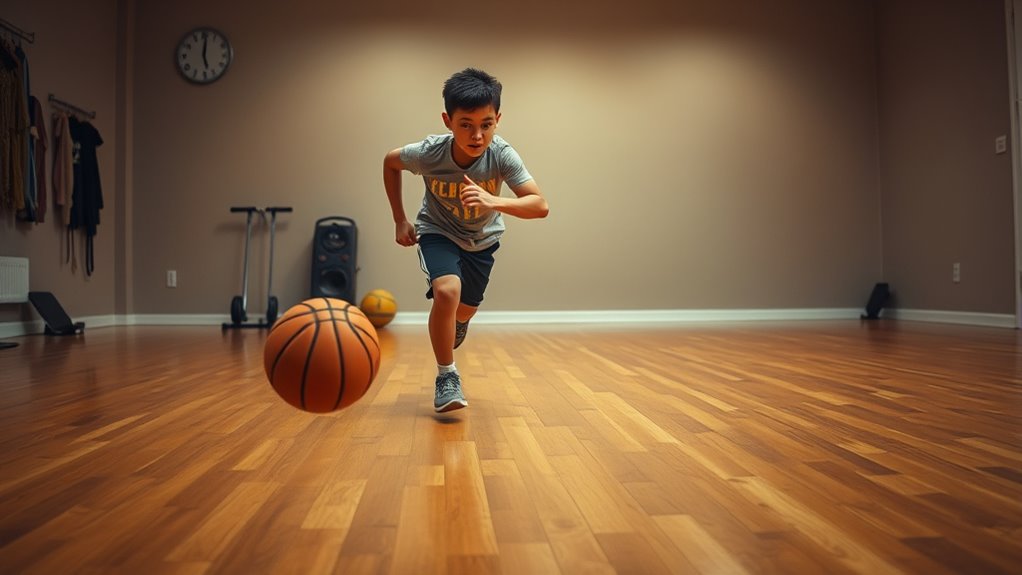
Building on your shooting practice, improving your dribbling skills can make you a more versatile player on the court. You can enhance your ball handling using household items like empty bottles, small boxes, or even rolled-up socks. Set up a simple dribbling course by placing these items in a line or scattered around a small space. Practice bouncing the ball or household item with one hand while moving around, focusing on control and quickness. These items challenge your dexterity and simulate defenders, helping you develop better touch and coordination. Incorporate crossover or behind-the-back moves as you navigate around household obstacles. This not only sharpens your ball handling but also keeps your skills sharp without needing a traditional basketball or court. Additionally, practicing with training methods like handling drills can improve your overall agility and responsiveness on the court. Engaging in these drills can also help you understand core traits such as focus and adaptability, which are essential for athletic performance. Moreover, understanding the importance of environmental awareness, even in a small space, can enhance your ability to adapt quickly during actual game situations.
Cone and Object Weaving for Agility

Start by setting up your course with cones or objects spaced evenly to challenge your agility. Focus on dribbling through the obstacles smoothly, maintaining control and speed. As you improve, gradually increase the pace to boost your agility and precision. Remember to incorporate proper lighting and a clear layout to enhance your training environment and stay motivated. Using agility training techniques can further improve your performance and help you navigate obstacles more efficiently. Incorporating dog breeds into your training can also add variety and fun to your practice sessions. Additionally, utilizing smart-home solutions such as timers and sensors can help track your progress and optimize your practice routines. Leveraging automation’s role in business intelligence can inspire methods to analyze your training data more effectively.
Setting Up the Course
To create an effective cone and object weaving course at home, you need to carefully plan and arrange your obstacles. Start by visualizing your court layout, assuring you have enough space for safe movement and clear pathways. Measure and mark the areas where you’ll place cones or objects, maintaining consistent spacing for balanced drills. During equipment setup, use durable cones or household items like bottles or chairs. Arrange them in a zigzag or straight-line pattern, depending on your focus. Keep the course simple yet challenging to simulate game-like agility. Make sure obstacles are stable and won’t tip over easily. Once everything is in place, double-check your layout for safety and flow. A well-planned setup ensures efficient practice and helps you maximize your agility training at home. Paying attention to spacing and alignment can significantly enhance the effectiveness of your drills, especially when considering proper track development techniques. Additionally, maintaining a consistent training environment can help track your progress and identify areas for improvement. Incorporating variations in obstacle placement can also keep the drills engaging and prevent plateauing. Regularly evaluating and adjusting your course can lead to better overall performance improvement in your agility skills.
Dribbling Through Obstacles
How can you improve your ball-handling skills at home? One effective way is practicing dribbling through obstacles like cones or objects. Set up a course with items spaced about a foot apart, simulating defenders or tight spaces on the court. Focus on obstacle navigation, weaving your dribble smoothly around each obstacle without losing control. Keep your head up and your body balanced while maintaining quick, controlled dribbles with both hands. This drill enhances your agility, improves your ability to change direction quickly, and sharpens your ball-handling under pressure. Consistent practice with obstacle weaving builds confidence and helps you stay composed during real-game situations. Make sure to vary speed and incorporate sudden stops to mimic game-like scenarios. Using proper comfort solutions for equipment, such as cushioned insoles or grip-enhanced balls, can also improve your training experience. Incorporating mental focus techniques during your drills can further enhance your concentration and performance under pressure. Additionally, paying attention to your dribbling technique ensures you maintain control and maximize your skill development. Incorporating regular practice sessions can accelerate your progress and help solidify new skills more effectively.
Increasing Speed and Control
Enhancing your speed and control during dribbling requires incorporating dynamic cone and object weaving drills. These drills boost agility by forcing quick direction changes, improving your reaction time. To maximize results, integrate plyometric exercises beforehand to develop explosive power, which translates into faster movements on the court. Set up cones or objects in a zigzag pattern and weave through them as swiftly as possible, focusing on tight, controlled dribbles. Incorporate reaction time drills by having a partner signal or call out directions unexpectedly, forcing you to adapt quickly. Consistent practice of these drills sharpens your agility, control, and overall game speed. Remember, the key is to stay focused, maintain low stances, and push your limits with each session.
Wall Ball Rebounds to Improve Hand-Eye Coordination

Practicing wall ball rebounds is an effective way to boost your hand-eye coordination right at home. Focus on ball rebound techniques that challenge your timing and control. Stand a few feet from the wall, toss the ball against it with one hand, and catch it with the other, maintaining a steady rhythm. Keep your movements quick and precise, aiming for consistent rebounds. As you improve, vary your throws—use different angles, speeds, or incorporate one-handed catches—to make your hand eye coordination drills more challenging. This drill enhances your reflexes, focus, and coordination, all essential for better basketball performance. Regularly practicing wall ball rebounds will sharpen your ability to anticipate ball movements and improve your overall game at the same time.
Jump Rope for Speed and Endurance
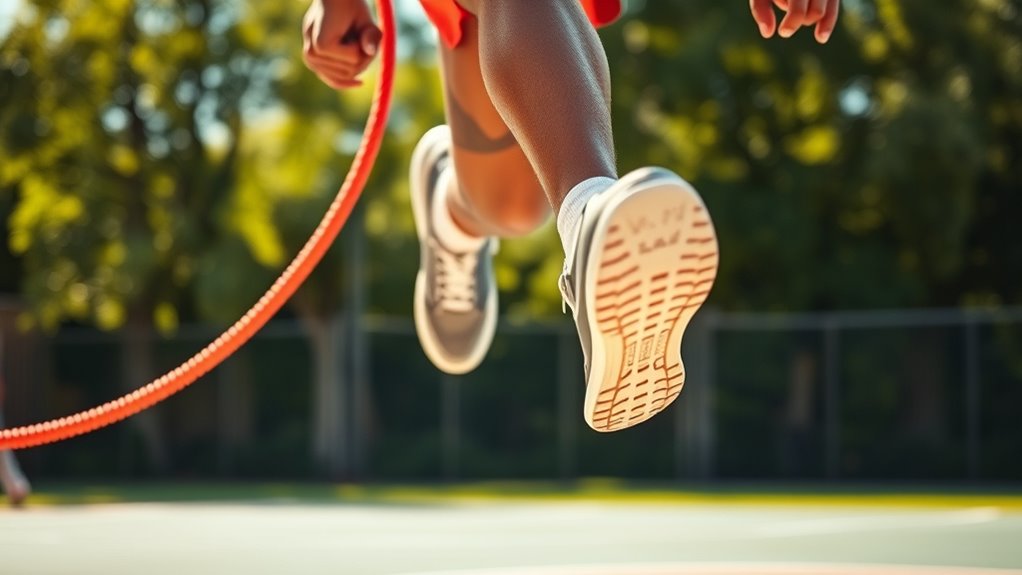
Jump rope is a highly effective way to boost your speed and endurance on the basketball court. Incorporating jump rope into your endurance training helps improve your cardiovascular fitness, allowing you to sustain high-level performance longer. By practicing different jump rope techniques, such as double unders or high knees, you challenge your coordination and agility. Consistent jump rope workouts increase your foot speed, making quick cuts and defensive movements more natural. You don’t need much space or equipment—just a quality jump rope and a few minutes daily. As you build endurance, you’ll notice your stamina improve during intense game moments. This simple drill is perfect for at-home training, helping you stay sharp, fast, and ready to outpace your opponents.
Close-Range Shooting Practice for Better Touch

Developing a reliable touch around the basket is essential for scoring efficiently in tight situations. To improve, focus on ball hand coordination and shot release timing. Practice close-range shots repeatedly, emphasizing a smooth, consistent motion. Use these strategies:
- Keep your shooting hand steady and aligned with the target
- Focus on the ball hand coordination for better control
- Time your shot release precisely as you reach the peak of your jump
- Use a one-two rhythm to develop muscle memory
- Vary your angles and distances for adaptability
Stationary Defensive Stance and Footwork Exercises

A solid stationary defensive stance is the foundation of effective on-ball and off-ball defense, helping you stay balanced and ready to react. To develop this, focus on maintaining a low, wide stance with knees bent and weight on the balls of your feet. Your hands should be active and positioned to challenge passes or shots. Incorporate footwork drills like slide shuffles, defensive slides, and quick pivots to improve lateral movement and reaction time. Practice staying low while moving laterally, making sure your hips stay square to your opponent. Consistent drills will enhance your agility, balance, and overall defensive presence. Building strong defensive stance habits at home will translate into better on-court performance, allowing you to stay in front of your man and disrupt plays effectively.
Cardio Drills to Boost Overall Stamina
Building strong defensive stance habits at home not only improves your positioning but also sets the stage for enhanced endurance. Cardio drills are essential for boosting your overall stamina, making you quicker and more resilient on the court. To elevate your mental toughness, incorporate high-intensity interval training (HIIT), pushing through fatigue while maintaining focus. These drills also reinforce teamwork strategies by practicing partner drills or timed group challenges, simulating game-like conditions. Consistency and effort are key to progress. Here are effective cardio drills to try:
- Jump rope intervals
- Sprinting drills in place
- Burpees with lateral jumps
- Mountain climbers
- Shuttle runs in a confined space
Frequently Asked Questions
What Equipment Is Essential for At-Home Basketball Drills?
You mainly need a good basketball and a hoop or a suitable surface for practicing ball handling and shooting techniques. A pair of comfortable athletic shoes helps maintain proper footwork. If you want to enhance your drills, consider a rebounder or a training ball to improve your skills. These essentials allow you to focus on key areas like ball handling and shooting techniques, making your at-home practice effective and efficient.
How Often Should I Practice These Drills for Noticeable Improvement?
You should practice these drills 4-5 times a week to see noticeable improvement within a few weeks. Consistency is key, so sticking to a regular practice schedule accelerates your improvement timeline. Keep your sessions focused and challenging, and you’ll develop better skills faster. Remember, regular practice not only boosts your game but also builds confidence, helping you perform better during actual matches.
Can Beginners Effectively Do These Drills Without Prior Experience?
Yes, beginners can do these drills effectively with some progression tips and beginner modifications. Start slow, focusing on proper form and gradually increase intensity. Use lighter balls, shorter durations, or support to build confidence. As you improve, add more challenging variations. Consistent practice with patience helps you develop skills safely, so don’t rush—embrace the process, and you’ll see progress over time.
How Can I Track My Progress During These At-Home Drills?
Think of your progress tracking as a lighthouse guiding your basketball journey through foggy nights. To evaluate your performance, record each drill session, noting improvements in shot accuracy, dribbling speed, and stamina. Use a journal or app to log these details, set specific goals, and revisit them regularly. This way, you’ll see your skills grow like a tree reaching for the sun, fueling your motivation and clarity.
Are There Safety Precautions to Consider During Intensive Drills?
To prevent injuries during intensive drills, always prioritize injury prevention by incorporating a proper warm-up before starting. This prepares your muscles and joints, reducing strain and risk. Make sure to listen to your body, avoid overexertion, and stay hydrated. If you feel pain or discomfort, stop immediately. Using proper technique and gradually increasing intensity also helps keep you safe while improving your basketball skills.
Conclusion
With these simple, skill-sharpening drills, you’ll see your game grow stronger from the comfort of your home. Consistent practice boosts your balance, ball-handling, and shooting skills, making you a better player on the court. So, stay focused, stay flexible, and keep pushing yourself. Remember, dedication and daily drills deliver dramatic development. Start today, and watch your basketball brilliance bloom beyond boundaries!