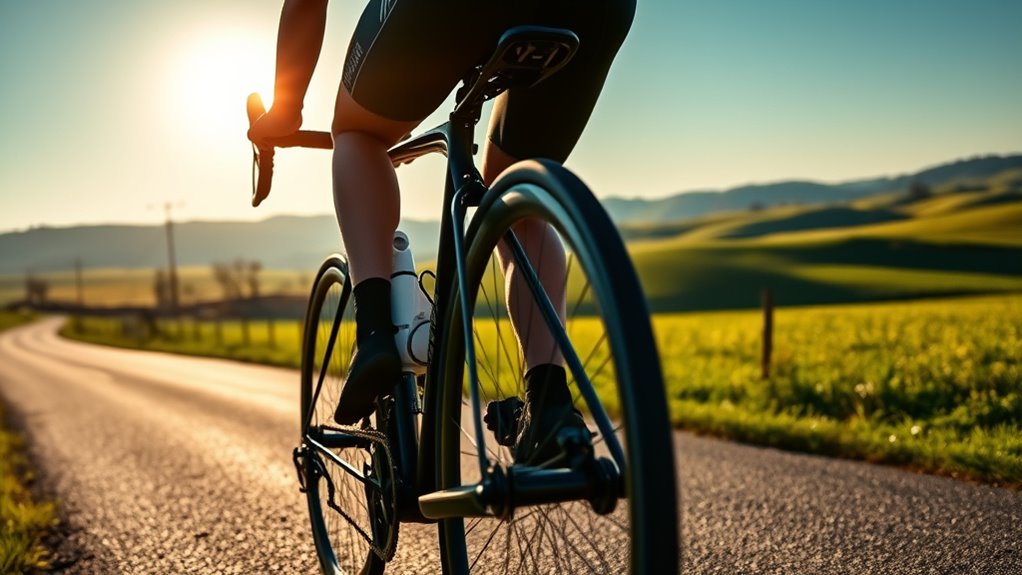
To cycle 100 miles, start with a structured plan that gradually increases your distance to build endurance. Focus on consistent training, practice proper nutrition and hydration strategies, and guarantee your bike is well-maintained for comfort and efficiency. Adjust your bike fit to prevent fatigue and ride in different lighting conditions for safety. Keep these tips in mind, and you’ll discover more ways to prepare effectively for your century ride.
Key Takeaways
- Gradually increase your weekly mileage with long rides to build endurance safely.
- Develop and test a nutrition and hydration plan during training to prevent stomach issues.
- Ensure bike readiness by performing thorough maintenance and adjustments before intense training.
- Incorporate comfort and safety gear, including proper bike fit and visibility lights, for long-distance riding.
- Monitor fatigue levels and incorporate rest days to avoid overtraining and promote steady progress.
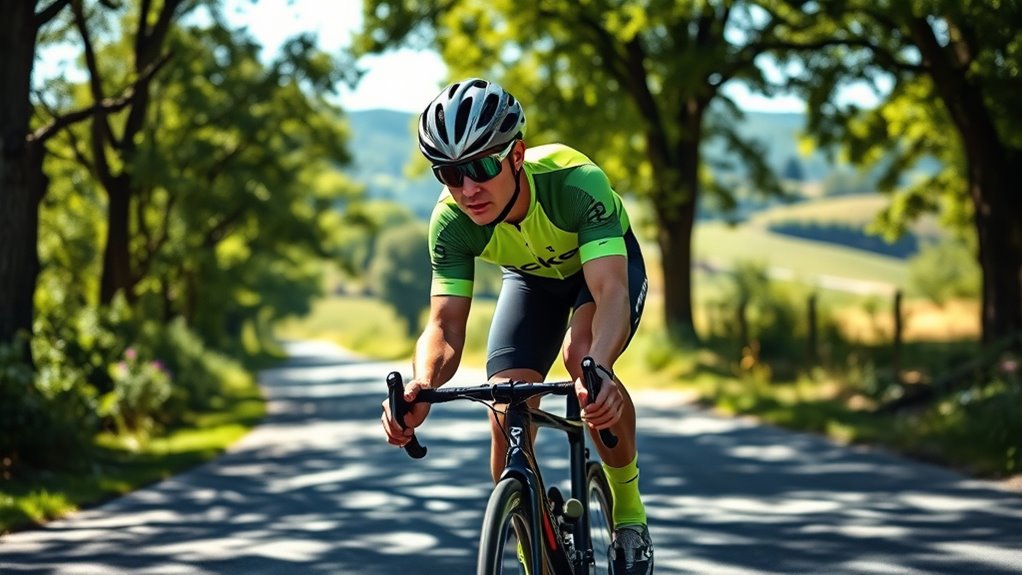
Preparing for a century ride is all about strategic training and gradual buildup. You want to guarantee your body is ready for the long miles ahead, and that your bike is in top shape to handle the distance safely and efficiently. To start, focus on your nutrition planning. Proper fueling is vital; you’ll need to develop a nutrition strategy that keeps your energy levels steady throughout your ride. This means practicing with the foods and drinks you plan to consume on the day of the event. Pack easy-to-digest carbs like energy gels, bananas, or energy bars, and stay hydrated by drinking water or electrolyte solutions regularly. Don’t wait until the last minute to figure out what works best—test your nutrition during training rides to avoid surprises or stomach issues on the day of the ride.
Alongside nutrition, bike maintenance is a key aspect of your preparation. Before ramping up your training, give your bike a thorough check-up. Make sure your tires are properly inflated and free of cuts, your chain is clean and lubricated, and your brake pads are in good condition. Check your gears to ensure smooth shifting, and inspect your bike for any signs of wear or damage. Having a well-maintained bike not only prevents mechanical failures mid-ride but also makes pedaling more efficient and comfortable. If you’re unsure about bike maintenance, consider visiting a local bike shop for a tune-up well before your ride date. This way, you can focus on training without the worry of equipment issues.
As you progress, incorporate rides that gradually increase in distance, paying close attention to your nutrition and bike condition each time. Use these longer rides to fine-tune your nutrition plan, figuring out what and when to eat and drink to sustain your energy. Also, take the opportunity to practice your bike maintenance skills—like fixing a flat or adjusting gears—so you’re prepared for any minor issues during the ride. Remember, consistency is key; regular, incremental increases in mileage will help build your endurance without overtaxing your body. Additionally, understanding the contrast ratio of your bike’s lighting system can improve visibility and safety during early morning or late evening training rides.
Lastly, guarantee your bike setup is comfortable and suited for long-distance riding. Adjust your saddle height and handlebar position for optimal comfort, and consider clipless pedals if you’re used to them. Proper positioning reduces fatigue and helps you maintain a steady pedaling rhythm. With thoughtful nutrition planning and diligent bike maintenance, you’ll be setting yourself up for a successful century ride—confident, prepared, and ready to enjoy the journey mile by mile.
Frequently Asked Questions
What Should I Eat Before a 100-Mile Ride?
You should eat a balanced, carb-rich meal about 3-4 hours before your ride, focusing on foods like oats, bananas, or bread with peanut butter to fuel your muscles. Don’t forget hydration strategies—drink plenty of water beforehand and consider a sports drink for electrolytes. Keep snacks light and easy to digest, like energy bars or gels, for quick energy during the ride. Proper nutrition planning helps maintain your energy and stamina.
How Do I Prevent Saddle Soreness During Long Rides?
Imagine your saddle as a trusted friend—comfort starts with a proper bike fit and ample saddle padding. You prevent soreness by ensuring your bike fits perfectly, reducing unnecessary friction, and choosing a saddle with good padding that cushions your ride. Regularly adjust your position, shift your weight, and take breaks to keep discomfort at bay. With these steps, you’ll glide through long rides, saddle soreness a distant memory.
What Gear Is Essential for Century Rides?
For a successful century ride, you need essential gear like cycling gloves to protect your hands and improve grip. A hydration pack is crucial to stay fueled and hydrated over the long distance. Don’t forget to carry tools for basic repairs, a spare tube, and energy snacks. Proper clothing, sunglasses, and a map or GPS also help guarantee comfort and safety throughout your 100-mile journey.
How Do I Stay Motivated During Training?
To stay motivated during training, focus on setting clear goals and tracking your progress to see your improvements. Use motivation strategies like rewarding yourself after each milestone and cycling with friends for encouragement. Build mental resilience by visualizing success and reminding yourself why you started. Keep a positive mindset, celebrate small victories, and remember that consistent effort will help you conquer the century ride.
What Are Common Mistakes to Avoid on a Century Ride?
Mindful mistakes might mar your century ride. Avoid overexertion by sticking to steady pacing techniques, conserving energy for the long haul. Prioritize proper hydration strategies—sip regularly to prevent dehydration and fatigue. Don’t neglect nutrition, and skip skipping breaks; they’re essential for recovery. Finally, don’t ignore bike checks; mechanical issues can derail your ride. Stay vigilant, stay hydrated, and pace yourself—success depends on smart strategies every mile.
Conclusion
Think of your century ride journey as climbing a mountain—each training ride is a step up. With consistent effort, you build strength and endurance, turning formidable peaks into manageable hills. Trust your training plan, stay steady, and enjoy the view from the top. Before you know it, you’ll be crossing the finish line, feeling triumphant, like reaching the summit after a long climb. Keep pedaling forward—your century adventure awaits!