To prepare for open-water swims in oceans or lakes, prioritize safety gear like a brightly colored swim cap, wetsuit, swim buoy, and waterproof navigation devices to stay visible and secure. Mentally, develop resilience through visualization, segmentation of your route, and positive self-talk to boost confidence and stay calm. Practice mindfulness and familiarize yourself with environmental sensations. Mastering both physical and mental strategies will set you up for success — if you keep exploring these tips, you’ll be ready for any challenge.
Key Takeaways
- Equip yourself with essential safety gear like brightly colored caps, wetsuits, swim buoys, and navigation devices for visibility and security.
- Develop mental strategies such as visualization, segmentation, and positive self-talk to boost confidence and manage apprehension.
- Familiarize yourself with water conditions, practice mindfulness, and breathing exercises to stay calm amid environmental challenges.
- Integrate safety equipment use with mental preparedness to enhance overall resilience and focus during open-water swims.
- Approach open-water swimming as a combination of physical safety and mental readiness for successful ocean or lake experiences.

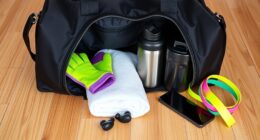
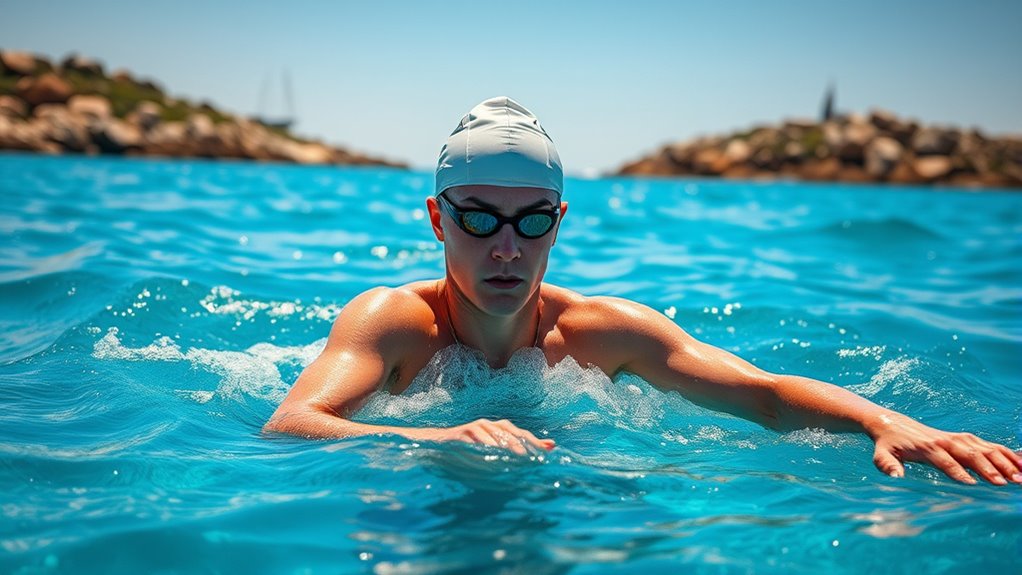
Have you ever wondered what it takes to master open-water swimming? It’s not just about knowing how to swim; it’s about being prepared for the unique challenges that come with swimming in the ocean or a lake. First and foremost, safety gear plays a crucial role in keeping you secure. A brightly colored swim cap ensures you’re visible to boats, kayakers, and fellow swimmers. Wearing a wetsuit, if conditions call for it, provides buoyancy, warmth, and protection from scrapes or stings. Consider using a swim buoy—an inflatable float you attach to your waist—which acts as a visible marker and offers a safe place to rest if you tire. For navigation, a waterproof compass or a GPS device can help you stay on course, especially in unfamiliar waters. These tools are essential safety gear that give you peace of mind, allowing you to focus on your technique and endurance rather than worrying about drifting off or losing orientation. Additionally, understanding the effects of essential oils for respiratory health can help you breathe more easily during your swim if you experience congestion or breathing difficulties.
Beyond physical safety gear, mental strategies are equally vital for a successful open-water swim. It’s normal to feel apprehensive when facing open water, but developing mental resilience can make all the difference. Visualize your route beforehand, mentally rehearsing each stroke and breathing pattern. This mental map can boost your confidence and reduce anxiety. Break the swim into manageable segments—focusing on reaching a buoy or a specific landmark—and celebrate small victories along the way. If you start feeling overwhelmed, remind yourself to breathe deeply and stay calm. Positive self-talk is powerful; tell yourself that you’re prepared and capable. Familiarize yourself with the sensations of cold water, fatigue, and waves, so they don’t catch you off guard. Practicing mindfulness or breathing exercises before and during your swim can help you maintain focus and stay relaxed, even when conditions aren’t perfect.
Preparing your mind with these strategies, combined with the right safety gear, ensures you’re equipped both physically and mentally for open-water swimming. Remember, it’s not just about speed or distance—it’s an opportunity to learn, adapt, and grow more comfortable in these vast, unpredictable environments. With the proper gear and mental readiness, you’ll find yourself more resilient and capable, ready to face any open water challenge that comes your way.
Frequently Asked Questions
How Do I Choose the Right Wetsuit for Open-Water Swimming?
Choose a wetsuit with the right thickness, typically 3mm to 5mm, depending on water temperature. Make sure it fits snugly without being too tight, allowing full flexibility for comfortable swimming. Look for a wetsuit that offers good stretch and mobility, especially around your shoulders and arms. Test different sizes and styles to find one that keeps you warm, comfortable, and unrestricted for your open-water adventures.
What Are the Best Safety Tips for Swimming in Cold Water?
Think of cold water safety like preparing for a winter hike—you need to gear up and stay alert. To prevent hypothermia, wear a suitable wetsuit and limit your time in the water. Practice cold water acclimatization gradually, so your body adjusts. Always swim with a buddy, keep close to shore, and listen to your body—if you feel numb or dizzy, exit immediately. Safety first keeps your adventure enjoyable and safe.
How Can I Improve My Navigation Skills in Open Water?
To improve your navigation skills in open water, focus on landmark navigation and sighting techniques. Always pick a distinct landmark and keep it in your line of sight, adjusting your course as needed. Practice sighting every few strokes to maintain your direction, and use natural features or buoys as reference points. Consistent practice with these methods will boost your confidence and help you swim straight over longer distances.
What Should I Do if I Get Cramps During a Swim?
If you get cramps during a swim, stop and focus on muscle relaxation by gently stretching the affected area. Use your breath to calm yourself and try to relax your muscles. Stay hydrated with proper hydration strategies before and during your swim to prevent cramps. If possible, float on your back or tread water to ease the pain, and signal for help if needed.
How Do I Handle Unexpected Weather Changes While Swimming?
What do you do when weather unpredictability strikes during your swim? Stay calm and evaluate the situation quickly. If conditions worsen, head toward the nearest shore or safety boat. Keep emergency preparedness gear, like a whistle or waterproof phone, accessible. Do you have a plan for sudden storms? Always monitor weather reports before your swim and trust your instincts—safety comes first in unpredictable conditions.
Conclusion
Now that you’re equipped with the essentials, open-water swimming becomes both a challenge and a celebration. The vast ocean or calm lake may seem intimidating, but remember, they also hold your courage and determination. As you take each stroke, feel the freedom and serenity that contrast with the initial fear. Embrace the unknown, push your limits, and discover that the greatest achievement lies beyond your comfort zone. Plunge in—the water’s waiting.