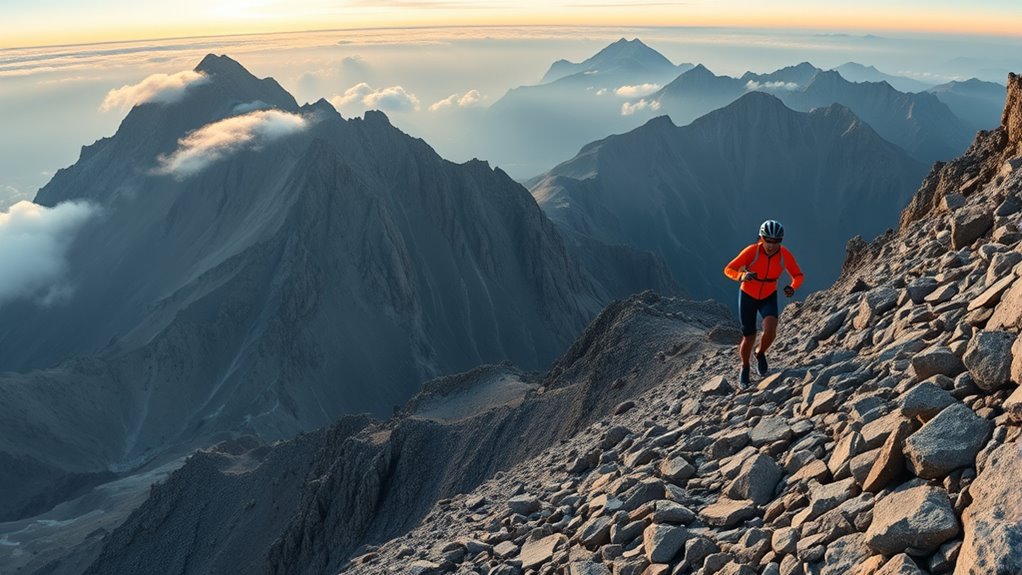

Training at high altitudes boosts your endurance by prompting your body to produce more red blood cells and enhance oxygen use. As you adapt, your muscles become more efficient, and your oxygen-carrying capacity increases. These changes help you perform longer with less fatigue. However, response varies among individuals, and proper acclimatization is essential to avoid risks. To discover how these physiological gains happen and how to maximize them, keep exploring the details behind altitude training.

Get workout gear delivered free — and shop member deals
- Fast, free delivery on millions of items
- Access to Prime Big Deal Days deals on October 6–7
- Prime Video, Amazon Music and more included
Key Takeaways
- High-altitude training enhances endurance by improving muscle efficiency and oxygen utilization.
- It stimulates increased red blood cell and hemoglobin production, boosting oxygen delivery.
- Adaptations lead to better aerobic energy production, delaying fatigue during prolonged activity.
- Individual responses vary; proper acclimatization is crucial to maximize benefits and prevent altitude sickness.
- These physiological changes can improve performance when returning to lower altitudes.

Have you ever wondered how athletes push their limits to improve performance? One method they often turn to is high-altitude training, a strategy designed to boost endurance by exposing the body to lower oxygen levels. When you train at high elevations, the air contains less oxygen, which directly impacts your oxygen saturation—the amount of oxygen your blood can carry. Initially, you might notice difficulty breathing or a decrease in performance, but your body begins to adapt quickly. Over time, your muscles become more efficient at using oxygen, a process known as muscle adaptation, which is key to enhancing endurance. This response is your body’s natural way of compensating for the reduced oxygen availability, prompting your muscles to become more effective at extracting and utilizing oxygen from your blood.
During high-altitude training, your body increases red blood cell production to carry more oxygen, which is a critical adaptation. This process takes several weeks and results in a higher hemoglobin concentration, meaning your blood can deliver oxygen more efficiently once you return to lower altitudes. The increase in red blood cells directly improves oxygen saturation levels when you’re back at sea level, giving you a physiological edge during competitions. Your muscles also develop a greater capacity for aerobic energy production, which delays fatigue and enhances overall endurance. These muscle adaptations are essential because they allow you to sustain longer periods of activity with less effort, ultimately elevating your athletic performance.
However, it’s important to recognize that not everyone responds equally to high-altitude training. Some athletes experience significant improvements, while others see minimal benefits or even setbacks if the training is too intense or prolonged. Proper acclimatization is crucial to avoid altitude sickness and ensure your body adjusts gradually. Many athletes use simulated high-altitude environments or “altitude tents” to mimic these conditions without leaving their training locations. This approach helps maintain consistent oxygen saturation levels necessary for ideal muscle adaptation without the risks associated with spending extended time at extreme elevations.
As an affiliate, we earn on qualifying purchases.
Frequently Asked Questions
How Long Should I Stay at High Altitude for Optimal Benefits?
You should stay at high altitude for about 2 to 3 weeks to maximize benefits while allowing for proper acclimatization. This period helps your body adjust and reduces the risk of altitude sickness. Remember, an adequate acclimatization period is essential to avoid symptoms like headaches and nausea. Listen to your body, and if you experience severe symptoms, consider descending to lower elevations to recover before continuing your training.
Can High-Altitude Training Improve Performance at Sea Level?
High-altitude training can improve your performance at sea level by increasing your red blood cell count and oxygen saturation. However, if you don’t adapt well, you might experience altitude sickness, which can hinder your progress. To get the benefits, you need to train carefully, allowing time for your body to acclimate. When done correctly, altitude training can boost your endurance and overall athletic performance at sea level.
Are There Risks Associated With High-Altitude Training?
You should know that high-altitude training carries risks like altitude sickness and hypoxia, which can seriously harm your health. When you ascend too quickly or stay too long without proper acclimatization, these dangers increase. It’s important to monitor your symptoms and give your body time to adapt. Ignoring these risks might lead to severe issues, so always train under medical supervision and listen to your body’s signals.
What Is the Best Altitude for Endurance Training?
You should aim for an altitude around 2,000 to 2,500 meters for endurance training, as it offers benefits without excessive risk. During the acclimatization process, you’ll adapt to lower oxygen levels, boosting red blood cell production. However, be mindful of altitude sickness; take time to adjust gradually, and listen to your body to prevent adverse effects while maximizing endurance gains.
How Does High-Altitude Training Affect Recovery Times?
High-altitude training can extend your recovery times because your body works harder to adapt to lower oxygen levels, which may lead to altitude sickness if you push too fast. To speed recovery, you should prioritize hydration strategies, drinking plenty of fluids to prevent dehydration. Listen to your body, gradually increase your altitude exposure, and give yourself extra rest days to recover fully and avoid altitude sickness.
As an affiliate, we earn on qualifying purchases.
Conclusion
Just like the legendary mountaineers who pushed their limits at Everest’s peak, you can discover new levels of endurance through high-altitude training. Embrace the challenge, knowing that the sky’s the limit for your performance. Remember, every ascent is a step toward greatness—so breathe in that thin air and rise above your goals. Elevate your training, and let the mountains inspire your journey to peak fitness.
red blood cell booster supplements
As an affiliate, we earn on qualifying purchases.
As an affiliate, we earn on qualifying purchases.
As an affiliate, we earn on qualifying purchases.
Fall Picks
fall essentials
As an affiliate, we earn on qualifying purchases.