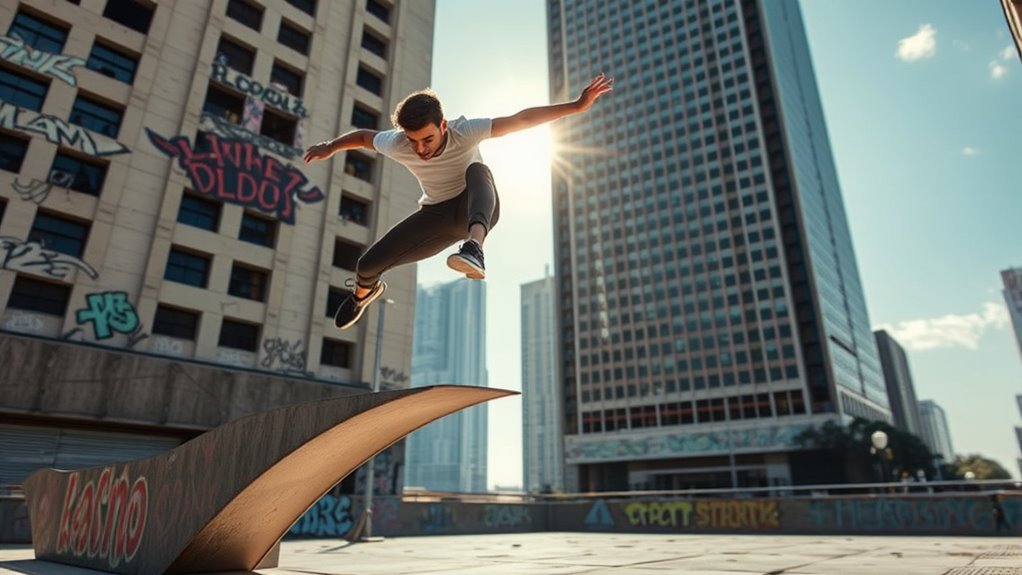

Yes, freerunning can definitely get you in shape. It turns urban spaces into a full-body workout by requiring you to climb, vault, jump, and balance through obstacles. This constantly challenges your muscles, improves your cardiovascular health, and boosts agility and strength. Plus, it sharpens your mental focus and problem-solving skills. With regular practice, freerunning offers a fun, effective way to build fitness while exploring your environment. If you want to know more, keep going and discover how it benefits both body and mind.
Key Takeaways
- Freerunning, a form of parkour, offers full-body workouts that improve strength, agility, and endurance.
- It enhances cardiovascular health through continuous, dynamic movements in urban environments.
- Practicing freerunning develops muscle, coordination, balance, and mental focus simultaneously.
- It can be scaled for all fitness levels using accessible urban features, making it practical and versatile.
- Freerunning promotes functional fitness and mental resilience by navigating real-world obstacles creatively.
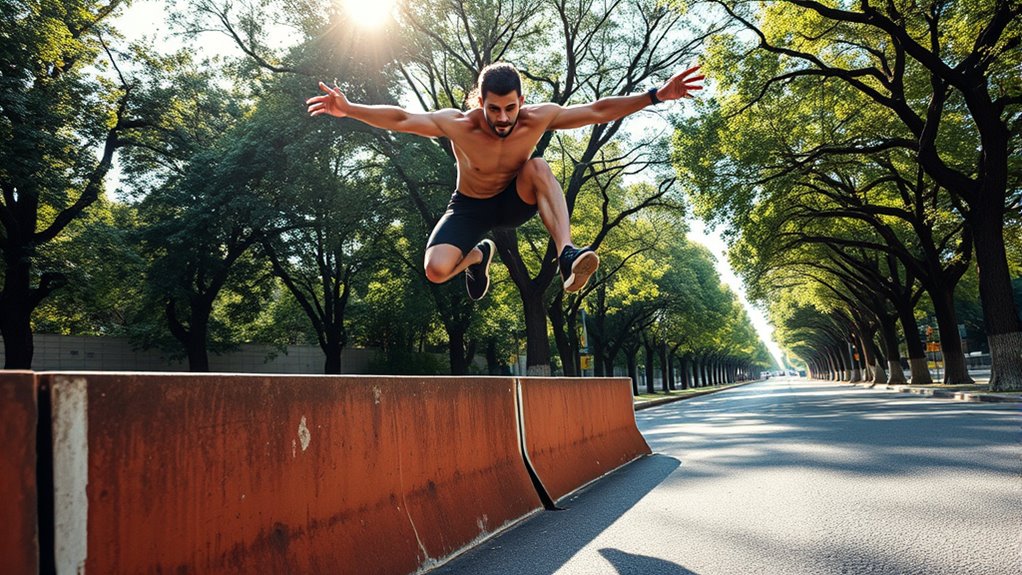
Ever wondered how to turn urban obstacles into a full-body workout? That’s exactly what parkour offers. It’s a dynamic way to use your environment—like railings, walls, and benches—to challenge your body in ways that traditional workouts might not. When you approach these obstacles with the mindset of a freerunner, you tap into a mix of agility, strength, and coordination. It’s not just about jumping from point A to B; it’s about fluidly maneuvering your surroundings, transforming everyday urban features into a personal obstacle course. This approach is similar to martial arts in that it emphasizes control, precision, and mental focus, but instead of fixed forms, you adapt on the fly, learning to overcome obstacles with creativity and confidence.
Think of parkour as an outdoor, full-body circuit. Each obstacle you encounter becomes a chance to push your limits, build muscle, and improve your cardiovascular health. You’ll find yourself climbing, vaulting, balancing, and landing repeatedly—engaging muscles you might not target through conventional exercises. This constant movement mimics the intensity of obstacle courses designed for military training or adventure races, but you don’t need special equipment. The beauty of parkour is that it’s accessible everywhere. You can start in your local park or urban landscape, using what’s available to craft a workout that’s both fun and effective.
Transform your surroundings into a full-body workout with climbing, vaulting, balancing, and landing—no equipment needed.
Learning parkour isn’t just about physical gains; it’s also about mental resilience. As you practice, you develop problem-solving skills—figuring out how best to clear a gap or climb a wall—and boost your confidence with each successful attempt. It’s a full-body workout that emphasizes active engagement and adaptability. Furthermore, many practitioners incorporate martial arts principles into their training, such as discipline, control, and respect for the environment and your own body. This blend of skills makes parkour not only a fitness routine but a way to develop quick reflexes and body awareness.
As you become more comfortable with the movements, you’ll notice improvements in your strength, agility, and endurance. The constant challenge of overcoming obstacles keeps your workouts fresh and exciting, preventing boredom and plateaus. Plus, by transforming your urban environment into a personal obstacle course, you’re turning everyday spaces into opportunities for fitness. So, next time you see a railing or a wall, think of it as a potential part of your workout—an invitation to push your boundaries and discover what your body can do through the art of parkour.
Frequently Asked Questions
What Equipment Is Needed for Beginner Parkour Training?
To start beginner parkour training, you mainly need basic training gear like comfortable athletic shoes with good grip, comfortable clothing, and gloves if you prefer. Safety equipment is essential, so consider using wrist guards, knee pads, and a helmet for protection during practice. These items help you stay safe while building strength and agility. As you progress, you can add more specialized gear, but these essentials keep your training safe and effective.
How Safe Is Parkour for Untrained Individuals?
Parkour can be risky for untrained individuals, but you can minimize injury by understanding key risk factors and focusing on injury prevention. While falling or improper technique pose dangers, starting with professional guidance and basic skills helps you stay safe. Don’t rush into complex moves; gradually build strength and confidence. With proper precautions, you can enjoy parkour’s benefits while keeping safety at the forefront.
Can Parkour Help Improve Mental Toughness?
Yes, parkour can boost your mental toughness by enhancing your mindset resilience and confidence. As you master challenging moves, you learn to stay calm under pressure and overcome fear, building inner strength. The sense of accomplishment from conquering obstacles translates to everyday life, making you more resilient and confident. With consistent practice, you’ll develop a mindset that embraces challenges, helping you stay focused and motivated both on and off the course.
How Often Should I Practice to See Fitness Results?
Think of your progress as planting a seed; consistent training frequency nurtures it into a strong, thriving tree. To see fitness results, practice 3-4 times a week, allowing your body to adapt and grow. Track your progress with each session—note improvements and setbacks. Stay committed, and over time, you’ll notice your strength and agility blossoming, transforming your effort into impressive achievement.
Are There Age Restrictions for Practicing Freerunning?
Age restrictions for practicing freerunning vary, but safety considerations are key. If you’re a beginner or older, start with professional guidance to prevent injuries. Many parks and gyms welcome teens and adults, but younger kids should have supervision and age-appropriate training. Always listen to your body, respect your limits, and consult with trainers to guarantee safe practice. Prioritizing safety considerations helps you enjoy freerunning at any age.
Conclusion
So, are you ready to turn your workouts into an adventure? Parkour isn’t just about daring jumps and flips; it’s about transforming your body and mind. Imagine yourself conquering obstacles with confidence—it’s like revealing a secret superpower. Embrace the challenge, push your limits, and watch your fitness soar. Remember, every leap and vault brings you closer to a stronger, more agile you. The question is: are you brave enough to leap into your best self?