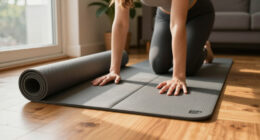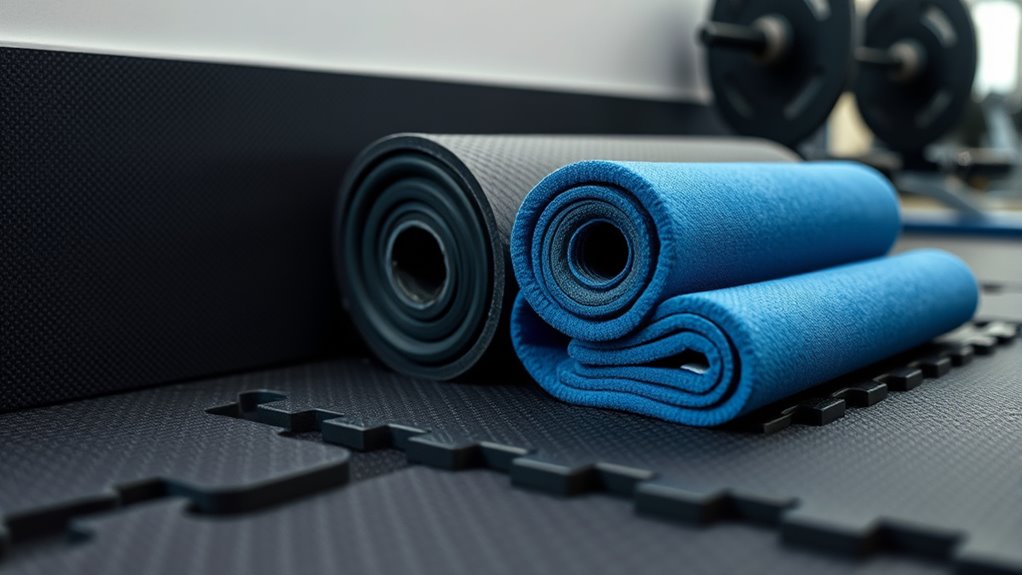

To create a safe home gym, choose durable mats made from rubber, foam, or vinyl that resist wear and provide stable, non-slip surfaces. Measure your space carefully and install the mats securely to prevent shifting. Thicker rubber mats are ideal for heavy lifting, while softer foam mats work well for cardio and stretching. Properly selected and installed flooring protects your equipment, reduces injury risk, and enhances comfort—keep exploring to learn more tips for a perfect workout foundation.

Get workout gear delivered free with Prime
- Fast, free delivery on millions of items
- Prime Video, Amazon Music and more included
- Member-only deals all year
Key Takeaways
- Choose durable mats made from rubber, foam, or vinyl for impact absorption and longevity.
- Measure your workout area accurately and select appropriately sized mats to prevent gaps and shifting.
- Ensure mats have non-slip backing and secure installation methods for safety during high-intensity exercises.
- Match mat thickness and material to your workout type: thicker rubber for weightlifting, softer foam for cardio and stretching.
- Properly maintain and regularly inspect mats to ensure continued safety, durability, and a stable workout surface.

Creating a home gym is a great way to stay fit, but choosing the right flooring is essential to protect your space and equipment. When it comes to selecting mats and padding, one of the most important factors is exercise mat durability. You want flooring that can withstand the wear and tear from weights, high-impact movements, and daily use without tearing or losing its cushioning. High-quality mats are made from dense rubber, foam, or vinyl, which offer a good balance of shock absorption and resilience. Durable exercise mats not only last longer but also provide a stable surface for your workouts, reducing the risk of slipping or injury. Additionally, considering the natural properties of materials helps ensure your flooring remains eco-friendly and sustainable over time.
Durable mats made from rubber, foam, or vinyl ensure longevity and safety in your home gym.
To maximize the lifespan of your flooring, it’s helpful to follow some flooring installation tips. First, measure your workout area carefully so you know how much material you’ll need, avoiding gaps or overlaps that can trip you up. Clean the subfloor thoroughly before laying down mats to ensure a smooth, secure fit. If you’re using interlocking foam tiles, snap them together tightly to prevent shifting during movement. For roll-out mats, unroll and allow them to flatten out before installation; this helps eliminate wrinkles and bubbles that could cause instability. Securing mats with double-sided tape or adhesive strips can add extra stability, especially in high-traffic areas. Always follow the manufacturer’s instructions for installation to get the best results and to maintain the durability of the flooring.
In addition, consider your workout types when choosing mats. If you’re lifting heavy weights, look for thicker, denser rubber mats that can absorb the impact and protect your floors from damage. For cardio or stretching, softer foam mats might be more comfortable, but ensure they’re still durable enough to handle frequent use. Proper installation and choosing the right materials ensure your home gym remains safe and functional over time. It’s also worth investing in mats with non-slip backing to prevent any accidents during intense sessions. Being mindful of free floating flooring options can also help in creating a flexible and adaptable workout space.
Ultimately, your goal should be to create a safe, comfortable environment that supports your fitness routine. High-quality exercise mats with good durability will serve you well for years, especially if you follow proper installation tips. Taking the time to select the right flooring now will save you headaches and expenses down the line. A well-installed, durable surface not only protects your equipment but also makes your workouts more enjoyable and safer, helping you stay motivated and injury-free.
Products Worth Considering

Bowflex PR1000 Home Gym

Oura Ring 4 Smart Ring – Silver – Size 8

Therabody Theragun Relief Massage Gun, 3-Speed, Black
As an affiliate, we earn on qualifying purchases.
Frequently Asked Questions
How Do I Clean and Maintain Gym Flooring Mats?
To clean and maintain your gym flooring mats, follow simple cleaning routines like sweeping or vacuuming regularly to remove dust and debris. Use a damp cloth with mild soap for spot cleaning, and avoid harsh chemicals. Maintenance tips include checking for wear and tear, rotating mats to prevent uneven aging, and ensuring they’re dry before use. Consistent care keeps your mats safe, clean, and prolongs their lifespan.
Can I Install Gym Flooring Over Existing Flooring?
Yes, you can install gym flooring over existing flooring, but proper surface preparation is key. Start by cleaning and leveling the current surface to guarantee good adhesion and stability. Check for any damage or uneven areas and repair them before flooring installation. This helps create a smooth, secure base, preventing shifting or lifting during workouts. Taking these steps guarantees a safe, durable gym environment for your home workouts.
Which Flooring Is Best for High-Impact Weightlifting?
For high-impact weightlifting, rubber flooring is your best choice. It offers excellent shock absorption to protect your floor and joints, and it also reduces noise, making your workouts quieter. Look for thick, dense rubber mats or tiles designed specifically for heavy lifting. They withstand heavy weights, absorb impact, and minimize noise transfer, ensuring a safe and comfortable workout environment while safeguarding your home flooring.
Are There Eco-Friendly Flooring Options Available?
Yes, eco-friendly flooring options are available for your home gym. You can choose sustainable materials like cork or bamboo, which are renewable and biodegradable. Recycled flooring, made from repurposed rubber or plastic, also offers a great environmentally conscious choice. These options help reduce your carbon footprint while providing durability and safety for your workouts. So, you can create a green, safe workout space without sacrificing quality or sustainability.
How Often Should I Replace My Gym Mats?
You should replace your gym mats every 1 to 3 years, depending on usage and wear. Regularly inspect for mold prevention, especially in humid environments, and address odor control to keep them fresh. If mats become torn, stained, or lose cushioning, it’s time for a replacement. Proper cleaning and care extend their life, but don’t hesitate to upgrade when they no longer provide safe, comfortable support during your workouts.
Conclusion
Choosing the right home gym flooring keeps you safe and ready for action—just like a trusty horse in a Wild West showdown. Whether you opt for mats or padding, prioritize durability, shock absorption, and comfort. Remember, your workout space is your sanctuary, so invest in quality flooring that supports your goals. With the right foundation beneath your feet, you’ll be ready to conquer each workout with confidence—no need for a time machine, just good planning.