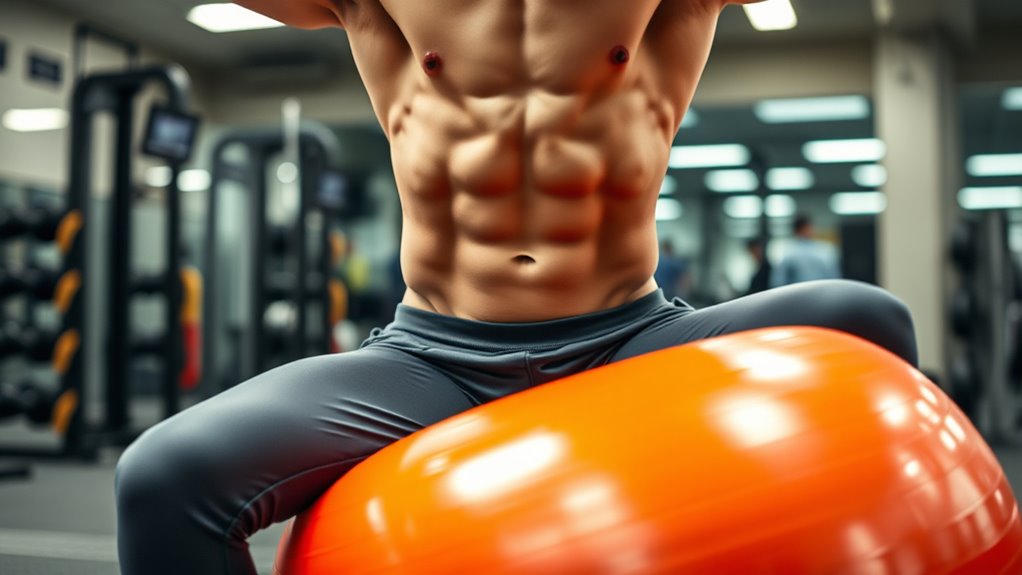
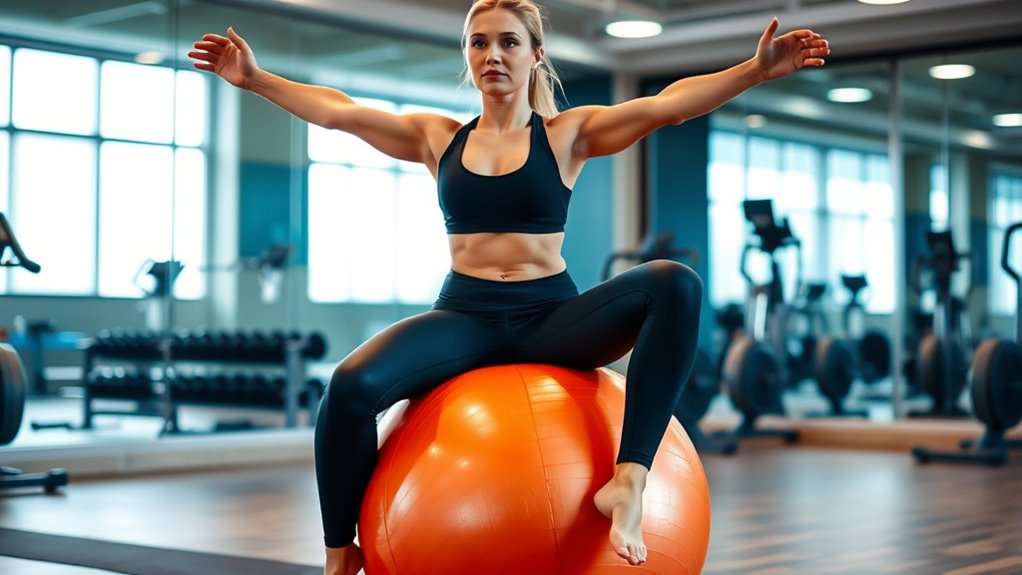
Stability ball workouts are a great way to boost your core strength, improve balance, and engage multiple muscles at once. By challenging yourself on an unstable surface, you activate stabilizer muscles that support your spine and enhance your posture. These exercises are adaptable for all fitness levels, making them perfect for recovery, seniors, or anyone looking to prevent injuries. Keep exploring to discover effective routines that will help you build strength and stability along the way.
Key Takeaways
- Stability ball workouts effectively enhance core strength, balance, and overall fitness through engaging multiple muscle groups simultaneously.
- Using an exercise ball supports proper posture and reduces injury risk by strengthening deep abdominal, back, and pelvic muscles.
- Ball exercises challenge your balance, improve coordination, and mimic real-life movements for better functional stability.
- They are adaptable for all fitness levels and ideal for rehabilitation, offering low-impact, controlled movements.
- Stability ball training activates stabilizer muscles, leading to improved movement efficiency, posture, and injury prevention.
Stability ball workouts are a versatile and effective way to improve your core strength, balance, and overall fitness. When you incorporate exercises using a stability ball, you’re engaging multiple muscle groups simultaneously, which enhances your ability to stay balanced and stable during daily activities. This makes stability ball training particularly valuable for balance training, helping you develop better coordination and proprioception. As your balance improves, so does your ability to perform everyday tasks with greater ease and confidence. Plus, stability ball exercises are gentle on your joints, reducing the risk of strain or injury, and making them suitable for people of all fitness levels.
One of the key benefits of stability ball workouts is their role in injury prevention. When you strengthen your core muscles—the deep abdominal, back, and pelvic muscles—you create a solid foundation that supports your spine and reduces the likelihood of injuries, especially those related to the lower back. An unstable surface like a stability ball forces you to activate stabilizer muscles that often go unnoticed during traditional exercises, promoting better posture and alignment. This added stability not only helps prevent injury but also improves your overall movement patterns, making you less prone to falls or strains.
Incorporating balance training through stability ball exercises challenges your body to maintain equilibrium in dynamic ways. For example, when you perform a plank or a seated balance pose on the ball, you’re forced to engage your core and leg muscles to stay steady. These exercises mimic real-life scenarios where maintaining balance is essential, such as walking on uneven surfaces or reaching for objects. By regularly practicing balance training with a stability ball, you train your nervous system to respond more quickly and effectively, which further enhances your stability during everyday actions. Additionally, the unstable surface encourages activation of stabilizer muscles, which are crucial for maintaining proper posture and preventing injuries.
Furthermore, stability ball workouts are highly adaptable. You can modify exercises to match your fitness level, gradually increasing difficulty as you gain strength and confidence. This adaptability makes them a great option for rehabilitation, seniors, or anyone recovering from injury who needs low-impact, controlled movement. As you progress, the increased challenge of balancing on the ball helps you build resilience, reducing the chance of future injuries.

Trailoom Microfiber Gym Towels, Quick Dry, Highly Absorbing, Odor-Free
- High Absorbency: Instantly absorbs sweat during workouts
- Fast Drying: Dries up to three times faster
- Bacteria-Free: Ensures quick, hygienic drying
As an affiliate, we earn on qualifying purchases.
Frequently Asked Questions
Can Beginners Safely Use a Stability Ball?
Yes, beginners can safely use a stability ball. Start with simple exercises to focus on core activation and balance improvement. Make sure the ball is the right size for your height, and perform movements slowly to avoid injury. Keep your core engaged throughout, and don’t push yourself too hard initially. Over time, you’ll build strength and confidence, making your workouts more effective and enjoyable.
How Often Should I Incorporate Stability Ball Exercises?
You should incorporate stability ball exercises 2-3 times a week to maximize core engagement and support injury prevention. Regular practice helps strengthen your core muscles, improving stability and balance. Make certain you listen to your body and avoid overdoing it, especially if you’re a beginner. Consistent, moderate sessions will yield the best results without risking injury, helping you build strength safely and effectively over time.
What Size of Ball Is Suitable for My Height?
Your stability ball size is essential for safe, effective workouts. For your height, choose a ball that matches your height compatibility—generally, a 55cm ball for under 5’4”, 65cm for 5’4” to 5’11”, and 75cm for over 6’. Using the right size feels like it’s made just for you, transforming your workouts into a powerhouse of strength and confidence. Don’t settle for less—find your perfect fit!
Are Stability Ball Workouts Effective for Weight Loss?
Yes, stability ball workouts are effective for weight loss. They offer cardio benefits by increasing your heart rate and muscle toning through engaging multiple muscle groups. Incorporating these exercises into your routine boosts calorie burn, helps improve balance, and builds strength. Consistent sessions on the exercise ball can support your weight loss goals while enhancing overall muscle tone and stability. Just stay committed and combine with proper diet for the best results.
How Do I Prevent Slipping During Exercises?
Imagine you’re in a medieval joust—maintain your balance by focusing on your foot grip and surface stability. To prevent slipping, make sure your feet are firmly planted, possibly using shoes with good traction. Choose a non-slip, rubberized surface for your workout area, and keep the exercise ball clean and dry. Engaging your core also helps stabilize your movements, making slipping less likely and your workout safer.

Acteon Microfiber Gym Towels 5 Pack, Quick Dry Silver ION Odor-Free Sweat Towel, Super Absorbent Fast Drying for Men & Women, Workout, Yoga, Running, Hiking, Travel – 16x30.5 Inch
- Odor-Free with Silver Ions: Prevents odors and wicks moisture
- Quick Dry Microfiber: Absorbs five times its weight and dries fast
- Durable and Lightweight: Long-lasting, easy to wash, and portable
As an affiliate, we earn on qualifying purchases.
Conclusion
Incorporating stability ball workouts into your routine gently guides you toward a stronger, more balanced core. As you embrace these exercises, you’ll find yourself subtly transforming your strength and stability, like a quiet sunrise gradually brightening the day. With patience and consistency, you’ll open new levels of confidence and resilience. So, let the ball be your humble partner on this journey—quietly supporting you as you build a healthier, more centered body from within.

BowFlex Results Series 552 SelectTech Dumbbells (Pair)
- Quick Adjustment Dials: Easily change weights from 5 to 52.5 lbs
- Space-Saving Design: Replace 15 weights with one set
- Premium Metal Components: Durable plates with secure locking system
As an affiliate, we earn on qualifying purchases.
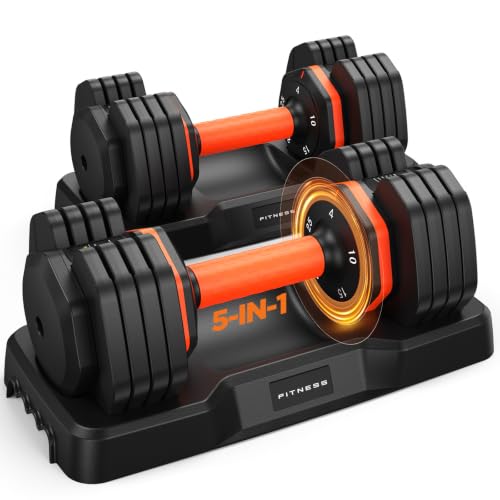
2026 Updated Adjustable Dumbbell Set of 2, 5-in-1 Weights Dumbbell Set with Storage Box, 25lbs Adjustable Weights with Anti-slip Silicone Grip, Weight Set For Home Gym Suit both Men and Women
- Weight Range: 4 to 25 lbs per dumbbell
- Quick Adjustment: Switch weights in one second
- Space Saving: Replaces multiple dumbbell sets
As an affiliate, we earn on qualifying purchases.