To build strong abs and back with Pilates, focus on controlled movements, mindful breathing, and correct alignment. Engaging deep core muscles through rhythmic breathing—expanding your rib cage on inhale and drawing the belly button inward on exhale—boosts effectiveness. Using equipment like stability balls or reformers can also help improve balance and muscle activation. Keep practicing with proper technique, and you’ll discover how to strengthen your core efficiently—more tips are just ahead.
Key Takeaways
- Pilates emphasizes controlled movements and proper breathing to activate deep core muscles, strengthening abs and back.
- Rhythmic breathing during exercises enhances muscle engagement and improves overall core stability.
- Using equipment like reformers and stability balls increases resistance and challenges core muscles effectively.
- Incorporating Pilates into your routine promotes better posture, balance, and spinal support, leading to a stronger back.
- Starting with foundational exercises and gradually adding equipment ensures safe progression and optimal core development.
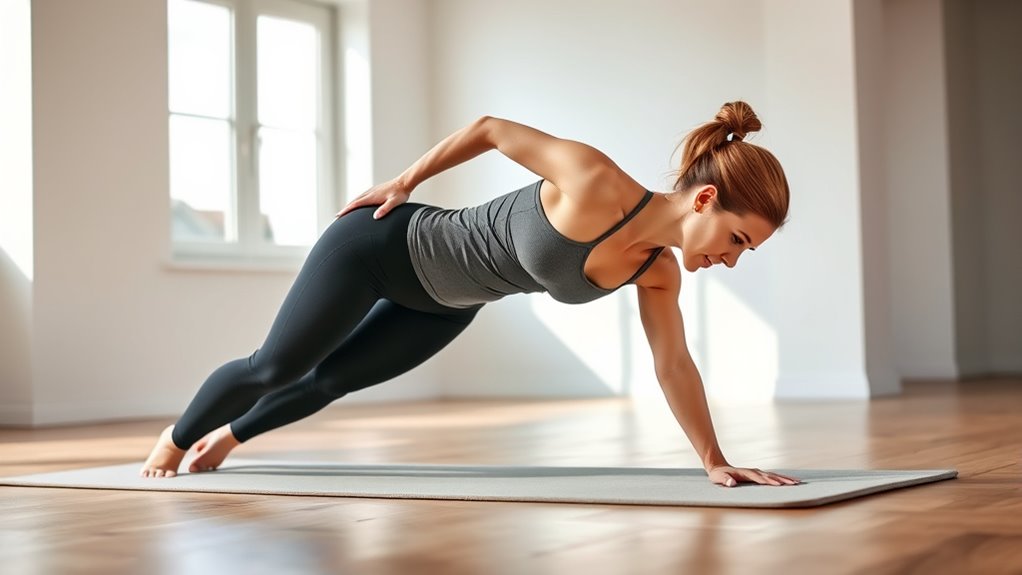
Have you ever wondered how to build a stronger, more stable core? The answer lies in the fundamental principles of Pilates, which focus on controlled movements, mindful breathing, and proper alignment. One of the most effective ways to enhance your core strength is by mastering breathing techniques. In Pilates, your breath isn’t just for oxygen; it’s an essential tool that helps activate your deep abdominal muscles and stabilizers. As you inhale, you want to expand your rib cage, and with each exhale, draw your belly button toward your spine, engaging your core muscles. This rhythmic breathing supports smooth, controlled movements, ensuring you’re not just going through the motions but actively strengthening your core with each exercise. Incorporating proper breathing techniques can significantly increase the effectiveness of your workout.
Another key aspect is selecting the right equipment options. While Pilates can be done on a mat, incorporating equipment like a Pilates reformer, stability ball, or resistance bands can greatly diversify your workout and target your muscles more effectively. The reformer, with its adjustable springs, allows you to modify resistance levels, making exercises more challenging or gentle depending on your fitness level. Stability balls help improve balance and engage your core by requiring constant stabilization. Resistance bands add external resistance, increasing muscle activation without the need for heavy weights. Using these equipment options, you can perform a wide range of exercises that target your abs and back, ensuring thorough core development.
Incorporate equipment like reformers, stability balls, and resistance bands for a more effective core workout.
Starting with basic exercises that emphasize proper breathing and form lays a strong foundation. For example, during a simple pelvic tilt or hundred, focus on inhaling to prepare and exhaling to engage your deep core muscles. As you become more comfortable, you can incorporate equipment, like placing your feet on a stability ball during crunches or using the reformer for resisted leg pulls. These tools not only enhance muscle activation but also help you maintain proper alignment, reducing the risk of injury. Opting for equipment options also allows you to customize your workouts, making them suitable for beginners or advanced practitioners alike.
Consistent practice of Pilates, combined with mindful breathing and the thoughtful use of equipment options, will gradually build your core strength. This approach improves not just your abs and back but also enhances your posture, balance, and overall stability. Remember, it’s not about rushing through exercises but engaging your muscles mindfully and with control. With patience and persistence, you’ll notice your core becoming stronger, more resilient, and better equipped to support your daily movements.
Frequently Asked Questions
Can Pilates Improve Posture Beyond Core Strength?
Yes, Pilates can improve your posture beyond just core strength. It helps with posture correction by focusing on proper spinal alignment and muscle imbalances. As you practice, you’ll develop better awareness of your body, leading to improved habits throughout the day. Pilates exercises target the muscles supporting your spine, which enhances overall posture and reduces discomfort. Consistent practice promotes long-term spinal health and a more confident, upright stance.
Is Pilates Suitable for Pregnant Women?
Yes, Pilates can be suitable for pregnant women, but you should always prioritize pregnancy modifications and prenatal safety. You might find gentle, low-impact exercises help maintain strength and flexibility, easing pregnancy discomfort. However, consult your healthcare provider first. With proper adjustments, Pilates can support your changing body, improve posture, and prepare you for labor, making it a beneficial activity during pregnancy.
How Often Should Beginners Practice Pilates for Best Results?
You should practice Pilates 2 to 3 times a week for the best results as a beginner. Consistency is key, so stick to a regular practice schedule to see progress. Focus on proper form and listen to your body to prevent injury. Beginner tips include starting with gentle exercises, gradually increasing intensity, and taking rest days when needed. This approach helps build strength safely and effectively.
Are There Any Medical Conditions That Contraindicate Pilates?
If you have medical restrictions or spinal injuries, you should consult your doctor before starting Pilates. Some exercises may not be suitable for your condition, and certain movements could worsen your injury. Always inform your instructor about your medical history, so they can modify exercises for your safety. With proper guidance, Pilates can be adapted to support your recovery and strengthen your core without risking further harm.
How Does Pilates Compare to Traditional Core Exercises?
You’ll find that Pilates emphasizes controlled movements and abdominal activation, making it more effective for building muscle endurance compared to traditional core exercises. While traditional workouts often focus on reps and intensity, Pilates promotes precise engagement of deep core muscles, leading to stronger abs and back. This approach reduces injury risk and enhances stability, so you get better core strength with less strain. Overall, Pilates offers a balanced, sustainable way to strengthen your core muscles.
Conclusion
By incorporating Pilates into your routine, you’re planting seeds of strength that grow into a resilient core, like a sturdy oak standing tall against the storm. With each mindful movement, you’re weaving a strong foundation beneath your body’s house, supporting every twist and turn. Keep nurturing these muscles, and you’ll watch your core blossom into a fortress of stability and grace, empowering you to face life’s challenges with confidence and ease.