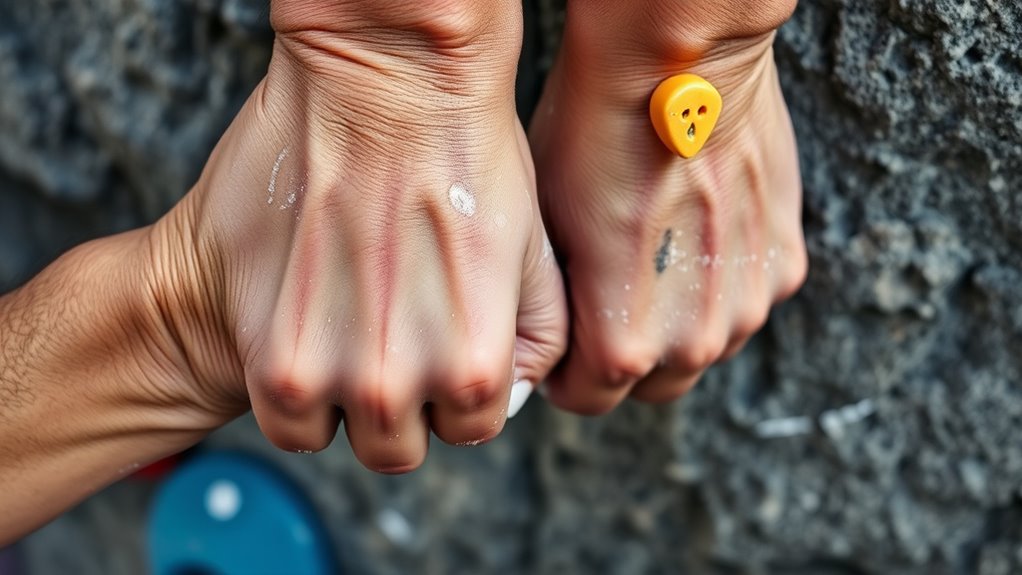

To boost your grip and strength for climbing, focus on exercises like dead hangs, pull-ups, and finger curls on a hangboard or grip trainer. Incorporating core workouts like planks also enhances overall stability. Use proper gear, such as climbing shoes and chalk, for better performance. Balance indoor and outdoor practice to refine technique and build strength. To discover more effective routines and tips, keep exploring ways to elevate your climbing game.
Key Takeaways
- Incorporate dead hangs, pull-ups, and finger curls on fingerboards or grip trainers to target finger and grip strength.
- Use climbing-specific exercises like farmer’s carries and towel wrings to enhance grip endurance.
- Combine core workouts such as planks and leg raises to improve overall climbing stability and power.
- Balance indoor and outdoor training to develop both strength and technical skills effectively.
- Gradually increase exercise difficulty and intensity to prevent injury and promote consistent strength gains.
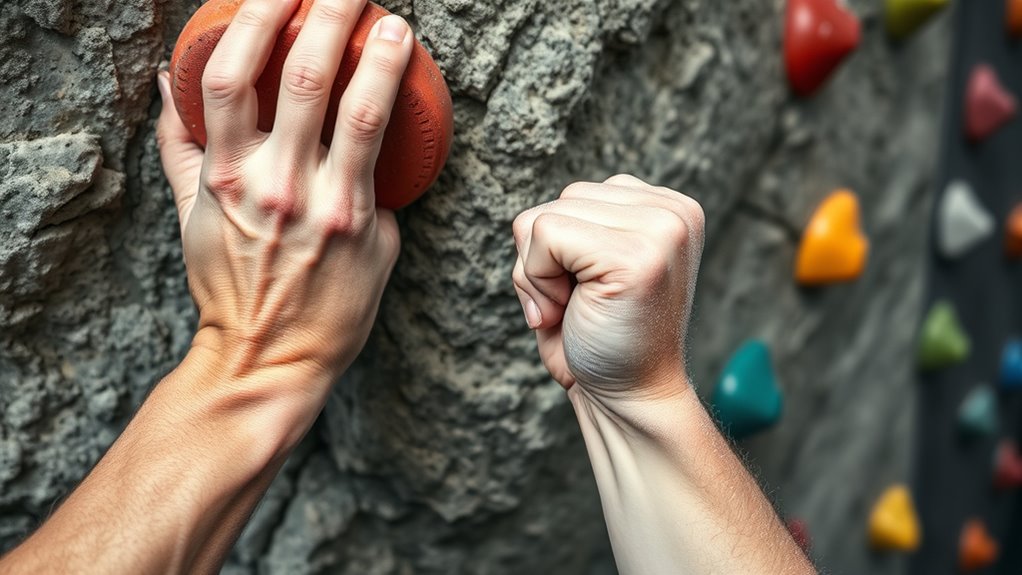
Are you looking to improve your rock climbing skills? Whether you’re a beginner or an experienced climber, building grip and overall strength is essential. One of the key decisions you’ll face is choosing between indoor vs. outdoor training. Indoor climbing gyms offer controlled environments, allowing you to focus on specific strength exercises without the unpredictability of outdoor conditions. They’re perfect for consistent training, especially when weather or daylight limits outdoor options. Outdoor climbing, on the other hand, provides real-world challenges that help develop your technique, mental toughness, and adaptability. Ideally, blending both approaches gives you the best of both worlds, but understanding the strengths of each can help tailor your training plan.
Indoor gyms offer controlled, consistent training, while outdoor climbing builds technique and mental toughness—combine both for optimal progress.
When it comes to building grip strength, your climbing gear essentials come into play. Investing in a good pair of climbing shoes that fit snugly provides better grip and control, which is essential for developing finger strength. Chalk is another indispensable gear component; it keeps your hands dry and maximizes your grip on holds, reducing fatigue and preventing slips. If you’re serious about grip training, consider using grip trainers or fingerboards like hangboards, which are designed specifically to develop finger and hand strength. These tools allow targeted exercises such as dead hangs, pull-ups, and finger curls, making your training both efficient and measurable. Additionally, understanding how to select reliable whole-home backup power can help ensure consistent training conditions, especially if you rely on electronic equipment like timers or fitness devices during your routines.
To boost your grip and overall strength effectively, incorporate exercises that simulate climbing motions. For example, dead hangs on a fingerboard or pull-ups on a sturdy bar help develop finger and forearm muscles. You can also do farmer’s carries or towel wrings to build grip endurance. Remember to start with manageable intensity, gradually increasing the difficulty to avoid injury. Rest days are just as important as training days because they allow your tendons and muscles to recover and grow stronger.
Climbing-specific strength exercises should be complemented with core workouts, as a strong core stabilizes your body, making each move more efficient. Incorporate planks, leg raises, and rotational exercises into your routine for best results. Consistency is key; set a schedule that allows you to train grip and strength multiple times a week, but always listen to your body to prevent overtraining. Whether indoors or outdoors, having the right gear and targeted exercises will accelerate your progress, helping you become a stronger, more confident climber.
Top picks for "rock climb train"
Open Amazon search results for this keyword.
As an affiliate, we earn on qualifying purchases.
Frequently Asked Questions
How Often Should I Incorporate Grip Exercises Into My Climbing Routine?
You should incorporate grip exercises into your climbing routine 2-3 times a week, ensuring proper training frequency. Be sure to include recovery strategies like rest days and stretching to prevent overtraining and injury. Listen to your body; if you feel excessive fatigue or pain, give yourself more time to recover. Balancing intense grip workouts with adequate recovery will help you build strength safely and improve your climbing performance.
Are There Any Risks of Overtraining Grip Muscles?
You risk overtraining your grip muscles if you push too hard without proper rest. Muscle fatigue can mask pain, leading to tendon injuries that could sideline your climbing. Pay close attention to signs of overuse, like persistent soreness or decreased strength. Incorporate rest days, vary your exercises, and listen to your body. Ignoring these cues might seem harmless at first, but the consequences can be serious and long-lasting.
Can Grip Strength Exercises Improve Performance on All Climbing Routes?
Grip strength exercises can improve your performance on many climbing routes, especially if you focus on training consistency. By regularly challenging your grip muscles, you promote muscle hypertrophy, leading to increased strength. However, not all routes require the same grip strength, so tailor your exercises to target specific holds and movements. Consistent training helps you adapt faster, enhancing overall climbing ability and reducing fatigue during challenging routes.
What Equipment Is Best for At-Home Grip Strength Training?
You should use finger bands and grip trainers for effective at-home grip strength training. Finger bands help strengthen your fingers and improve endurance, while grip trainers target overall hand and forearm strength. These tools are compact, affordable, and easy to use anywhere. Incorporate them into your routine regularly, and you’ll see improvements in your climbing grip, making routes feel easier and more controlled.
How Long Does It Typically Take to See Improvements in Grip Strength?
You’ll notice grip strength improvements in about 3 to 6 weeks if you train consistently, like forging a sturdy grip that can hold firm through a mountain’s challenge. Keep training 2-3 times weekly, and prioritize recovery strategies like stretching and rest to prevent fatigue. Imagine your fingers becoming more agile and powerful, gripping holds with confidence—this steady progress rewards your dedication and smart recovery.
Conclusion
By consistently incorporating grip and strength exercises into your routine, you’ll notice improvements in your climbing ability. For example, imagine Sarah, who struggled on overhangs but added fingerboard training and targeted grip work. After a few months, she conquered her first V8 boulder problem. Stay dedicated, listen to your body, and keep challenging yourself. With perseverance and the right exercises, you’ll open new heights and enjoy climbing even more.