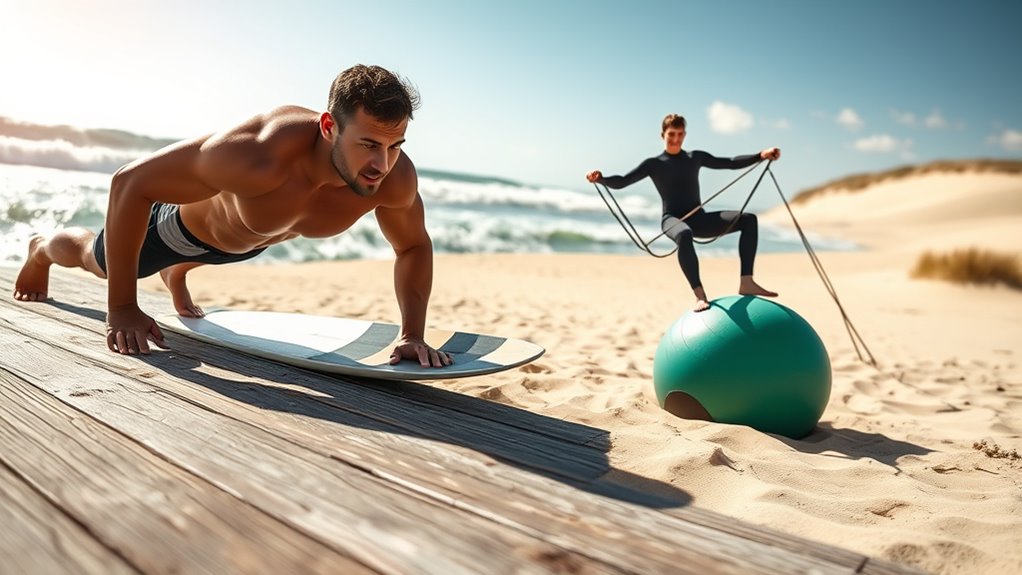

To improve your wave riding through land exercises, focus on balancing and core stability drills. Practice standing on one leg or use a balance board to mimic surf conditions and activate stabilizer muscles. Incorporate core workouts like planks, Russian twists, and leg raises to boost control and endurance. Using tools like BOSU balls adds extra challenge, helping you stay on your board longer and ride with more power. Keep exploring to reveal even more effective techniques.
Key Takeaways
- Incorporate balance exercises like single-leg stands and balance board drills to enhance stability on your surfboard.
- Strengthen core muscles with planks, Russian twists, and leg raises for better control and endurance during waves.
- Use tools such as BOSU balls or balance discs to challenge stability and mimic wave dynamics on land.
- Practice dynamic movements, including bodyweight squats and bird dogs, to improve coordination and reaction time.
- Consistently train at least three times weekly to develop stability, coordination, and overall surfing performance.

Surfing isn’t just about catching waves; it also demands strength, balance, and endurance. To excel on your board, you need to build a strong foundation that supports your movements on the water. One of the most effective ways to do this is through balance training and core stability exercises on land. These activities don’t just improve your ability to stay upright— they enhance your overall coordination and control, making every wave ride smoother and more powerful.
Balance training is essential because surfing requires you to stay steady on an unstable surface—your surfboard—while adapting to changing wave conditions. You can incorporate simple exercises like standing on one leg or using a balance board to mimic this challenge. These drills force your stabilizer muscles to activate, improving your proprioception and reaction time. When you focus on balance training regularly, you’ll notice a quicker response to shifts in the wave, helping you maintain your stance longer and with more confidence.
Balance exercises like standing on one leg or using a balance board enhance stability and reaction time on unpredictable waves.
Core stability plays a pivotal role in surfing because your core acts as the central link between your upper and lower body. A strong core provides the control needed to maneuver on the board, whether you’re paddling out, popping up, or riding a wave. You should dedicate time to exercises such as planks, Russian twists, and leg raises. These target your abdominals, obliques, and lower back, ensuring your torso remains steady even when the water gets choppy. Improved core stability also reduces fatigue, allowing you to surf longer sessions without losing form or control.
Integrating balance and core exercises into your land workout doesn’t require fancy equipment. Bodyweight moves like bird dogs, side planks, and single-leg squats are highly effective. You can also use tools like balance discs or BOSU balls to add an extra challenge. Consistency is key; aim for at least three sessions per week to see noticeable improvements. As your balance and core strength grow, you’ll find yourself riding waves with more ease and less effort.
Ultimately, these land-based exercises prepare your body for the dynamic demands of surfing. They help you develop the stability, coordination, and endurance needed to stay on your board longer and ride with greater control. Keep pushing your limits on land, and you’ll notice a real difference when you’re out on the water. Your next surf session will feel more natural, more powerful, and more fun.
Frequently Asked Questions
How Often Should I Perform Surfing-Specific Land Exercises?
You should perform surfing-specific land exercises 3 to 4 times a week to boost your cardio endurance and flexibility routines. Consistency helps build strength and stamina, making you more confident on your board. Incorporate dynamic movements like paddling simulations, balance drills, and stretching. Rest days are essential for recovery, so listen to your body. This routine keeps you active and prepared for your next surf session.
Can Land Exercises Replace Actual Surfing Practice?
Think of land exercises as your training wheels—they help, but can’t totally substitute riding waves. While wave simulation and paddle strength exercises boost your muscle memory and endurance, they can’t mimic the feel of actual surf. Practicing on land builds a strong foundation, but hitting the water sharpens your skills and timing. Combining both ensures you stay balanced and ready to ride every swell that comes your way.
What Equipment Is Essential for Surfing Fitness Training?
You’ll want essentials like a balance board or stability ball to enhance balance training and core stability. Resistance bands are great for strength-building exercises, while a foam roller helps with flexibility and muscle recovery. Incorporate dumbbells or kettlebells for functional strength, and a jump rope for cardio. These tools help mimic surfing movements, improve your stability, and boost overall fitness, making you a more confident wave rider.
How Do I Prevent Injuries During Land-Based Workouts?
To prevent injuries during land-based workouts, you should start with warm-up routines that increase blood flow and loosen muscles. Incorporate stretching techniques like dynamic stretches before exercise and static stretches afterward to improve flexibility and reduce strain. Always listen to your body, avoid pushing through pain, and gradually increase intensity. Proper form and rest days also help prevent overuse injuries, ensuring you stay safe while enhancing your surfing performance.
Are There Age-Specific Land Exercises for Surfers?
Yes, there are age-specific land exercises for surfers. You should focus on age-appropriate workouts that enhance balance, strength, and flexibility, tailored to your fitness level. Senior surfer exercises, for example, emphasize gentle stretching, low-impact cardio, and core stability to prevent injuries and maintain mobility. Incorporate modified yoga poses and resistance training to support your surfing skillset while respecting your body’s needs. Always consult a trainer for personalized recommendations.
Conclusion
By incorporating these land exercises into your routine, you’ll build a stronger, more balanced body ready to ride any wave that comes your way. Think of your fitness as the engine beneath your surfboard—powerful and reliable. With dedication, you’ll turn your limits into launch pads, soaring toward better waves and smoother rides. Remember, every splash on land brings you closer to mastering the ocean’s dance—so keep pushing, and soon you’ll be riding waves like a pro.