Expect your first CrossFit class to start with a warm-up that prepares your body and reduces injury risk. You’ll then move into skill or strength work on specific movements, followed by the workout of the day (WOD) that combines various exercises using equipment like kettlebells and jump ropes. The session ends with a cool-down to improve flexibility. Stay involved, and you’ll discover tips to help you succeed and enjoy your journey.
Key Takeaways
- Expect a structured class starting with warm-up, followed by skill work, the workout of the day (WOD), and cool-down.
- Be prepared for a variety of exercises including weights, cardio, and bodyweight movements tailored to all levels.
- Focus on proper form and listen to your coach’s modifications to ensure safety and effective training.
- Engage with the community for support, motivation, and camaraderie throughout the session.
- Prioritize good hydration, sleep, and mental readiness to maximize your first CrossFit experience.
Understanding the Structure of a Typical CrossFit Session

A typical CrossFit session is carefully structured to maximize efficiency and results. It usually begins with a brief warm-up to prepare your body, followed by skill or strength work that focuses on specific movements. Next comes the workout of the day (WOD), which combines various exercises designed to challenge your endurance, strength, and agility. Throughout the session, you’ll need some equipment essentials like kettlebells, jump ropes, and weight plates, so knowing what to have ready is helpful. Proper nutrition tips also play a vital role in recovery and performance, so fueling your body beforehand can make a significant difference. Additionally, understanding the importance of proper technique can help prevent injuries and improve overall effectiveness. The session often ends with a cool-down to prevent injury and promote flexibility. This structured approach ensures you get a well-rounded workout every time. Incorporating specialized equipment such as kettlebells and jump ropes can further enhance your training efficiency. Being aware of training intensity levels can also help you progress safely and effectively over time.
Common Exercises and Movements You’ll Encounter

CrossFit workouts feature a diverse range of exercises and movements that target different muscle groups and fitness components. You’ll quickly learn that basic movements like squats, deadlifts, and pull-ups form the core, but also include Olympic lifts and cardio bursts. Expect warm-up routines that prepare your body and reduce injury risk, often involving mobility drills and light cardio. Nutrition tips are essential to fuel your performance and aid recovery. Here’s a quick glance:
| Exercise Type | Focus Area |
|---|---|
| Olympic lifts | Explosive power and coordination |
| Bodyweight movements | Strength, endurance, and mobility |
| Cardio intervals | Cardiovascular health and stamina |
| Gymnastics skills | Flexibility, balance, and control |
How to Prepare Mentally and Physically for Your First Class

Preparing mentally and physically for your first CrossFit class sets the foundation for a successful experience. Focus on breathing techniques to stay calm and maintain energy during workouts. Practice deep, controlled breaths to improve your oxygen flow and reduce anxiety. Developing mental resilience helps you push through challenging moments and stay committed, even if you’re feeling overwhelmed. Visualize yourself completing movements and embracing the process. Get a good night’s sleep before your first session and hydrate well to guarantee your body is ready. Remember, everyone starts somewhere, so be patient with yourself. Approach the class with a positive attitude, ready to learn and adapt. Strengthening your mental resilience and practicing proper breathing will boost your confidence and help you get the most out of your first CrossFit experience. Additionally, understanding your cookie preferences can enhance your browsing experience and keep you informed about your data privacy. Incorporating knowledge about training fundamentals can also prepare you better for the physical demands of CrossFit. Being aware of grocery store hours can be helpful if you plan to stock up on essentials before or after your workout sessions. Recognizing the importance of proper recovery techniques can further optimize your training and prevent injuries.
Tips for Navigating the Community and Finding Support

Connecting with the community is a key part of enjoying your CrossFit journey. To build strong social connections, attend classes regularly and engage with your peers before and after workouts. Don’t hesitate to ask for advice or share your progress; most members are enthusiastic to support newcomers. Participating in team workouts or challenges fosters camaraderie and boosts your sense of belonging and social engagement. Remember, community support isn’t just about motivation—it’s about creating relationships that encourage consistent participation and growth. Building a positive environment also involves understanding team dynamics, which can enhance your overall experience. Being aware of motors and power output in equipment can help you better understand your workout intensity and safety measures. Developing an understanding of resilience and family influences can deepen your motivation and help you navigate challenges more effectively. Be friendly, approachable, and open to conversations. Over time, these social connections will become a valuable part of your fitness experience, making workouts more enjoyable and helping you stay committed to your goals. Recognizing family dynamics and influences can also inspire a deeper understanding of personal motivation and resilience in your fitness journey.
Safety Tips and Modifications for Beginners
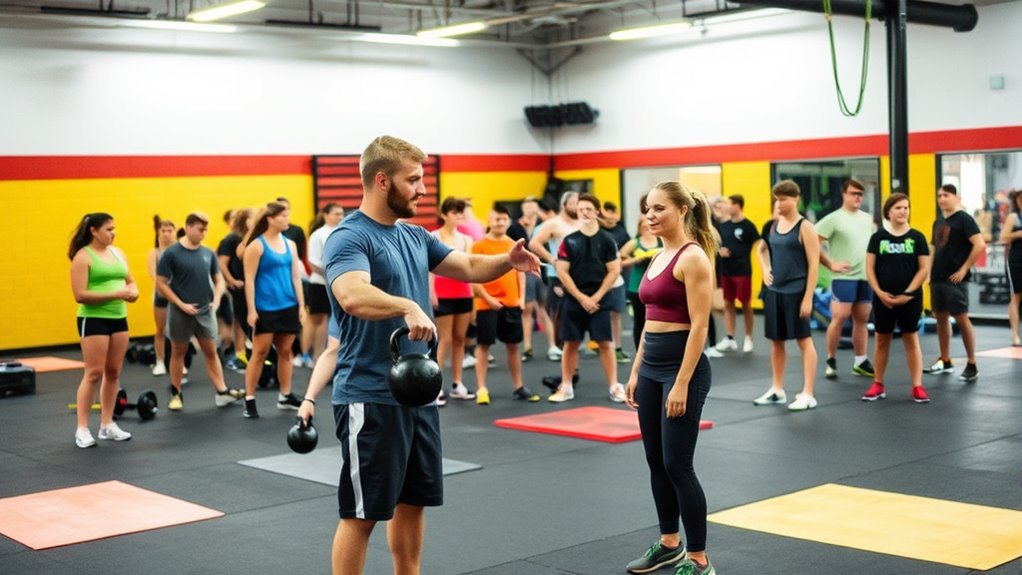
Starting your CrossFit journey safely is essential to prevent injuries and build confidence. Focus on injury prevention by listening to your body and avoiding overexertion. Use beginner modifications to adapt workouts, ensuring proper form and reducing strain. Always prioritize quality over quantity. Warm-up thoroughly and cool down afterward to prevent injuries. Communicate openly with your coach about any discomfort. Here’s a quick guide to modifications:
| Exercise Type | Modification Tips | Purpose |
|---|---|---|
| Heavy lifts | Use lighter weights or no weights | Reduce strain and injury risk |
| High-impact moves | Step instead of jump, slower pace | Minimize joint stress |
| Cardio | Shorter duration, lower intensity | Build endurance safely |
| Flexibility work | Gentle stretches, no bouncing | Prevent overstretching |
| Core exercises | Supportive modifications, slow reps | Avoid back injuries |
Additionally, understanding proper training techniques can further enhance safety and effectiveness during your workouts. Incorporating knowledge of the SDLC phases can help you better understand the structure of your training plan and plan your progression safely. Being aware of training progressions allows you to advance gradually and avoid unnecessary setbacks. Staying informed about current trends and best practices through hackathons can also inspire new workout ideas and safety innovations. Moreover, paying attention to proper form during each exercise is crucial in preventing injuries and maximizing benefits.
Frequently Asked Questions
How Do I Choose the Right Crossfit Gym for Beginners?
To choose the right Crossfit gym for beginners, prioritize a welcoming gym atmosphere where you feel comfortable. Look for trainers with strong credentials and experience working with newcomers. Visit multiple gyms to observe classes and ask about their beginner programs. A good gym will offer personalized guidance, clear instructions, and a supportive community that motivates you. Trust your instincts—find a place where you feel confident and excited to start your fitness journey.
What Should I Wear for My First Crossfit Class?
Worried about what to wear? Just toss on your gym attire and some workout gear, and you’re good to go. Irony? You’ll probably sweat more than you ever thought possible, so don’t overthink it. Opt for comfortable, breathable clothes that move with you, and don’t forget supportive shoes. Crossfit is intense, but your outfit just needs to keep up—simple, functional, and ready for anything!
Can I Join a Class if I Have Existing Injuries?
Yes, you can join a class if you have existing injuries, but you should get medical clearance first. Inform your coach about your injuries so they can recommend injury modifications to keep you safe. Coaches are experienced in adjusting workouts, ensuring you stay active without risking further harm. Always prioritize your health, and don’t hesitate to ask for modifications tailored to your specific needs.
How Often Should I Attend Crossfit Sessions?
You should aim for 3 to 4 Crossfit sessions per week to optimize your progress. Consistent training frequency helps you build strength, endurance, and skills faster. Keep workout consistency by sticking to your schedule, but listen to your body and allow rest days when needed. This balance prevents injury and keeps you motivated. Over time, you’ll notice improvements and stay committed to your fitness journey.
What Are the Costs Associated With Joining a Crossfit Gym?
Joining a CrossFit gym involves membership fees, typically ranging from $150 to $300 per month, depending on the gym and location. Some gyms may charge an initiation fee, around $50 to $150. Be aware of additional expenses like personal training, specialized classes, or merchandise. These costs can add up, so budget accordingly. Always check with your local gym for exact rates and any ongoing promotions.
Conclusion
Embrace your first CrossFit class like a hero stepping into the arena, knowing every champion started somewhere. As you navigate new movements and forge connections, remember that even Odysseus faced challenges before reaching Ithaca. With patience and perseverance, you’ll build strength and confidence, transforming doubts into triumphs. So, take that first step—your fitness odyssey awaits, and like any hero’s journey, it’s the struggle that makes the victory all the sweeter.