
To start yoga as a beginner, focus on basic poses like Mountain, Downward Dog, and Warrior I to build strength and stability. Use props like blocks or straps to improve alignment and modify poses as needed. Practice deep breathing and maintain proper alignment to avoid injury. Create a quiet, comfortable space with calming decor, and set a regular routine. Watching out for common mistakes will help you progress safely—discover more tips as you continue your yoga journey.
Key Takeaways
- Focus on foundational poses like Mountain, Downward Dog, and Warrior I to build strength and stability.
- Use props such as blocks and straps to improve alignment and accessibility for beginners.
- Practice proper breathing techniques, including deep inhales and exhales, to enhance focus and relaxation.
- Create a comfortable, clutter-free practice space with soft lighting and supportive accessories.
- Maintain consistency by practicing at the same time daily, wearing comfortable clothing, and gradually progressing.
Essential Poses to Know as a Beginner
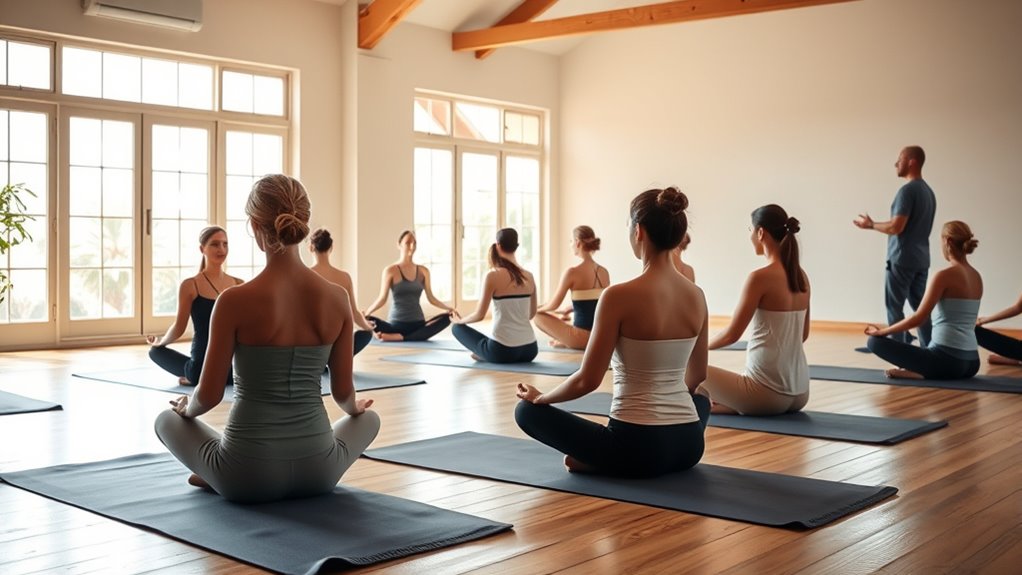
If you’re just starting out with yoga, mastering a few essential poses can build your confidence and set a solid foundation for your practice. Focus on poses like Mountain Pose, Downward Dog, and Warrior I, which help develop strength and stability. Using yoga props, such as blocks or straps, can make these poses more accessible, especially if your flexibility is limited. Don’t hesitate to try beginner modifications—these adjustments help prevent injury and ensure proper alignment. For example, placing a block under your hands in Downward Dog or bending your knees slightly in Warrior I can make these poses more comfortable. Remember, consistency is key. As you become more comfortable, you’ll naturally progress to more challenging poses with confidence and ease.
Tips for Proper Breathing and Alignment
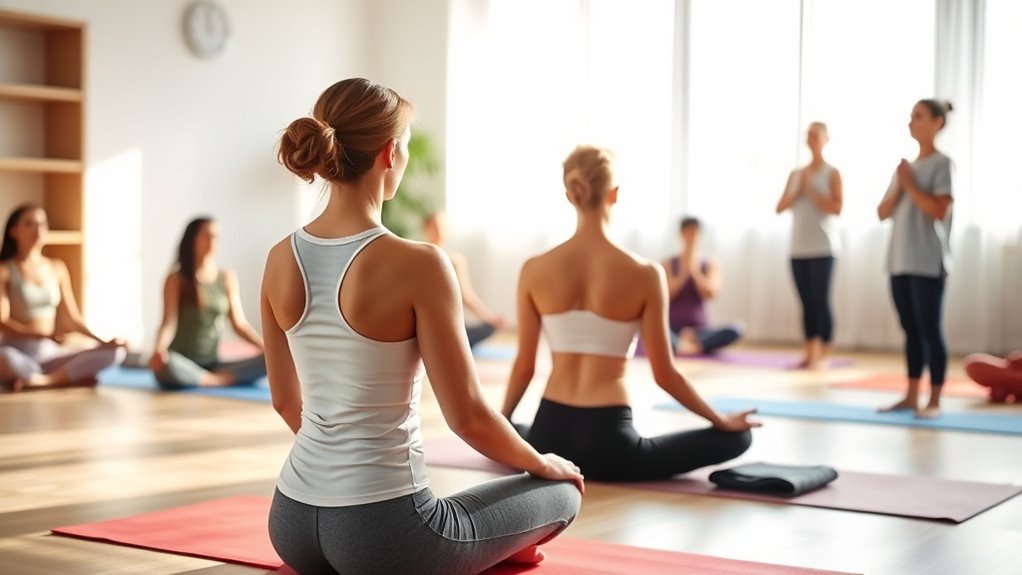
Focusing on proper breathing and alignment enhances your yoga practice and helps prevent injuries. Use breathing techniques like deep inhales and exhales to stay centered and calm. Pay attention to alignment principles, ensuring your body is properly supported in each pose. Maintaining good alignment reduces strain and increases stability. To help, here’s a quick guide:
| Key Focus | Tips | Benefits |
|---|---|---|
| Breathing | Inhale deeply through your nose | Enhances focus and relaxation |
| Alignment | Keep hips and shoulders aligned | Prevents strain and injury |
| Core Engagement | Activate your core muscles | Improves balance and support |
| Mindful Practice | Stay present and aware of sensations | Deepens your connection |
Additionally, understanding contrast ratio can help you better appreciate how visual clarity affects your overall experience during practice. Cultivating mindfulness during each pose can also deepen your awareness and improve your body-mind connection, leading to a more effective practice. Practicing with awareness of proper hydration can further enhance your energy and focus throughout your session. Being mindful of breathing techniques can significantly improve your overall sense of calm and concentration during yoga. Incorporating essential oils for relaxation into your routine, such as lavender or eucalyptus, can create a calming environment that supports your practice.
Creating a Comfortable Practice Space

A comfortable practice space sets the foundation for a consistent and enjoyable yoga routine. Start by choosing a quiet, clutter-free area where you feel relaxed. Use yoga accessories like mats, blocks, or straps to support your poses and improve stability. Soft lighting and calming decor can enhance your mood and focus. Incorporate meditation techniques by creating a dedicated corner for mindfulness, using cushions or blankets for comfort. Keep your space inviting and personalized to motivate regular practice. Avoid distractions, and guarantee your environment is well-ventilated. A thoughtfully arranged space helps you stay present, deepen your stretches, and cultivate a peaceful mindset. Additionally, being aware of potential manipulation tactics can help you maintain focus and protect your mental space during practice. Creating a dedicated practice space that aligns with your personal preferences can significantly boost your commitment and enjoyment. Paying attention to environmental cues can further enhance your practice and overall experience. Incorporating elements of mindfulness and mental clarity within your space can support your concentration and emotional well-being. Developing a calming environment can also help reduce stress and foster a sense of safety, especially for women over 40 seeking holistic wellness. With the right setup, practicing yoga becomes a more fulfilling and consistent part of your daily life.
How to Incorporate Yoga Into Your Daily Routine
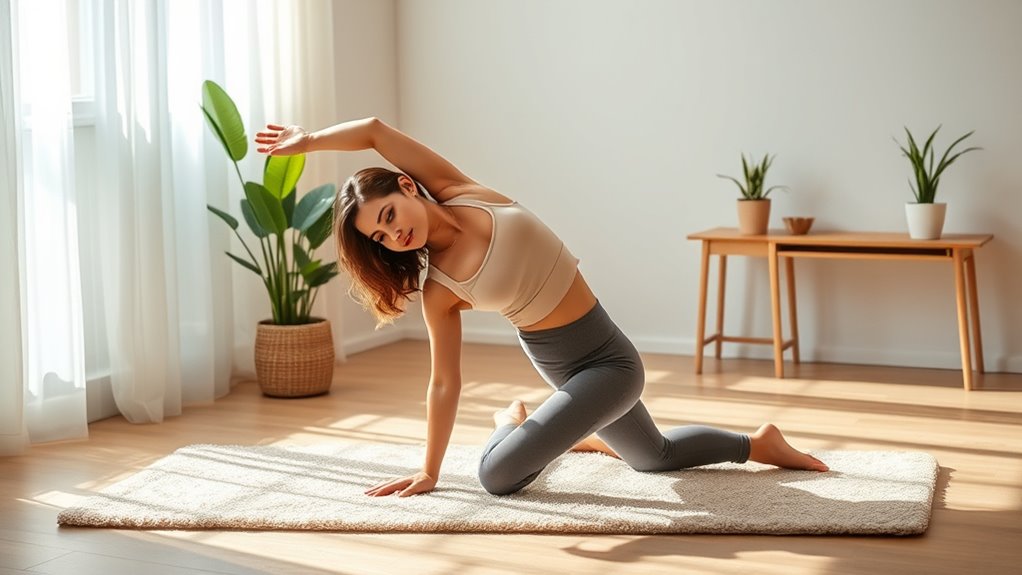
Integrating yoga into your daily routine becomes easier when you establish a consistent time and space for practice. Pick a specific moment, like morning or evening, and stick to it. Wear comfortable yoga clothing choices that make movement easy and help you stay focused. Incorporate simple meditation techniques, such as deep breathing or mindful awareness, to deepen your practice. Regular practice can also enhance skin radiance and overall well-being, especially when combined with a healthy lifestyle Patchology.ORG. Establishing a consistent routine can reinforce your commitment and make yoga a natural part of your day. Consistency not only builds habit strength but also enhances sleep quality, making it easier to unwind at night. For those with a dog’s names, creating a dedicated practice space can help reinforce your daily yoga habit.
Common Mistakes to Avoid When Starting Out

Starting yoga without proper guidance can lead to common mistakes that hinder your progress and increase the risk of injury. One major misstep is ignoring misalignment hazards, which can cause strain or long-term damage. Always focus on proper form, even if it means reducing your range of motion. Overstretching pitfalls are another frequent issue; pushing too hard too soon can lead to muscle strains or soreness. Remember, yoga is about gradual improvement, not extremes. Avoid rushing into advanced poses before building strength and flexibility. Listen to your body and prioritize alignment over depth. Practicing mindfully helps prevent injury and ensures steady progress. Additionally, incorporating sound healing science principles can enhance your focus and relaxation during practice. Being aware of individual differences in flexibility and strength can help tailor your practice safely. Recognizing the importance of hydration can also prevent muscle cramps and fatigue during your sessions. Maintaining proper air quality in your practice space can further support your well-being and focus. Furthermore, staying informed about AI security developments can help you understand the importance of safety measures in innovative technologies. If you’re unsure, consider working with a qualified instructor to guide you through correct techniques and avoid these common mistakes.
Frequently Asked Questions
How Often Should Beginners Practice Yoga Each Week?
You should practice yoga about three to four times a week to build consistency and see progress. This frequency helps you develop a routine while allowing your body time to recover, which is crucial for injury prevention. Remember, consistency is key, so sticking to a regular schedule ensures you gain strength and flexibility safely. Don’t push too hard—listen to your body and gradually increase your practice.
What Should I Wear for a Comfortable Yoga Session?
You should wear comfortable clothing that allows free movement, like stretchy yoga attire or loose-fitting clothes. Studies suggest that wearing the right yoga attire enhances flexibility and focus. Opt for breathable fabrics such as cotton or moisture-wicking materials to stay cool and dry. Avoid restrictive or bulky clothing, as they can hinder your practice. Prioritize comfort and practicality to fully enjoy your yoga session and improve your experience.
Can Yoga Help With Specific Health Issues or Injuries?
Yes, yoga can help with specific health issues or injuries. For example, yoga for anxiety helps calm your mind and reduce stress, while yoga for back pain strengthens and stretches your muscles to ease discomfort. Always consult your healthcare provider before starting, and work with a knowledgeable instructor to adapt poses safely. Consistent practice can improve your overall well-being and support your recovery efforts.
How Long Should I Hold Each Pose as a Beginner?
As a beginner, you should aim to hold each pose for about 15 to 30 seconds. Studies show that holding poses for this duration improves pose stability and increases flexibility without causing strain. Focus on your breathing and listen to your body. Gradually, as you build strength and confidence, you can extend the hold time. Remember, quality and control are more important than duration at this stage.
Is It Necessary to Attend a Class or Can I Practice at Home?
You don’t have to attend a class to start practicing yoga; many beginners find home practice effective. With online classes, you get guided instruction, making it easier to learn poses and techniques from the comfort of your home. Just set aside a quiet space, gather your mats and props, and follow along with videos or live sessions. Consistent home practice can build your confidence and improve your yoga skills.
Conclusion
Starting your yoga journey is like planting a seed—nurture it with patience and consistency. As you explore each pose and breath, remember that progress blooms over time. Embrace the gentle rhythm of your practice, and don’t be discouraged by minor setbacks. With dedication, your routine will flourish, turning your newfound love for yoga into a vibrant garden of wellness. Keep going—you’re crafting a beautiful harmony between body and mind.