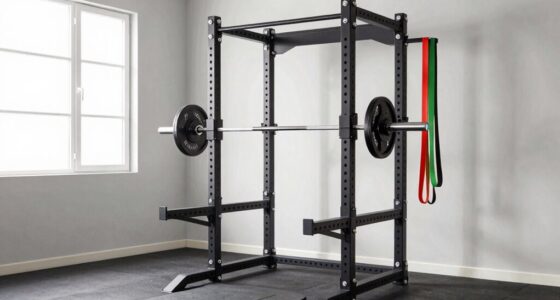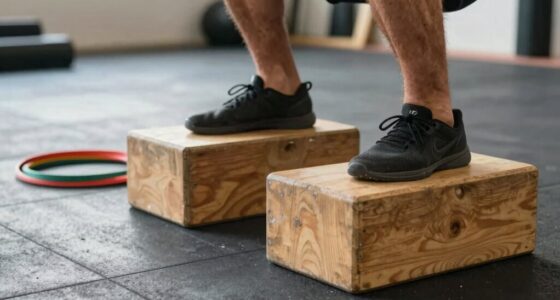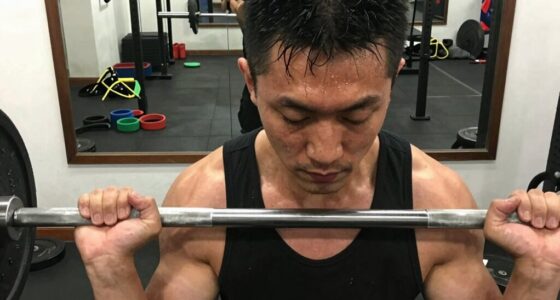

Accessory exercises boost your main lifts by targeting specific muscles, fixing weaknesses, and preventing imbalances that can cause injuries. They help improve stability, control, and lockout strength, making your big lifts more efficient. By addressing areas like your rear delts, hamstrings, or triceps, you build balanced muscle groups that support long-term progress. If you want to discover how these extra moves can take your training further, learn more about the strategies behind effective supplementation.
Key Takeaways
- Accessory exercises target weak muscles, directly enhancing strength and stability in main lifts.
- They help correct muscle imbalances, reducing injury risk and improving overall lift efficiency.
- Supporting muscles developed through accessory work boost lift performance and lockout strength.
- Incorporating accessory movements improves joint stability, allowing for safer, more consistent progress.
- They enhance training volume and variety, leading to faster strength gains and better long-term results.
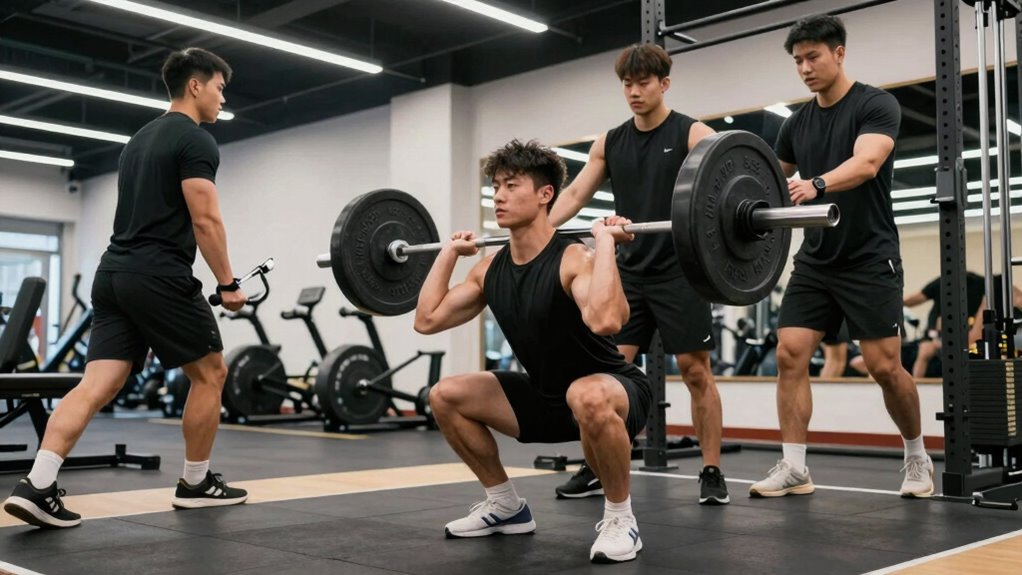
Many lifters focus solely on their main lifts, but accessory exercises play a essential role in boosting your strength and performance. While the big lifts like squat, deadlift, and bench press get all the attention, accessory work helps fill in the gaps that can limit your progress. These exercises target specific muscles through muscle isolation, allowing you to strengthen weak points and build balanced muscle groups. This targeted approach not only enhances your main lifts but also helps prevent injuries by addressing imbalances that might otherwise lead to strain or overuse injuries.
Accessory exercises strengthen weak points and prevent injuries by addressing muscle imbalances and promoting balanced development.
When you include accessory exercises in your routine, you can zero in on muscles that assist your primary lifts. For example, targeting your rear delts, rotator cuff, or triceps with isolation movements improves stability and control during pressing and pulling motions. As a result, your main lifts become more efficient and safer. By strengthening supporting muscles, you reduce the risk of developing weaknesses that could cause injury under heavy loads. This injury prevention aspect is often overlooked but is essential for sustained progress and longevity in lifting.
Furthermore, accessory exercises can help you correct weaknesses that might be holding back your big lifts. If your squat stalls, it might be due to weak glutes or hamstrings. Focusing on accessory movements like glute bridges or hamstring curls can build those muscles independently, leading to better overall strength and improved squat performance. Similarly, if your bench press struggles, working on tricep extensions or chest flyes can improve lockout strength and stability. These targeted efforts make your main lifts more effective by addressing precise deficiencies. Incorporating connected fitness devices can also provide real-time feedback to optimize your accessory work and track progress more effectively. Additionally, understanding how to incorporate complementary training techniques can further enhance the effectiveness of your accessory work, leading to more balanced development. Including training periodization can also help structure your accessory exercises to match your peak performance phases.
In addition to enhancing strength and preventing injuries, accessory work keeps your training varied and engaging. It breaks the monotony of always doing the same heavy lifts and allows you to focus on areas that need improvement. This variation can lead to better mental motivation and a more well-rounded physique. Plus, when you understand the purpose of these exercises, you’ll see how they complement your big lifts, creating a synergistic effect that accelerates your progress. Incorporating emerging trends in digital publishing can also help you stay informed about innovative training techniques and tools to optimize your routines.
adjustable dumbbell for accessory exercises
As an affiliate, we earn on qualifying purchases.
As an affiliate, we earn on qualifying purchases.
Frequently Asked Questions
Can Accessory Exercises Replace Main Lifts Entirely?
No, accessory exercises can’t replace main lifts entirely. They enhance your strength and stability through accessory variations and muscle isolation, but they don’t develop the same overall power and technique as your primary lifts. Main lifts target multiple muscle groups simultaneously, building a foundation for strength. Incorporating accessory exercises helps refine weaknesses, but to maximize progress, you should focus on your main lifts while using accessory work as support.
How Often Should I Incorporate Accessory Exercises Into My Routine?
You should incorporate accessory exercises 2 to 3 times a week, but the real secret lies in your training frequency and exercise selection. Too often, people underestimate how strategic variations boost strength and stability. Mix it up based on your goals, focus on weak spots, and don’t overdo it—balance is key. Pay attention to your recovery, and you’ll release gains you never thought possible, transforming your big lifts.
Are Certain Accessory Exercises Better for Specific Lifts?
Yes, certain accessory exercises target specific muscle imbalances and enhance particular lifts. For example, lunges strengthen your glutes and quads for squats, while pull-aparts improve shoulder stability for bench presses. Incorporating varied training with different accessory movements helps prevent plateaus and maintains motivation. By focusing on exercises tailored to your weaknesses, you optimize your big lifts and reduce injury risk through balanced development.
Do Accessory Exercises Prevent Injuries?
Accessory exercises help prevent injuries by addressing muscle imbalances and strengthening stabilizer muscles. When you focus on these exercises, you improve your overall form and reduce the risk of strains or overuse injuries. Incorporate effective recovery strategies, like proper rest and mobility work, to support this process. This combined approach keeps your muscles balanced and resilient, making injuries less likely and allowing you to lift more safely and effectively.
How Do I Know if I’m Doing Accessory Exercises Correctly?
You’ll know you’re doing accessory exercises correctly when they feel like a precise brushstroke in your workout masterpiece. Focus on controlled movements that isolate muscles, ensuring you engage the right ones without swinging or using momentum. Incorporate workout variety to challenge muscles differently, preventing plateaus. If you feel targeted muscle activation and maintain proper form, you’re on the right track, turning these exercises into powerful allies for your big lifts.
rotator cuff injury prevention kit
As an affiliate, we earn on qualifying purchases.
As an affiliate, we earn on qualifying purchases.
Conclusion
So, don’t overlook those accessory exercises—they’re the secret sauce to boosting your big lifts. Think of them as the small gears that keep the entire machine running smoothly; neglect them, and your progress stalls. Incorporate these targeted moves into your routine, and you’ll find yourself lifting heavier and feeling stronger than ever. Remember, sometimes the smallest pieces can make the biggest difference, so give them the attention they deserve and watch your gains soar.
glute bridge resistance bands
As an affiliate, we earn on qualifying purchases.
As an affiliate, we earn on qualifying purchases.
tricep extension machine
As an affiliate, we earn on qualifying purchases.
As an affiliate, we earn on qualifying purchases.