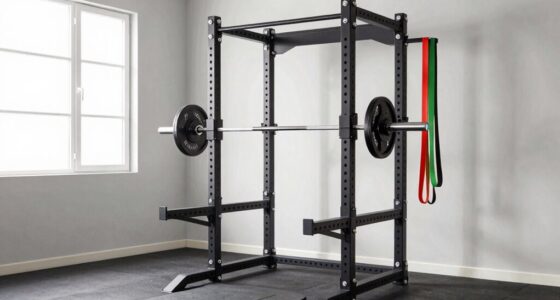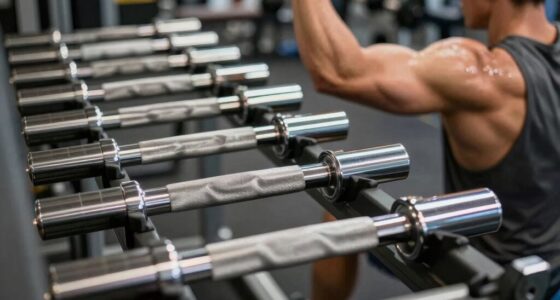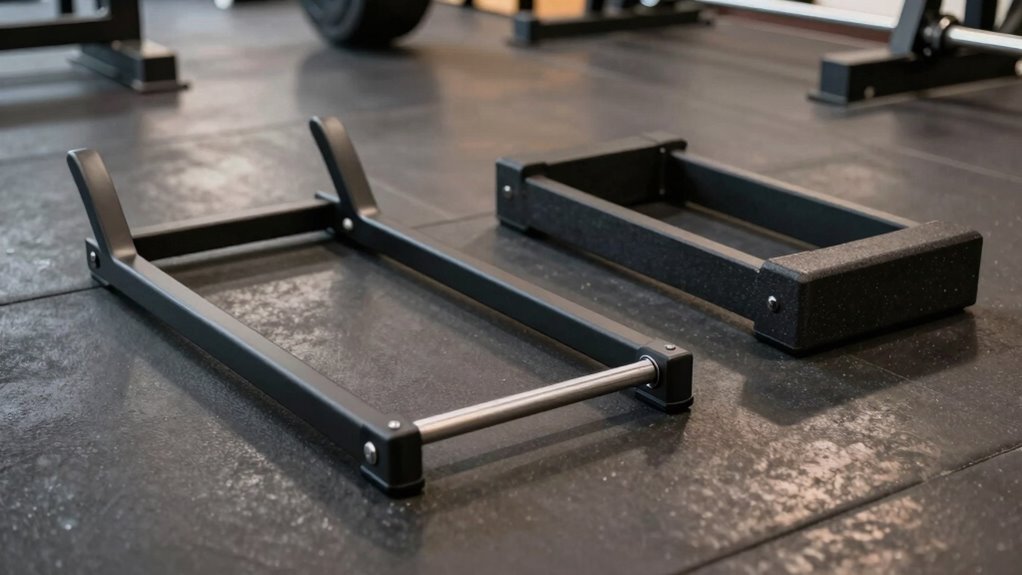

Open trap bars give you more grip options and better ergonomic comfort than traditional trap bars. They allow natural hand and shoulder movement, reducing wrist and joint stress, which is great if you want to stay injury-free or work around issues. They also promote different muscle activation patterns, especially for your posterior chain. If you want to explore how these differences can boost your workout, keep going for more insights.

Get workout gear delivered free — and shop member deals
- Fast, free delivery on millions of items
- Access to Prime Big Deal Days deals on October 6–7
- Prime Video, Amazon Music and more included
Key Takeaways
- Open trap bars offer wider, adjustable grips that reduce wrist stress and accommodate different hand sizes.
- Traditional trap bars have fixed handles, providing stability but limited grip options.
- Open trap bars promote a more upright torso and target posterior chain muscles effectively.
- Traditional trap bars are better for heavy, controlled lifts with consistent form.
- Choose open or traditional trap bars based on comfort, joint health, and specific training goals.

When choosing a trap bar for your workouts, understanding the differences between open and traditional designs can make a significant impact on your training. One key aspect to evaluate is grip variations. Open trap bars typically feature a wider, more accessible grip area, allowing you to adopt multiple hand positions easily. This flexibility can help target different muscle groups and accommodate various hand sizes or preferences. Traditional trap bars usually have a narrower, fixed handle, which limits your grip options but offers a more stable hold. If you prefer experimenting with grip variations or need to reduce stress on your wrists, an open trap bar might be the better choice. Conversely, if you want a straightforward, consistent grip for heavy lifts, a traditional design could suit you better. Additionally, the design differences between open and traditional trap bars can influence how your body aligns during lifts, impacting both effectiveness and safety. Proper ergonomic design considerations are important to ensure comfort and reduce injury risk during heavy lifting. Muscle activation is another important factor. The open trap bar’s design encourages a more natural, shoulder-width grip, which can influence muscle engagement during lifts. Many users find that open trap bars promote better activation of the glutes, hamstrings, and lower back because the wider grip encourages a more upright torso position and a slightly different angle of pull. This can lead to enhanced posterior chain development. Traditional trap bars, with their fixed handles, tend to produce a more direct path for the lift, emphasizing the quadriceps and lower back. If you’re aiming to target your quads more intensely or prioritize a more controlled, stable movement, the traditional style may be advantageous. Another aspect to think about is how each design affects your workout comfort and safety. Open trap bars often allow for more natural hand and arm movement, reducing strain on your wrists and shoulders. This can be especially beneficial if you have joint issues or are recovering from injury. Traditional trap bars, while generally stable, might restrict certain grip positions and potentially increase discomfort if your wrists or shoulders don’t align well with the fixed handles.
As an affiliate, we earn on qualifying purchases.
Frequently Asked Questions
Which Trap Bar Type Is Better for Beginners?
For beginners, open trap bars are a better choice because they offer greater grip comfort and make it easier to learn proper form. The open design reduces wrist strain and allows for more natural movement, helping you build confidence. Plus, their versatility lets you perform a variety of lifts, making them ideal as you develop strength and technique. Overall, open trap bars promote safer, more comfortable workouts for newcomers.
How Does Grip Strength Affect Trap Bar Performance?
Your grip strength directly impacts trap bar performance because it influences your grip endurance and hand positioning. If your grip weakens quickly, you’ll struggle to lift heavier weights or maintain proper form. Improving grip endurance through specific exercises helps you hold onto the bar longer, maximizing your effort. Additionally, adjusting hand positioning can reduce strain and optimize leverage, allowing you to lift more efficiently and safely during trap bar exercises.
Can Open Trap Bars Reduce Wrist Strain?
Using an open trap bar is like opening a window to fresh air—you’ll likely find it eases wrist strain. It improves wrist comfort by allowing a more natural grip, reducing discomfort during lifts. The open design enhances grip ergonomics, making it easier to maintain proper form without putting unnecessary pressure on your wrists. If wrist pain has been holding you back, switching to an open trap bar could be a game-changer.
Are There Specific Exercises Better With Traditional Trap Bars?
You’ll find traditional trap bars better suited for exercises like deadlifts and shrugs, where you benefit from stable, consistent grip positions. Using alternative grip methods or adjusting trap bar height variation can enhance comfort and effectiveness. Traditional trap bars often provide a more secure grip for heavier lifts, making them ideal for building strength. If wrist strain is a concern, exploring open trap bars or grip modifications might be advantageous.
How Do Trap Bar Choices Impact Overall Muscle Activation?
Choosing a trap bar is like selecting a different map for your workout journey—you’ll see different terrain. The type impacts muscle activation by targeting muscles differently; open trap bars often emphasize activation in your quads and core, while traditional trap bars engage your posterior chain more. These activation differences mean your muscles work in unique ways, so pick based on which areas you want to develop and how you want to feel during lifts.
traditional trap bar with fixed handles
As an affiliate, we earn on qualifying purchases.
As an affiliate, we earn on qualifying purchases.
Conclusion
Choosing between open trap bars and traditional ones depends on your comfort and goals. Did you know that users report a 15% increase in grip strength with open trap bars? If you’re aiming for a more natural lifting experience and improved grip, open trap bars might be your best bet. However, if stability and load capacity matter more, traditional trap bars could serve you better. Experiment with both to see which helps you lift stronger and safer.
ergonomic trap bar for joint health
As an affiliate, we earn on qualifying purchases.
As an affiliate, we earn on qualifying purchases.
As an affiliate, we earn on qualifying purchases.
Fall Picks
fall essentials
As an affiliate, we earn on qualifying purchases.