To make an Olympic barbell feel better to lift, focus on its material quality, such as stainless or hardened steel, which provides durability and smooth movement. A well-designed grip with balanced knurling prevents slipping while avoiding skin irritation. The finish and coatings protect against rust, ensuring a consistent feel over time. When these features come together, lifting becomes more controlled and comfortable. Keep exploring to discover more ways to improve your lifting experience.
Key Takeaways
- High-quality stainless or hardened steel ensures smooth spin and consistent movement during lifts.
- Well-designed knurling provides a secure grip without causing skin irritation.
- Proper coating or finish prevents rust, maintaining a polished, smooth surface over time.
- Optimal grip texture balances friction and comfort, reducing slippage and hand fatigue.
- Overall construction durability enhances performance stability and confidence during heavy lifts.
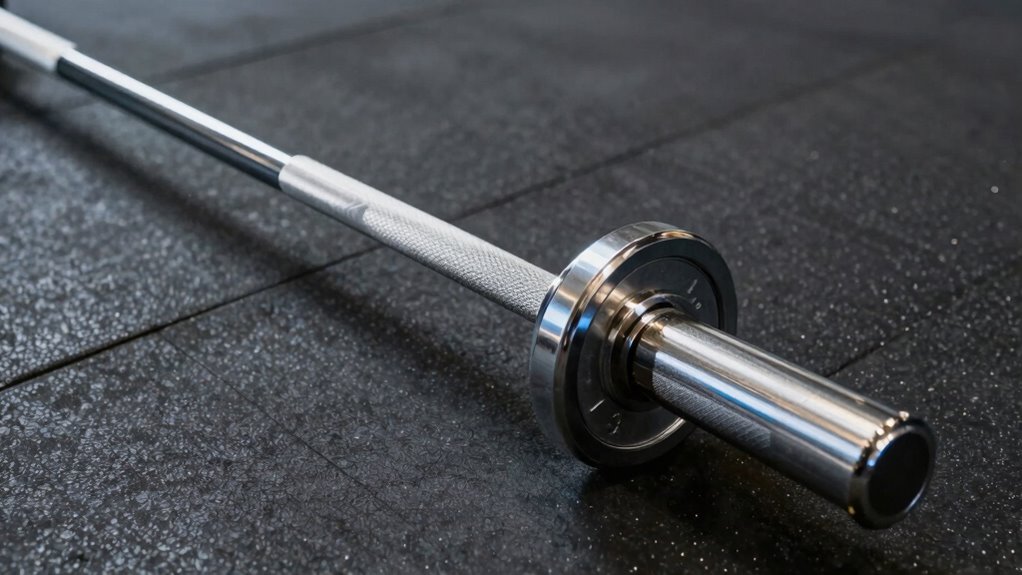
Have you ever wondered why some Olympic barbells feel smoother and more comfortable to lift than others? The answer often comes down to the details that make a difference during your workout—specifically, barbell material and grip texture. These factors influence how the bar feels in your hands, how it performs during lifts, and ultimately, how much you enjoy your training sessions.
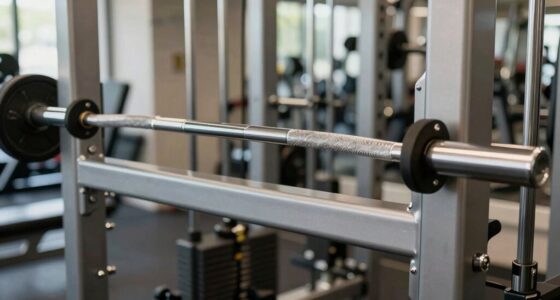
The barbell material plays a pivotal role in both durability and feel. High-quality Olympic barbells are typically made from stainless steel or hardened steel, giving them a solid weight and consistent spin. When the material is first-rate, you’ll notice that the bar maintains its integrity over time, resisting rust and scratches, even after frequent use. Cheaper materials might cause the bar to feel rough or uneven, which can interfere with your grip and performance. A well-manufactured barbell with premium material provides a smooth, polished surface that enhances your lifting experience, making each move feel precise and effortless. Additionally, the material quality impacts the bar’s resistance to corrosion, ensuring it remains in top condition for years. Many top-tier bars also feature specialized coatings or finishes that further improve their performance and longevity. Choosing the right material composition can also influence how the bar responds under different environmental conditions, which is crucial for outdoor or humid settings.
Premium materials like stainless or hardened steel ensure durability, smoothness, and a seamless lifting experience.
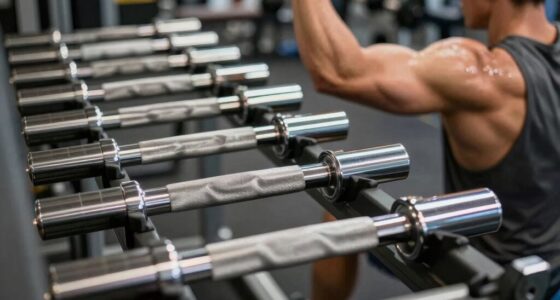
Grip texture is another essential aspect that affects how comfortable and secure your lift feels. A good Olympic barbell will have a knurled surface—tiny, patterned ridges strategically placed along the shaft—designed to improve your grip. The depth and pattern of this knurling can vary, but the goal is always to prevent slipping while providing enough grip to lift confidently without causing discomfort or skin tears. When you lift a bar with an ideal grip texture, you experience better control, especially during heavy lifts or high-rep sets. If the grip feels too smooth, your hands might slide, forcing you to grip harder and tire faster. Conversely, overly aggressive knurling can cause skin irritation or pain, making workouts less enjoyable. The perfect grip texture strikes a balance, offering enough friction for security without sacrificing comfort.
Both barbell material and grip texture work together to create a feel that’s tailored to your lifting needs. A smooth, corrosion-resistant surface combined with a well-designed knurling pattern means you can focus on your technique without fighting the bar. When these elements are refined, your lifts become more precise, safer, and more comfortable. Paying attention to barbell material and grip texture ensures you’re selecting equipment that enhances your performance and enjoyment. So, next time you’re choosing an Olympic barbell, pay attention to what it’s made of and how its grip feels in your hands. Those seemingly small details can make a significant difference in how much you enjoy your training—and how quickly you see progress.
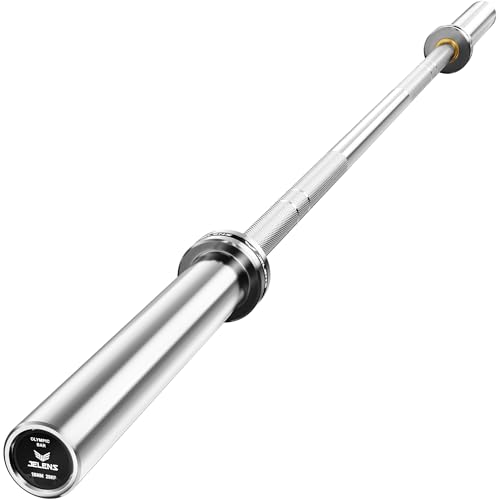
JELENS 7FT Bar Olympic Barbell, 1000lb Capacity Weight Bar for Strength Training, 2 Inch Strength Training Bar With Knurled Grip for Squats, Deadlifts, Presses, Rows, Curls (Silver, 7FT Olympic Barbell)
- Material Quality: High-grade steel with 150,000 PSI tensile strength
- Weight Capacity: Supports up to 1000 lbs for heavy lifts
- Finish: Hard chrome coating for corrosion resistance
As an affiliate, we earn on qualifying purchases.
As an affiliate, we earn on qualifying purchases.
Frequently Asked Questions
How Often Should I Replace My Olympic Barbell?
You should replace your Olympic barbell when it shows signs of significant wear or damage, like bent sleeves or rust, which can affect your lifting technique and safety. Regularly inspecting your barbell helps you determine if it needs customization or replacement. If it feels less smooth or unstable, it’s time to get a new one to maintain peak performance and prevent injury during lifts. Keep your gear in top shape for best results.
Does Barbell Knurling Affect Grip Comfort?
Yes, barbell knurling affects grip comfort. The grip texture created by the knurling design influences how secure and comfortable your hold feels during lifts. If the knurling is too aggressive, it can cause discomfort, but if it’s too smooth, you might slip. Look for a balanced knurling design that provides good grip without irritating your hands. Choosing the right knurling makes lifting safer and more comfortable.
Are There Specific Barbell Materials for Better Durability?
Think of a barbell as the backbone of your workout—its material determines how long it’ll serve you well. For durability concerns, look for high-quality steel or stainless steel, which resist rust and wear over time. These materials are tough enough to handle heavy lifts and constant use, ensuring your investment lasts. Choosing the right barbell material means you’ll trust your gear as much as you trust your strength.
How Does Barbell Whip Influence Lifting Experience?
Barbell whip responsiveness greatly influences your lifting experience by providing flexibility that absorbs forces smoothly. When a barbell has ideal barbell flexibility, it bends slightly under load, making lifts feel more natural and reducing strain. This whip responsiveness helps you generate power efficiently and improves control during lifts, especially in dynamic movements like snatches or cleans. A well-designed whip ensures you feel confident, balanced, and more connected to each lift.
What Maintenance Is Needed to Keep a Barbell in Top Condition?
To keep your barbell in top condition, regularly apply barbell lubrication to prevent rust and guarantee smooth rotation of the sleeves. Check the knurling and clean it to maintain grip, or consider knurling customization if needed. Keep the bar dry, store it properly, and periodically inspect for wear or damage. Proper maintenance not only prolongs its lifespan but also enhances your lifting experience.
JELENS 7FT Bar Olympic Barbell, 1000lb Capacity Weight Bar for Strength Training, 2 Inch Strength Training Bar With Knurled Grip for Squats, Deadlifts, Presses, Rows, Curls (Silver, 7FT Olympic Barbell)
- Material Quality: High-grade steel with 150,000 PSI tensile strength
- Weight Capacity: Supports up to 1000 lbs for heavy lifts
- Finish: Hard chrome coating for corrosion resistance
As an affiliate, we earn on qualifying purchases.
As an affiliate, we earn on qualifying purchases.
Conclusion
Choosing the right Olympic barbell can substantially improve your lifting experience, making workouts more efficient and enjoyable. Remember, a well-balanced, high-quality barbell can enhance your performance and reduce injury risk. Did you know that the average Olympic lifter performs over 1,500 lifts annually? Investing in the right equipment isn’t just about comfort—it’s about optimizing your training and reaching your goals faster. So, pick wisely and lift confidently!

CAP 35lb 7ft Olympic Barbell, Chrome, Strength Training
- Weight Capacity: 500 LB maximum load
- Bar Length: 7 feet long
- Ideal For: Squats, bench press, deadlifts
As an affiliate, we earn on qualifying purchases.
As an affiliate, we earn on qualifying purchases.

Thunder Tape 2 Pk Grip Tape – Cloth Grip Tape for Pull Up Bars, Sports, Tools, Handles, Bats, Rackets, Gym Equipment, Wire Wrap – No Residue, Sweat Resistant, 1 Inch x 66 Feet Each Roll – Black
- Sweat-resistant and residue-free: Supports various sports and tools
- Strong hold with clean release: Removes without fraying or residue
- Multipurpose and durable: Ideal for workouts, repairs, and bundling
As an affiliate, we earn on qualifying purchases.
As an affiliate, we earn on qualifying purchases.