
Sweating more during exercise doesn’t mean you’re burning more fat or calories. Your sweat level is mainly your body’s way of cooling down and is influenced by hydration, clothing, and environmental conditions. To burn more fat, focus on increasing workout intensity and duration, not sweat. Proper effort and maintaining a caloric deficit are key. Keep exploring, and you’ll discover what truly maximizes your fat-burning potential.
Key Takeaways
- Sweating mainly indicates cooling, not increased calorie or fat burn.
- Fat loss depends on overall effort and maintaining a caloric deficit, not sweat quantity.
- External factors like environment and clothing can cause more sweating without more fat burning.
- Higher workout intensity and duration are more effective for fat loss than sweating levels.
- Proper hydration supports metabolism but does not directly influence fat burning through sweating.
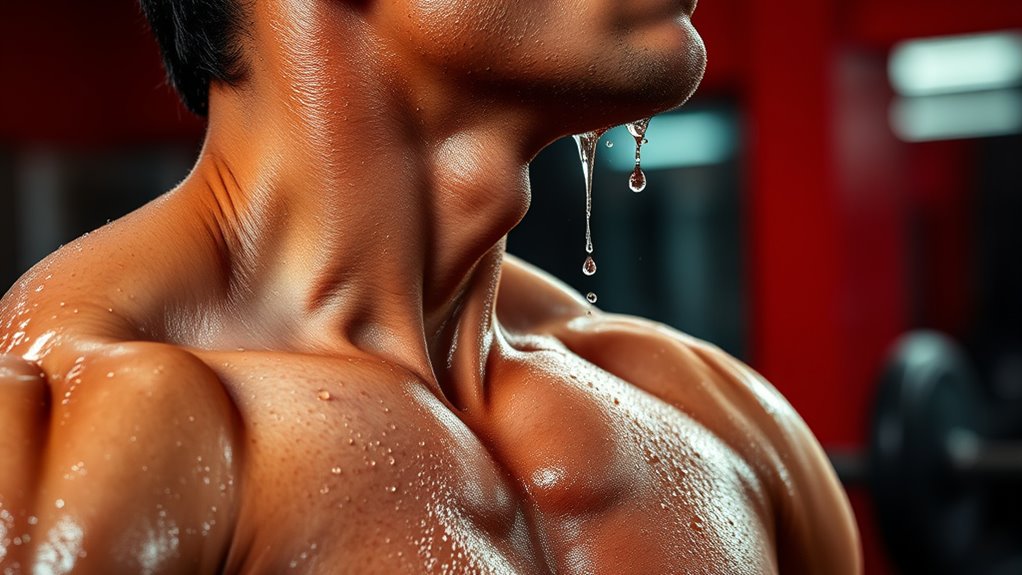
Have you ever wondered if sweating more during exercise means you’re burning more fat? It’s a common belief that heavy sweating indicates a more intense workout and, consequently, more fat loss. But the truth is, sweating primarily reflects your body’s effort to regulate temperature, not necessarily how many calories or fat you’re burning. When you exercise, your metabolic rate—the speed at which your body converts food into energy—increases. A higher metabolic rate means you’re burning more calories overall, but sweating isn’t a direct indicator of that. Instead, it’s your hydration levels and environmental factors that influence how much you sweat. If you’re in a hot room or wearing heavy gear, you’ll sweat more, even if your effort level remains the same. This excess sweating doesn’t equate to burning more fat; it just shows your body trying to cool itself down.
Understanding this can help you stay focused on what truly matters during your workouts. If your goal is fat loss, concentrate on maintaining a consistent caloric deficit through a combination of diet and exercise, rather than relying on sweat as a marker of effectiveness. While staying hydrated is essential, it’s not about sweating more to lose weight but about replacing fluids lost during activity. Proper hydration levels support your metabolism, keep your energy levels stable, and help your body perform at its best. When you’re dehydrated, your metabolic rate can slow down, making fat burning less efficient. So, drinking enough water before, during, and after exercise ensures your body can regulate temperature effectively without risking dehydration, which could impair your performance and recovery. Additionally, using proper workout techniques can maximize fat burning without relying on sweating as an indicator.
Moreover, focusing on your workout’s intensity and duration will give you a more accurate picture of fat burning. Engaging in sustained, moderate to high-intensity exercise boosts your metabolic rate and promotes greater calorie expenditure. Over time, this leads to fat loss, regardless of how much you sweat. Remember, sweating is just your body’s way of cooling down, not a measure of how many calories you’re burning. If you notice you’re sweating excessively, it might be due to environmental factors or hydration issues rather than increased fat burning. Instead of chasing after sweat, aim for consistency, proper nutrition, and hydration to support your metabolic rate and overall fitness goals. Ultimately, the key to burning more fat lies in your overall effort, not the amount you sweat.
hydration water bottles for exercise
As an affiliate, we earn on qualifying purchases.
As an affiliate, we earn on qualifying purchases.
Frequently Asked Questions
Can Dehydration Affect Sweat Rate Without Impacting Fat Loss?
Dehydration can reduce your sweat rate without affecting fat loss. When hydration levels drop, your body conserves fluids, leading to less sweating even if you’re working hard. This also changes sweat composition, making it more concentrated. So, while you might sweat less due to dehydration, your actual calorie and fat burn stay the same. Staying properly hydrated guarantees your sweat reflects your effort and supports overall fitness progress.
Does Climate or Humidity Influence How Much I Sweat During Exercise?
Don’t let climate variations fool you—humidity effects mean you sweat more, but that doesn’t equal burning more fat. In humid conditions, your body works harder to cool itself, increasing sweat, yet your calorie burn stays the same. High humidity can make you feel more exhausted, but it’s your effort, not the climate, that truly determines fat loss. Stay consistent regardless of weather, and results will follow.
Is Sweating More an Indicator of Higher Calorie Burn?
Sweating more doesn’t necessarily mean you’re burning more calories. Your metabolic rate and calorie expenditure depend on factors like workout intensity and duration, not just how much you sweat. When you exercise harder or in hot conditions, you sweat more, but that’s often due to temperature regulation, not increased fat burning. Focus on maintaining a consistent, challenging routine to effectively boost your calorie burn and overall fitness.
How Does Individual Fitness Level Impact Sweating During Workouts?
Your fitness capacity influences your sweat response during workouts. As your fitness improves, your body becomes more efficient at cooling itself, often resulting in less sweat for the same effort. Conversely, if you’re less conditioned, you might sweat more, signaling your body’s need to regulate temperature. This variation isn’t a direct reflection of fat burning but highlights how your individual fitness level shapes your body’s response to exercise.
Are There Health Risks Associated With Excessive Sweating and Dehydration?
Excessive sweating and dehydration can pose health risks, like dizziness, cramps, or heatstroke. To stay safe, you should follow proper hydration strategies, drinking water regularly and replenishing electrolytes to maintain electrolyte balance. Pay attention to your body’s signals, and don’t ignore signs of dehydration. By staying hydrated and managing electrolyte levels, you can reduce risks and enjoy your workouts safely.
high intensity workout gear
As an affiliate, we earn on qualifying purchases.
As an affiliate, we earn on qualifying purchases.
Conclusion
So, next time you’re drenched after a workout, don’t assume you’ve burned more fat. Sweating just means your body’s cooling itself down. The real secret lies deeper—your effort, your intensity, your consistency. Want to discover true fat-burning power? Keep pushing, stay committed, and stay curious. Because, in the end, the real magic isn’t just in the sweat—it’s in what you do after the sweat stops. Are you ready to find out more?
caloric deficit diet plan
As an affiliate, we earn on qualifying purchases.
As an affiliate, we earn on qualifying purchases.
fitness tracking smartwatch
As an affiliate, we earn on qualifying purchases.
As an affiliate, we earn on qualifying purchases.