

To fix your rounded shoulders, focus on exercises that improve shoulder mobility and strengthen upper back muscles. Try wall angels, where you press your arms against a wall and move them up and down, and shoulder blade squeezes to reinforce proper posture. Regularly stretch your chest muscles with doorway stretches to prevent tightness. Maintaining good ergonomic habits and consistent practice will make a big difference. Keep going to discover more tips to straighten your posture effectively.
Key Takeaways
- Perform wall angels to improve shoulder mobility and strengthen upper back muscles.
- Practice shoulder blade squeezes to reinforce proper muscle engagement and correct rounded shoulders.
- Incorporate doorway chest stretches regularly to loosen tight pectoral muscles and promote better posture.
- Adjust your workspace ergonomically, such as monitor height and chair position, to support proper shoulder alignment.
- Maintain consistent posture habits and perform daily exercises to prevent deterioration and reinforce proper muscle function.
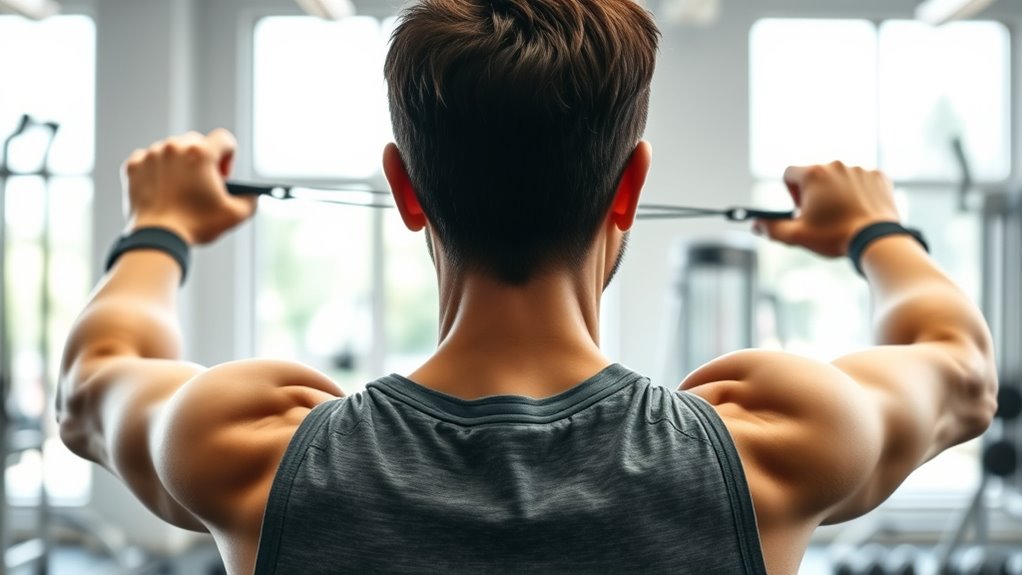
Have you ever noticed how often you slouch or hunch over without realizing it? It’s a common habit, especially if you spend hours at a desk or on your phone. Poor posture can lead to rounded shoulders, which not only look unappealing but also cause discomfort and reduce your overall shoulder mobility. The good news is, you can take steps to correct this by focusing on your ergonomic setup and incorporating exercises that strengthen your upper back and stretch your chest muscles.
Poor posture leads to discomfort and limited shoulder mobility; fix it with ergonomic adjustments and targeted exercises.
First, evaluate your workspace. An ergonomic setup is essential in preventing and correcting rounded shoulders. Adjust your chair height so your feet sit flat on the floor, and your knees are level with your hips. Position your monitor at eye level to avoid craning your neck forward, which can contribute to poor shoulder positioning. Keep your keyboard and mouse close enough so you don’t have to reach forward excessively. These small adjustments make a significant difference in maintaining proper alignment and reducing strain, helping you develop healthier habits over time.
Alongside optimizing your workspace, working on shoulder mobility is vital. When your shoulders are tight or weak, it’s easier to fall into a rounded posture. To counteract this, incorporate simple exercises into your daily routine. Wall angels are particularly effective—they help improve shoulder mobility and strengthen the muscles that support good posture. Stand with your back against a wall, arms raised to a 90-degree angle, and slowly move your arms up and down while keeping your elbows and wrists pressed against the wall. This movement opens up your chest and strengthens the upper back muscles responsible for pulling your shoulders back.
Another beneficial exercise involves shoulder blade squeezes. Sit or stand upright, then gently squeeze your shoulder blades together, as if you’re trying to hold a pencil between them. Hold for a few seconds, then release. Repeat this 10-15 times to reinforce proper muscle engagement and help correct rounded shoulders. Along with these, gentle stretches like doorway chest stretches can loosen up tight pectoral muscles that tend to pull your shoulders forward. Paying attention to your posture habits and staying mindful of your ergonomic setup can make a lasting difference in maintaining shoulder health and alignment.
Top picks for "posture exercis correct"
Open Amazon search results for this keyword.
As an affiliate, we earn on qualifying purchases.
Frequently Asked Questions
How Long Does It Take to See Posture Improvements?
You can start noticing posture improvements in just a few weeks if you stay consistent with exercises and ergonomic tips. While some posture myths suggest quick fixes, lasting change takes time and effort. By regularly practicing targeted exercises, maintaining awareness of your posture, and adjusting your workspace, you’ll build better habits. Usually, visible results appear within 4-6 weeks, but continued effort guarantees long-term improvements.
Can These Exercises Prevent Future Shoulder Issues?
These exercises act like a shield, helping to prevent future shoulder issues. By making ergonomic adjustments and practicing posture awareness daily, you strengthen your muscles and improve alignment. Consistently doing these exercises can reduce the risk of developing rounded shoulders again. Think of it as building a sturdy foundation for your posture, so you stay healthier and more comfortable in the long run. Regular practice truly makes a difference.
Are There Specific Stretches for Different Age Groups?
Yes, there are age-specific stretches and elderly posture exercises tailored to your needs. As you age, your flexibility and strength change, so these exercises focus on gentle stretches that improve mobility and reduce shoulder rounding. For seniors, these targeted stretches help maintain posture and ease discomfort. Incorporate age-specific stretches into your routine regularly to support better posture and prevent future issues, keeping you active and comfortable.
Should I Consult a Professional Before Starting These Exercises?
Think of starting exercises as sailing into uncharted waters—you wouldn’t set sail without a map. It’s wise to seek a professional consultation first, ensuring your journey is safe and tailored to you. A healthcare professional can guide you on exercise safety, preventing injuries, and customizing your routine. This way, you confidently navigate toward better posture, knowing you’re backed by expert advice, making your effort both effective and safe.
Can Poor Posture Affect Other Parts of My Body?
Yes, poor posture can affect other parts of your body, leading to muscle imbalances and discomfort. It may cause neck pain, headaches, or back aches. To help, follow ergonomic tips like adjusting your workspace and taking regular breaks. Strengthening and stretching exercises can improve posture, but consult a professional if you’re unsure. Addressing posture early prevents more serious issues down the line and keeps your whole body healthier.
Conclusion
By consistently practicing these exercises, you can effectively correct rounded shoulders and improve your posture. Some experts believe that strengthening upper back muscles not only realigns your shoulders but also boosts confidence and reduces pain. While there’s debate about how quickly results appear, evidence suggests that regular effort leads to noticeable improvements over time. So, commit to these movements, and you’ll likely find yourself standing taller, feeling better—supporting the idea that posture correction is both achievable and beneficial.