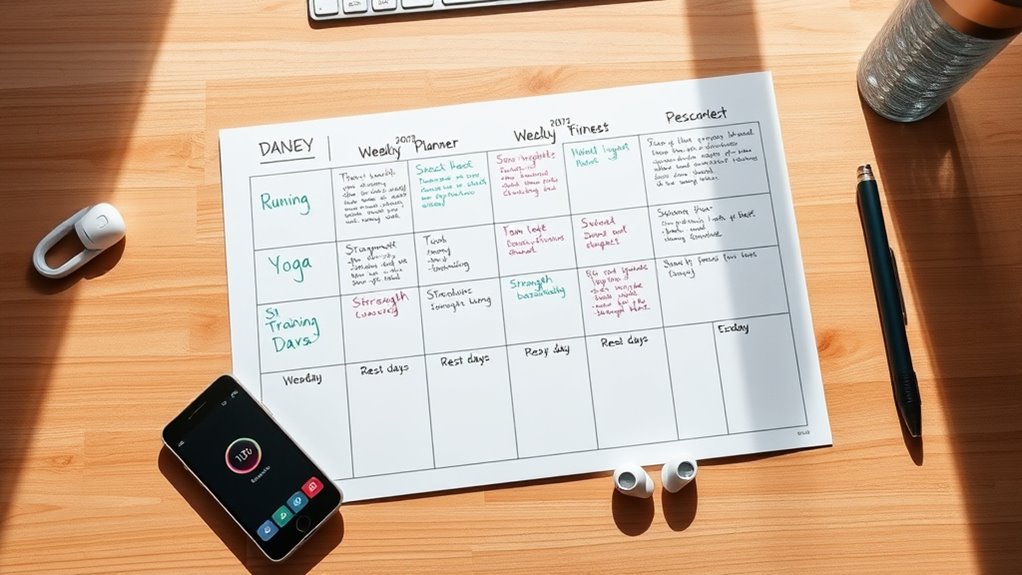
To create your first workout schedule, start by setting clear, achievable goals and tracking your progress weekly using a journal or app. Begin with 3-4 days of balanced activities, combining cardio, strength, and flexibility exercises, each lasting 20-30 minutes. Gradually increase intensity and try new workouts to stay motivated. Remember, consistency and patience are key. If you keep going, you’ll discover more tips to help you build a sustainable, effective plan tailored just for you.
Key Takeaways
- Begin with a balanced plan including cardio, strength, and flexibility, starting with 20-30 minute sessions.
- Track workouts, weights, and duration weekly to monitor progress and adjust schedules accordingly.
- Gradually increase intensity, reps, or duration each week to ensure consistent progression.
- Incorporate motivational strategies like music or rewards to maintain enthusiasm throughout the plan.
- Review progress regularly and modify the schedule to prevent plateaus and promote sustainable growth.

Are you ready to take the first step toward a healthier, stronger you? Creating your first workout schedule can feel overwhelming, but breaking it down into manageable steps makes it attainable. The key is to develop a plan that’s realistic, sustainable, and motivating. As you start, focus on progress tracking to see your improvements, which helps you stay committed. Keep a journal or use a fitness app to record your workouts, noting how much weight you lift, how many reps you complete, or how long you can hold a plank. Seeing tangible progress fuels your motivation and keeps you pushing forward.
Start your fitness journey by tracking progress to stay motivated and see real improvements.
When designing your weekly plan, begin with a balanced mix of activities. Incorporate cardiovascular exercises like walking, jogging, or cycling, combined with strength training and flexibility routines. Start with shorter sessions, maybe 20 to 30 minutes, and gradually increase intensity and duration as your fitness improves. A well-rounded schedule prevents burnout and minimizes injury risk, making it easier to stick to your goals long-term. Setting clear, attainable goals for each week keeps you focused and gives you milestones to celebrate along the way.
Motivational strategies are essential in maintaining your workout routine. Find what inspires you—whether it’s listening to your favorite music, working out with a buddy, or rewarding yourself after reaching a milestone. Visualize your progress regularly; imagine how much stronger or healthier you’ll feel after sticking with your schedule. Remember, high refresh rates enhance your experience by reducing lag and making your workouts feel more seamless. Even on days when motivation wanes, remind yourself of your reasons for beginning and the benefits you’ll gain.
As you progress week by week, adjust your schedule to challenge yourself without overwhelming. For instance, if you’re comfortable with your current routine, add an extra set, increase your pace, or try a new activity to keep things fresh. Use your progress tracking to identify when you’re ready for these adjustments. Celebrate small wins—completing a full week of workouts, improving your form, or increasing your reps—as these boost your confidence and reinforce positive habits.
In essence, creating your first workout schedule is about consistency, gradual progression, and maintaining motivation. Keep your goals clear, track your progress diligently, and apply motivational strategies that resonate with you. With patience and dedication, your efforts will pay off, and you’ll build a sustainable fitness habit that supports your journey to a healthier, stronger you.
Frequently Asked Questions
How Do I Stay Motivated to Follow My Workout Schedule?
You stay motivated by setting clear goals and tracking your progress regularly. Motivation strategies like rewarding yourself for milestones can keep you engaged. Find accountability partners—friends or workout buddies—who encourage you and hold you responsible. Reminding yourself of your reasons for starting helps maintain focus. Keep workouts enjoyable and vary your routine to prevent boredom. With consistent effort and support, you’ll find it easier to stick to your schedule and stay motivated.
What Should I Do if I Miss a Workout Session?
Imagine you’re in a medieval marketplace, but your workout schedule’s a fragile vessel. If you miss a session, don’t fret—use a rest day to recover or opt for a workout substitution that targets similar muscles. Flexibility keeps you on track, so adjust your plan without guilt. Just reschedule missed workouts when possible and stay committed, knowing that one missed day won’t derail your progress.
How Can I Modify the Schedule for Different Fitness Levels?
You can adapt your workout schedule for different fitness levels by modifying exercises and adjusting intensity. If you’re a beginner, start with lighter weights and fewer reps, gradually increasing as your strength improves. For more advanced levels, add challenging variations or increase intensity. Listen to your body, and don’t hesitate to adapt exercises to suit your current fitness level, ensuring progress without risking injury.
What Equipment Is Essential for a Beginner’s Workout Plan?
You don’t need much to start; essential home equipment includes a set of dumbbells or resistance bands, a yoga mat, and a stability ball. Gym essentials like a jump rope or a pull-up bar can boost your routine. These tools are versatile, affordable, and space-efficient, helping you build strength and endurance without a gym membership. Starting with these basics keeps your workouts simple, effective, and accessible as you progress.
How Do I Track Progress Effectively Over Time?
To monitor progress effectively, you should set clear goals and use progress tracking tools like workout logs or apps. Record details like reps, weight, and how you feel after each session. Regularly review your data to see improvements and adjust your plan accordingly. Staying consistent with goal setting helps you stay motivated and ensures you’re moving in the right direction toward your fitness milestones.
Conclusion
Creating a workout schedule keeps you motivated and on track. Remember, consistency is key—studies show that beginners who stick to a plan are 60% more likely to see progress. Don’t get discouraged by setbacks; adjust your plan as needed. By following this week-by-week template, you’ll build confidence and habits that last. Stay committed, and you’ll be surprised at what you can achieve in just a few weeks!