
Powerlifting and bodybuilding focus on different goals and training styles. If you want to lift the heaviest weights, boost raw strength, and train with high intensity, powerlifting is your path. But if you aim for muscular size, symmetry, and an aesthetic physique, bodybuilding’s varied rep ranges and higher volume suit you better. Understanding these differences can help you pick the right approach to meet your goals. Keep exploring to discover which method aligns best with your aspirations.
Key Takeaways
- Powerlifting focuses on lifting maximum weights in squat, bench press, and deadlift, emphasizing raw strength and low repetitions.
- Bodybuilding aims for muscle hypertrophy and aesthetic symmetry through varied reps, higher volume, and controlled movements.
- Powerlifters prioritize high-intensity, short sessions with heavy weights, while bodybuilders use higher volume for muscle fatigue.
- Nutrition strategies differ: powerlifters focus on protein and carbs for strength, while bodybuilders manipulate calories for muscle growth and fat loss.
- The training and dietary approaches are tailored to each goal: strength gains for powerlifting, physique development for bodybuilding.
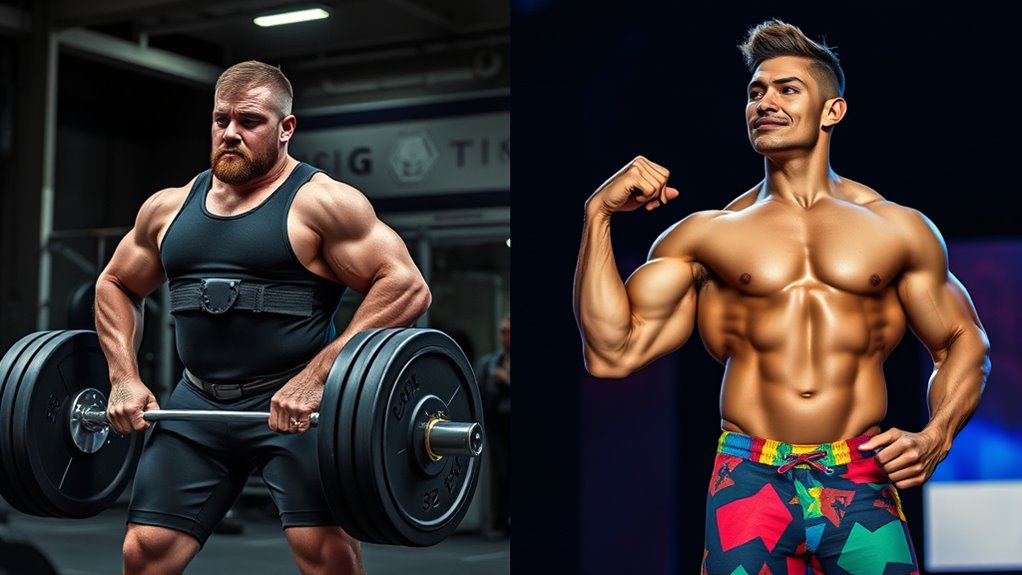
When deciding between powerlifting and bodybuilding, understanding their fundamental differences can help you choose the right path. Both disciplines require dedication, but they focus on different goals, which influence your approach to training and nutrition. Powerlifting centers on maximizing strength in three core lifts: squat, bench press, and deadlift. Your training intensity here is high, often involving heavy weights with low repetitions to push your limits. To fuel this kind of training, your nutrition strategies prioritize protein intake for muscle repair and carbohydrates for energy, along with strategic calorie adjustments to support strength gains without unnecessary fat gain. You might find yourself focusing on eating plenty of lean meats, complex carbs, and healthy fats to sustain the high demands of lifting heavy.
In contrast, bodybuilding emphasizes muscle hypertrophy and aesthetics. Your goal is to develop symmetrical, well-defined muscles, which means your training intensity often varies. You’ll cycle through different rep ranges, including moderate to high repetitions, and incorporate a variety of exercises to target specific muscle groups. The intensity is still challenging, but it’s more about volume and controlled movements rather than maximum effort. Your nutrition strategies here revolve around optimizing muscle growth and fat loss simultaneously. This typically involves eating a high-protein diet with precise calorie control, often cycling your intake to support muscle building during bulking phases and fat loss during cutting phases. You’ll pay close attention to macronutrient timing, ensuring you consume carbs and proteins around your workouts to maximize muscle protein synthesis and recovery.
Both disciplines demand discipline in nutrition and training, but their approaches differ markedly. Powerlifters push their limits with heavy sets, focusing on increasing raw strength, which requires shorter, intense training sessions with ample rest for recovery. Your nutrition supports this with a focus on strength-building foods and adequate calories to fuel your lifts. Bodybuilders, however, often train with higher volume, incorporating multiple exercises per muscle group to induce hypertrophy. Their nutrition strategies involve meticulous planning to manipulate body composition, emphasizing not just what you eat but when you eat it.
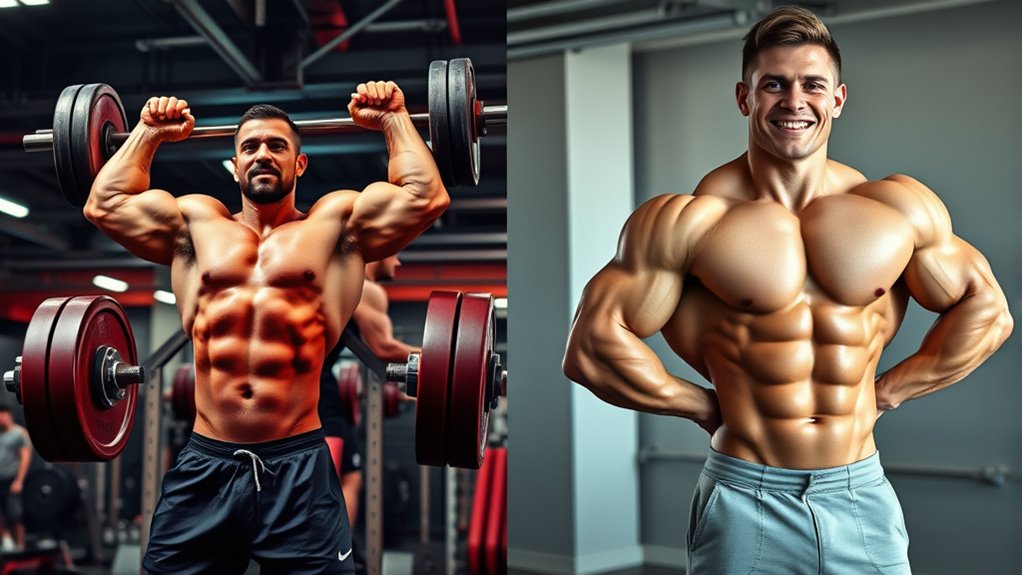
Ultimately, your choice depends on your goals. If you want to lift the heaviest weights possible and focus on raw strength, powerlifting’s high-intensity, low-rep training paired with strategic nutrition makes sense. If your aim is to sculpt your physique, achieve muscle symmetry, and showcase your muscular development, bodybuilding’s varied rep ranges, volume, and precise nutrition will align better with your ambitions. Both paths demand focus and consistency, but understanding these core differences helps you tailor your efforts effectively.
Frequently Asked Questions
Can Someone Compete in Both Powerlifting and Bodybuilding Simultaneously?
Yes, you can compete in both powerlifting and bodybuilding simultaneously, but it requires careful training balance. You’ll need to prioritize different aspects of your routine to avoid overtraining and optimize performance. Keep in mind that competition overlap might cause conflicts in schedules and goals. Focus on periodization, adjusting your training phases, so you can build strength for powerlifting while maintaining muscle size and definition for bodybuilding.
What Are the Main Dietary Differences Between Powerlifters and Bodybuilders?
Think of your diet as the blueprint for your strength and aesthetics. Powerlifters focus on a balanced mix of macronutrient ratios to maximize raw power, often emphasizing proteins and carbs for recovery. Bodybuilders, on the other hand, tweak their supplement strategies to sculpt muscle definition, sometimes reducing fats and carbs to highlight muscle tone. Your dietary approach should mirror your goals, fueling performance or physique with precision and purpose.
How Do Injury Risks Compare in Powerlifting and Bodybuilding?
You face higher injury risks in powerlifting due to heavy lifts like squats, deadlifts, and bench presses, especially if proper injury prevention and risk management aren’t prioritized. In bodybuilding, risks are generally lower because the focus is on controlled movements and higher repetitions. To stay safe in either sport, you should emphasize injury prevention strategies, such as proper technique, adequate rest, and listening to your body to minimize potential injuries.
Is It Possible to Switch From One Training Style to the Other?
Imagine switching from a rugged mountain trail to a smooth, scenic bike path—your training changeover can be seamless with proper planning. You can definitely switch from powerlifting to bodybuilding or vice versa; it’s about skill adaptation and gradually adjusting your routines. Focus on modifying your training intensity, volume, and technique, and give your body time to adapt. With dedication, you’ll master new movements and reach your evolving fitness goals.
Which Training Methods Are Most Effective for Beginners?
For beginners, the most effective training methods focus on training consistency and clear goal setting. You should start with a well-structured program that emphasizes proper form, gradually increasing intensity. Consistency helps your body adapt, while setting specific goals keeps you motivated. Whether you aim for strength or muscle size, sticking to a balanced routine and tracking progress will guarantee steady improvement and help you build a solid foundation.
Conclusion
So, whether you’re chasing raw strength on the powerlifting platform or sculpting your physique like a Renaissance artist, remember it’s all about your goals. Think of powerlifting as your trusty crossbow—focused and powerful—while bodybuilding is your vibrant palette of paints—creative and expressive. Choose what fuels your passion, and don’t forget, even Leonardo would tell you to enjoy the journey. After all, it’s your quest, so make it legendary!