A red light therapy mask can visibly improve skin tone, fine lines, and texture over time, but the category is crowded with lookalike devices that differ sharply in LED count, wavelength coverage, and build comfort. The Shark CryoGlow stands out as the best overall pick thanks to its unique under-eye cooling paired with medical-grade red light, while the iRestore LED Face Mask wins on raw light output with 360 LEDs and three wavelengths for targeting wrinkles and dark spots. If budget matters more than bells and whistles, the RENPHO wireless mask delivers a solid three-mode treatment without cords or a premium price. The main tradeoff you will face is between full face-and-neck coverage (heavier, pricier) versus lightweight face-only masks that are easier to wear during a routine. Read on for the full breakdown of all ten masks and which one fits your skin goals and schedule.

Get workout gear delivered free with Prime
- Fast, free delivery on millions of items
- Prime Video, Amazon Music and more included
- Member-only deals all year
Complete the kit

Key Takeaways
- Wavelength coverage separated the winners: masks offering both 630–660nm red light and 850nm near-infrared (like the INIA and wavytalk models) delivered deeper skin benefits than single-wavelength budget masks.
- Masks with 300+ LEDs, such as the iRestore with 360 diodes, provide more even coverage and shorter effective session times than the 200-LED class.
- Wireless designs (RENPHO, the face-and-neck wireless model) dramatically improve daily compliance, but typically trade away treatment modes and intensity control.
- The Shark CryoGlow’s under-eye cooling is the only feature in this lineup that addresses puffiness directly — no other mask here offers active cooling.
- Neck attachments (American Wellness Authority LX300 and the face-and-neck masks) add real value for anyone concerned about décolletage aging, but make sessions heavier and less comfortable.
| wavytalk Red Light Therapy Mask for Face, Glow Time LED Face Mask 850nm NIR |  | Best Overall | LED Count: 456 high-purity LED chips | Wavelengths: 630nm red, 850nm NIR, 415nm blue, 590nm amber | Power Density: 40mW/cm² | VIEW ON AMAZON | See Our Full Breakdown |
| INIA Red Light Therapy Mask for Face, 850nm NIR, Red/Blue LED Light 4 Modes |  | Best for High-Intensity Treatment | LED Count: 220 high-energy LED chips | Wavelengths: 620nm, 630nm red; 460–470nm blue; 850nm NIR | Power Density: Up to 105mW/cm² | VIEW ON AMAZON | See Our Full Breakdown |
| INIA Red Light Therapy Mask for Face, 850nm NIR, Red/Blue LED Light 4 Modes | 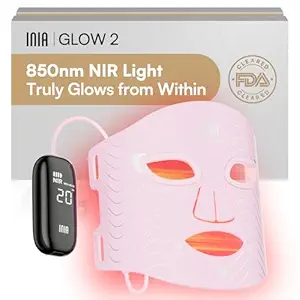 | Best Alternate Listing — Same Core Device | LED Count: 220 LED chips | Wavelengths: 620nm, 630nm red; 460–470nm blue; 850nm NIR | Power Density: Up to 105mW/cm² | VIEW ON AMAZON | See Our Full Breakdown |
| iRestore LED Face Mask for Youthful Skin, Red Light Therapy for Face, Red, Blue & Infrared Therapy for Wrinkles, Fine Lines, Dark Spots with 360 LEDs |  | Best Premium Build | LED Count: 360 LEDs | Wavelengths: 635nm red, 830nm infrared, 415nm blue | Design: Rigid dual-strap frame that hovers over the face | VIEW ON AMAZON | See Our Full Breakdown |
| Red Light Therapy Mask for Face & Neck, Wireless LED Face Mask, 4 Modes |  | Best Full Coverage — Face and Neck | Light Beads: 680 total (100 face + 70 neck panels, 4 LEDs each) | Coverage Area: Face, neck, and chest | Wavelengths: 630nm red, 460nm blue, 605nm amber, 850nm NIR | VIEW ON AMAZON | See Our Full Breakdown |
| Shark CryoGlow LED Face Mask, Red Light Therapy, Under-Eye Cooling, FW312PL |  | Best Premium Feature Set | Light Types: Red, Blue, Deep Infrared | Special Feature: InstaChill under-eye cooling, 3 levels | Treatments: Better Aging, Skin Clearing, Skin Sustain, Under-Eye Revive | VIEW ON AMAZON | See Our Full Breakdown |
| RENPHO Red Light Therapy Mask for Face, 204 LEDs, 3 Modes, Wireless LED Mask |  | Best Value for Everyday Use | LED Count: 204 high-density LED beads | Modes: 3 (620nm Red, 460nm Blue, Red + 850nm Infrared) | Battery: 2 interchangeable units, ~40 minutes each | VIEW ON AMAZON | See Our Full Breakdown |
| American Wellness Authority LX300 Red Light Therapy Face Mask with Neck Attachment |  | Best for Full Face-and-Neck Treatment | FDA Clearance: 510(k) cleared for home use | LED Chips: 432 face / 456 neck (888 total) | Wavelength Modes: 8 | VIEW ON AMAZON | See Our Full Breakdown |
| Red Light Therapy for Face and Neck, 7 Colors LED Mask, Rechargeable |  | Best Budget Face-and-Neck Combo | Primary Wavelength: 630nm red light | Modes: 7 targeted settings plus auto color cycling | Coverage: Full face and neck | VIEW ON AMAZON | See Our Full Breakdown |
| Red Light Therapy for Face, 4 Modes, Wireless 2000mAh Remote |  | Best for Multitaskers | Modes: 4 (850nm Infrared, 630nm Red, 600nm Amber, 460nm Blue) | LED Count: Listed as 360 LED beads / 90 LEDs total | Intensity Levels: 3 | VIEW ON AMAZON | See Our Full Breakdown |
| red light therapy mask | Battery | LED Count | Wavelengths | Session Options |
|---|---|---|---|---|
| wavytalk Red Light Therapy Mas | 2500mAh rechargeable, USB-C | 456 high-purity LED chips | 630nm red, 850nm NIR, 415nm blue, 590nm amber | 10, 15, or 20 minutes |
| INIA Red Light Therapy Mask fo | 2600mAh rechargeable controller | 220 high-energy LED chips | 620nm, 630nm red; 460–470nm blue; 850nm NIR | 10, 20, or 30 minutes with auto shutoff |
| INIA Red Light Therapy Mask fo | 2600mAh rechargeable | 220 LED chips | 620nm, 630nm red; 460–470nm blue; 850nm NIR | 10, 20, or 30 minutes |
| iRestore LED Face Mask for You | — | 360 LEDs | 635nm red, 830nm infrared, 415nm blue | 10-minute sessions |
| Red Light Therapy Mask for Fac | 2000mAh, rechargeable via Type-C | — | 630nm red, 460nm blue, 605nm amber, 850nm NIR | 10, 15, 20, 25, or 30 minutes with auto shutoff |
| Shark CryoGlow LED Face Mask | — | — | — | — |
| RENPHO Red Light Therapy Mask | 2 interchangeable units, ~40 minutes each | 204 high-density LED beads | — | — |
| American Wellness Authority LX | — | — | — | — |
| Red Light Therapy for Face and | 90 minutes use per 40-minute charge | — | — | — |
| Red Light Therapy for Face | 2000mAh rechargeable wireless remote | Listed as 360 LED beads / 90 LEDs total | — | — |
More Details on Our Top Picks
wavytalk Red Light Therapy Mask for Face, Glow Time LED Face Mask 850nm NIR
This option stands out for balancing power, comfort, and treatment flexibility better than anything else in this lineup. With 456 LED chips and 40mW/cm² of power density, it delivers more even full-face coverage than the INIA mask’s 220 chips, which means fewer patchy zones across the cheeks and jawline. The three distinct treatment modes — anti-fine-line, anti-acne, and amber rejuvenation — give it a wider range than the iRestore, which lacks an amber wavelength entirely. The soft liquid silicone build with light-sealing eye pads also makes it more comfortable for long sessions than the rigid iRestore frame. The tradeoff: the 20-minute maximum session is shorter than INIA’s 30 minutes, and the charger is not included, which is an annoying first-day surprise.
Pros:- 456 LEDs provide noticeably more uniform coverage than 200-chip rivals
- Three treatment modes plus optional near-infrared cover nearly every skin concern
- Flexible silicone with light-blocking eye pads is comfortable for multitasking
- Clinically referenced 28-day results data gives buyers realistic expectations
Cons:- Charger not included — you must supply a 5V/1A adapter
- 20-minute session cap is shorter than competitors offering 30 minutes
Best for: Buyers who want one mask that handles acne, fine lines, and dullness without paying premium-brand prices
Not ideal for: Anyone wanting long 30-minute sessions or a complete out-of-box experience — the charger is sold separately
- LED Count:456 high-purity LED chips
- Wavelengths:630nm red, 850nm NIR, 415nm blue, 590nm amber
- Power Density:40mW/cm²
- Session Options:10, 15, or 20 minutes
- Battery:2500mAh rechargeable, USB-C
- Recommended Use:3–5 times per week
- Material:Soft liquid silicone with eye pads
Our verdict“If you only buy one mask from this list, this is the one that does the most things well for the most people.”
INIA Red Light Therapy Mask for Face, 850nm NIR, Red/Blue LED Light 4 Modes
What separates this INIA model from the wavytalk is raw output: at up to 105mW/cm², it delivers more than double the energy density, and that matters if you’re chasing collagen support rather than casual glow maintenance. The four-mode system with an optional NIR boost button is more granular than the RENPHO’s three fixed modes, letting you layer near-infrared onto any color setting. The 30-minute maximum session also outpaces both wavytalk and iRestore, which suits people who like fewer, longer weekly treatments. The compromises are real, though: 220 LEDs means coverage is less dense than wavytalk’s 456, so energy per chip matters more here, and blue light tops out at 460–470nm rather than the 415nm wavelength typically associated with blemish control.
Pros:- 105mW/cm² output is among the highest in this roundup
- NIR can be layered onto any of the four color modes
- 30-minute timer with auto shutoff supports flexible routines
- 2600mAh controller is the largest battery among the face-only masks here
Cons:- 220 LEDs means less dense coverage than the wavytalk’s 456-chip layout
- Blue light at 460–470nm sits outside the 415nm range most cited for acne
Best for: Users focused on anti-aging and collagen who prioritize energy output and longer sessions over sheer LED count
Not ideal for: Acne-first buyers — the blue wavelength runs warmer than the 415nm standard used in wavytalk and iRestore
- LED Count:220 high-energy LED chips
- Wavelengths:620nm, 630nm red; 460–470nm blue; 850nm NIR
- Power Density:Up to 105mW/cm²
- Light Modes:4 modes with optional NIR layering
- Session Options:10, 20, or 30 minutes with auto shutoff
- Battery:2600mAh rechargeable controller
- Recommended Use:3–7 times per week
Our verdict“This is the pick for buyers who treat light therapy like a workout — high intensity, longer sessions, measurable effort.”
INIA Red Light Therapy Mask for Face, 850nm NIR, Red/Blue LED Light 4 Modes
Readers should know upfront: this listing is functionally the same INIA device reviewed above — identical 220 LEDs, identical 105mW/cm² output, identical four modes with NIR layering. It earns a slot because it’s often the easier listing to find in stock, and buying decisions at this level sometimes come down to availability rather than specs. Compared with the wireless INTEO face-and-neck mask, this INIA skips the neck piece but delivers higher energy per chip, which is why I’d steer anti-aging buyers here and coverage-focused buyers there. The same critiques apply: coverage density trails the wavytalk’s 456-chip array, and the blue wavelength isn’t the classic 415nm acne spec. If you’re choosing between the two INIA listings, pick whichever ships faster to you.
Pros:- Same high 105mW/cm² output and dual-wavelength design as the primary INIA listing
- Four customizable modes with optional near-infrared on each
- Long 30-minute timer ceiling with automatic shutoff
- Often easier to find in stock than the alternate listing
Cons:- Duplicate of the other INIA listing — no spec advantage over it
- 220 LEDs give sparser coverage than wavytalk’s 456-chip mask
Best for: Buyers who’ve already decided on the INIA spec sheet and want the listing with better availability
Not ideal for: Anyone who needs maximum LED coverage or a dedicated 415nm blue mode for breakout control
- LED Count:220 LED chips
- Wavelengths:620nm, 630nm red; 460–470nm blue; 850nm NIR
- Power Density:Up to 105mW/cm²
- Light Modes:4 modes plus NIR activation
- Session Options:10, 20, or 30 minutes
- Battery:2600mAh rechargeable
- Recommended Use:3–7 times per week, 10–30 minutes
Our verdict“A sensible buy only if this listing beats its twin on shipping or availability — the hardware is the same.”
iRestore LED Face Mask for Youthful Skin, Red Light Therapy for Face, Red, Blue & Infrared Therapy for Wrinkles, Fine Lines, Dark Spots with 360 LEDs
This model is better suited to buyers who value brand track record and build quality over sheer spec numbers. iRestore brings two decades of light-therapy R&D and a dermatologist-recommended reputation — something none of the newer entrants like wavytalk or INIA can claim. Its 360 LEDs with three well-chosen wavelengths (635nm red, 830nm infrared, 415nm blue) hit the classic therapeutic targets, and the rigid frame with dual straps that hovers off the face is arguably more hygienic and durable than floppy silicone designs. The downsides follow from that design: it’s less packable than the flexible masks, there’s no amber mode for dullness, and the 10-minute session structure assumes short, frequent use rather than the 30-minute sessions INIA allows.
Pros:- Established US brand with 20+ years of light-therapy development
- 360 LEDs with three clinically standard wavelengths including true 415nm blue
- Rigid hovering frame is durable and keeps light off the eyes
- Efficient 10-minute sessions, 3–5 times weekly
Cons:- Rigid frame is bulkier and less travel-friendly than silicone masks
- No amber wavelength, so dullness-focused users get fewer options
Best for: Buyers who prioritize an established brand, durable rigid construction, and the shortest possible daily time commitment
Not ideal for: Travelers and anyone wanting amber light or longer 30-minute sessions in a flexible format
- LED Count:360 LEDs
- Wavelengths:635nm red, 830nm infrared, 415nm blue
- Design:Rigid dual-strap frame that hovers over the face
- Session Options:10-minute sessions
- Recommended Use:3–5 times per week
- Compatibility:Can be paired with serums and moisturizers
- Brand Background:20+ years R&D, dermatologist-recommended US brand
Our verdict“The closest thing to a clinic-brand purchase in this lineup — pay for pedigree and build, accept less flexibility.”
Red Light Therapy Mask for Face & Neck, Wireless LED Face Mask, 4 Modes
This INTEO mask makes the most sense for one specific reason the others can’t match: it treats the face and neck together. Every other mask in this roundup stops at the jawline, and the neck is where many buyers first notice aging — the American Wellness Authority LX300 offers a neck attachment, but this builds it in natively. With 680 total light beads spread across both panels, raw coverage beats the wavytalk’s 456, and the fully wireless magnetic controller eliminates the cord entirely, unlike the iRestore. The tradeoffs are worth weighing: 680 beads across a much larger area means energy per square inch is lower than INIA’s concentrated 105mW/cm² output, the 2000mAh battery is the smallest here, and an unknown-brand device carries more quality-assurance risk than iRestore.
Pros:- Face-and-neck coverage in one device, unique among face-only rivals
- 680 light beads deliver the broadest raw coverage in this batch
- Fully wireless magnetic controller with no cords to manage
- Five timer settings from 10 to 30 minutes offer routine flexibility
Cons:- Light energy spread over a larger area means lower intensity per zone
- Smaller 2000mAh battery relative to the INIA and wavytalk
Best for: Buyers whose concerns extend below the jawline — neck lines, chest-area sun damage — and cord-haters who move around during sessions
Not ideal for: Anti-aging-focused users who want maximum energy density on the face alone — power is spread thinner here
- Light Beads:680 total (100 face + 70 neck panels, 4 LEDs each)
- Coverage Area:Face, neck, and chest
- Wavelengths:630nm red, 460nm blue, 605nm amber, 850nm NIR
- Light Modes:4 modes
- Session Options:10, 15, 20, 25, or 30 minutes with auto shutoff
- Battery:2000mAh, rechargeable via Type-C
- Design:Wireless magnetic controller, soft silicone
- Recommended Use:3–4 times per week, 20 minutes per session
Our verdict“Buy it for the neck coverage and cordless freedom, not for raw power — it’s the coverage play of this roundup.”
Shark CryoGlow LED Face Mask, Red Light Therapy, Under-Eye Cooling, FW312PL
This option stands out for one thing no other mask in this lineup offers: built-in under-eye cooling alongside its red, blue, and infrared light. The temp-controlled InstaChill pads target puffiness and tired eyes in a way the RENPHO 204-LED mask simply cannot, since RENPHO focuses purely on light modes. Treatments here are short — 4 to 8 minutes — compared with the 10-30 minute sessions the LX300 demands, which makes daily consistency far easier to maintain. The FDA clearance and independent clinical testing also give it stronger credibility than the generic 7-color masks later in this guide. The tradeoff: Shark charges a premium for the cryo feature, and if you only care about wrinkle or acne treatment, you’re paying for hardware you may never use. It’s also a rigid mask rather than flexible silicone, so fit is less forgiving.
Pros:- Unique under-eye cooling with 3 chill levels
- FDA-cleared with independent clinical testing on over 100 participants
- Four dermatologist-developed treatments with short 4-8 minute sessions
- May qualify for FSA/HSA reimbursement
Cons:- Premium price for a feature set that exceeds basic light therapy needs
- Rigid mask construction offers a less adaptable fit than flexible silicone rivals
Best for: Buyers who want a clinically backed, multi-treatment device and specifically struggle with puffy or tired under-eyes
Not ideal for: Budget-conscious buyers who only need basic red light — the cooling feature adds meaningful cost with no effect on wrinkles or acne
- Light Types:Red, Blue, Deep Infrared
- Special Feature:InstaChill under-eye cooling, 3 levels
- Treatments:Better Aging, Skin Clearing, Skin Sustain, Under-Eye Revive
- Session Length:4-15 minutes
- Regulatory:FDA-cleared; independently clinically tested
- Charging:USB-C
- Includes:Mask, clip-on chill pads, remote, charging cable
Our verdict“If puffy eyes are as much a concern as fine lines and acne, this is the only mask here that addresses both at once — everyone else can spend less.”
RENPHO Red Light Therapy Mask for Face, 204 LEDs, 3 Modes, Wireless LED Mask
Compared with the pricier Shark CryoGlow, this model strips away the extras and delivers the core benefit — red, blue, and combined red-plus-infrared light — at a far friendlier price. The two interchangeable magnetic control units are a genuinely practical touch: one can charge while the other runs your session, so you’re never waiting on a battery, a problem the single-remote masks in this guide can’t solve. The flexible silicone build wraps the full face more comfortably than rigid designs, and the automatic 10-minute timer keeps routines simple. The compromises are real, though. There’s no neck coverage like the LX300 provides, no intensity adjustment, and no FDA clearance — so buyers relying on clinical claims will want the Shark or LX300 instead. For straightforward at-home glow maintenance, this pick makes the most sense for the money.
Pros:- Dual magnetic control units double effective battery life
- Flexible, lightweight silicone with adjustable straps
- Three sensible modes covering wrinkles, acne, and both together
- Automatic 10-minute timer for safe, simple sessions
Cons:- No intensity adjustment or FDA clearance
- No neck coverage unlike the LX300 or 7-color mask
Best for: Skincare beginners who want a flexible, no-fuss cordless mask for daily glow maintenance without a big spend
Not ideal for: Buyers who want documented clinical clearance or neck coverage — this mask offers neither
- LED Count:204 high-density LED beads
- Modes:3 (620nm Red, 460nm Blue, Red + 850nm Infrared)
- Battery:2 interchangeable units, ~40 minutes each
- Timer:Automatic 10-minute shut-off
- Material:Flexible silicone
- Design:Cordless, adjustable head straps
Our verdict“The most sensible entry point for buyers who want reliable three-mode light therapy without paying for clinical branding or bonus features.”
American Wellness Authority LX300 Red Light Therapy Face Mask with Neck Attachment
If the RENPHO mask covers the face only, the LX300 goes further with 888 total LED chips split between face and neck — coverage that matters if neckline firmness is part of your goal. Its FDA 510(k) clearance puts it in the same credibility tier as the Shark CryoGlow, but at a more treatment-focused price, and the 8 wavelength modes with 5 intensity levels offer deeper customization than anything else in this batch. The 50,000-hour LED lifespan suggests this will outlast cheaper generic masks several times over. The drawbacks: it requires a wired remote during use, which undercuts the cordless freedom of the RENPHO and the 2000mAh-remote mask, and results demand patience — two to three sessions weekly for weeks before visible change. Commitment-phobes should look elsewhere.
Pros:- FDA 510(k)-cleared for home acne treatment and skin appearance
- 888 LED chips across face and neck for full coverage
- 8 wavelength modes and 5 intensity levels for real customization
- 50,000-hour LED lifespan and 1-year warranty
Cons:- Wired remote must stay connected during use
- Slow results requiring consistent multi-week sessions
Best for: Dedicated users targeting both facial wrinkles and neck lines who want FDA-cleared hardware and granular control
Not ideal for: Casual or impatient users — the wired remote and weeks-long commitment routine will frustrate anyone wanting grab-and-go convenience
- FDA Clearance:510(k) cleared for home use
- LED Chips:432 face / 456 neck (888 total)
- Wavelength Modes:8
- Intensity Levels:5
- Timer:10-30 minutes with auto shut-off
- Charging:USB-C rechargeable
- LED Lifespan:50,000 hours
- Includes:Mask, wired remote, cable, eye covers, straps
Our verdict“The most powerful and customizable option here for serious face-and-neck treatment, provided you can tolerate the tether and the wait.”
Red Light Therapy for Face and Neck, 7 Colors LED Mask, Rechargeable
Where the LX300 offers FDA clearance and 888 chips at a premium, this 7-color mask delivers the same face-plus-neck coverage idea at a budget-tier price. The 40-minute charge yielding 90 minutes of cordless use is the standout practical advantage — nearly double the runtime of the RENPHO’s single control unit — and the magnetic neck attachment makes it more versatile than face-only masks. The 7 modes plus auto-cycling sound impressive on paper, but this is where marketing outruns evidence: most of those colors have thin clinical support compared with the well-studied red, blue, and infrared trio that the LX300 and RENPHO focus on. There’s no FDA clearance either. Still, for buyers who want broad coverage and experimentation without a large investment, this model makes the most sense.
Pros:- 90 minutes of cordless use from a 40-minute charge
- Magnetic neck attachment included at a budget price
- 7 modes plus automatic color cycling for variety
- Lightweight, adjustable fit suitable for most face shapes
Cons:- No FDA clearance or cited clinical testing
- Extra color modes are lightly supported by evidence compared with red/blue/infrared
Best for: Budget-minded buyers who want neck coverage and long cordless runtime for casual, exploratory light therapy
Not ideal for: Evidence-driven buyers — no FDA clearance and several modes lack the clinical support of established wavelengths
- Primary Wavelength:630nm red light
- Modes:7 targeted settings plus auto color cycling
- Coverage:Full face and neck
- Battery:90 minutes use per 40-minute charge
- Design:Cordless, lightweight, adjustable strap
- Includes:Mask, magnetic neck attachment, USB-C cable, head strap, manual
Our verdict“A reasonable low-cost way to test face-and-neck light therapy, as long as you treat the extra color modes as bonus rather than science.”
Red Light Therapy for Face, 4 Modes, Wireless 2000mAh Remote
This mask’s pitch is true wireless freedom: a 2000mAh remote with no cable tether, unlike the LX300’s wired remote that forces you to stay plugged to the device mid-session. That makes it the pick for anyone who wants to fold light therapy into chores, yoga, or a commute-ready routine. The 5 timer settings from 10 to 30 minutes give more scheduling flexibility than the RENPHO’s fixed 10-minute cycle, and light-blocking eye cups plus a soft silicone strap keep long sessions comfortable. It’s not all convenience, though — the spec sheet’s own math is confusing, listing both 360 LED beads and a total of 90 LEDs, and with no FDA clearance or cited clinical data, its claims rest on the same wavelengths rather than on testing. Intensity options stop at three levels, short of the LX300’s five.
Pros:- Fully wireless 2000mAh remote with no tether during use
- Five timer settings from 10 to 30 minutes
- Four wavelengths including amber, rarely seen in this lineup
- Light-blocking eye covers and comfortable silicone fit
Cons:- Confusing, contradictory LED count in product specifications
- No FDA clearance or clinical data; only 3 intensity levels
Best for: Busy users who want to wear a mask while moving around the house and prefer flexible session lengths
Not ideal for: Buyers who prioritize verified specs and clinical clearance — the ambiguous LED counts and lack of FDA clearance will not inspire confidence
- Modes:4 (850nm Infrared, 630nm Red, 600nm Amber, 460nm Blue)
- LED Count:Listed as 360 LED beads / 90 LEDs total
- Intensity Levels:3
- Battery:2000mAh rechargeable wireless remote
- Charging:USB-C
- Timer:10, 15, 20, 25, or 30 minutes
- Design:Soft silicone, adjustable strap, light-blocking eye covers
Our verdict“Choose this for cordless convenience and flexible timing, not for documented performance — spec skeptics should pay up for the LX300 or Shark.”

How We Picked
My ranking logic starts with light output quality: the number of LEDs, whether the device combines red light (630–660nm) with near-infrared (850nm), and how evenly the diodes distribute across the face. A mask with more well-placed LEDs covers more skin area per session, which directly affects how quickly you see results. I then weighed usability — cordless operation, weight, eye comfort, session length, and how easy the controls are to use mid-treatment — because consistency matters more than any single spec in red light therapy.
From there, I scored each mask on build quality, mode versatility, and coverage area. Masks that included the neck or offered targeted features like cooling or blue light for breakouts ranked higher for specific buyer types even when they cost more. Finally, I considered value: a cheaper mask with fewer LEDs and no infrared can still be a smart buy for beginners, but it was never allowed to outrank a better-built device purely on price. Every pick below earned its spot by being the clear best choice for a defined buyer, not by averaging out to inoffensive mediocrity.
| red light therapy mask | Design |
|---|---|
| wavytalk Red Light Therapy Mas | — |
| INIA Red Light Therapy Mask fo | — |
| INIA Red Light Therapy Mask fo | — |
| iRestore LED Face Mask for You | Rigid dual-strap frame that hovers over the face |
| Red Light Therapy Mask for Fac | Wireless magnetic controller, soft silicone |
| Shark CryoGlow LED Face Mask | — |
| RENPHO Red Light Therapy Mask | Cordless, adjustable head straps |
| American Wellness Authority LX | — |
| Red Light Therapy for Face and | Cordless, lightweight, adjustable strap |
| Red Light Therapy for Face | Soft silicone, adjustable strap, light-blocking eye covers |
Factors to Consider When Choosing Red Light Therapy Mask
Before choosing a red light therapy mask, it helps to understand what actually drives results and where manufacturers cut corners. These are the factors that mattered most across this comparison.Wavelength Combination Is the Real Spec That Matters
Most shoppers fixate on LED count, but wavelength determines what the light actually does. Red light around 630–660nm works nearer the surface to improve tone and texture, while 850nm near-infrared penetrates deeper to support collagen production where wrinkles form. A mask with only visible red light, no matter how many LEDs, is working with half the toolkit. Blue light is a separate consideration entirely — it targets acne-causing bacteria rather than aging, so it only matters if breakouts are part of your concern. The most versatile masks in this category offer both red and near-infrared, with blue as an optional mode. A common mistake is buying a seven-color rainbow mask when three of those colors have negligible evidence behind them; fewer, well-chosen wavelengths usually beat a long color menu.
LED Count and Placement Overlap
LED density affects two things: how evenly light reaches every part of your face, and how short your sessions can be. A mask in the 300+ LED range like the iRestore can deliver a fuller dose of light in a ten-minute session than a 150-LED mask does in twenty. But placement matters alongside raw numbers — diodes clustered at the cheeks with sparse coverage at the forehead create uneven results over months of use. When comparing masks, look for descriptions that mention coverage across the full face rather than just a total diode count. The difference between 200 and 360 LEDs is noticeable in results timelines; the difference between 360 and 400 rarely is. Pay for even coverage, not just a bigger number on the box.
Wired Versus Wireless Changes Whether You Actually Use It
Red light therapy only works if you do it consistently, typically four to five sessions per week for eight to twelve weeks before results become visible. This makes cordless convenience a genuine performance factor, not a luxury. A wireless mask lets you walk around, fold laundry, or answer emails during a session, while a wired mask tethers you near an outlet. The tradeoff is that wireless masks carry their battery in the headset, adding weight to your face, and cheaper batteries degrade over a couple of years. If you already struggle to keep up with skincare routines, prioritize wireless. If you treat your sessions as dedicated relaxation time, a wired mask with consistent power delivery is perfectly fine and often cheaper per LED.
Face-Only Versus Face-and-Neck Coverage
The neck is one of the first places to show aging, yet most entry-level masks ignore it entirely. Face-and-neck designs like the American Wellness Authority LX300 treat the full décolletage area, which matters if your concern is overall aging rather than just facial texture. The compromise is weight and fit: a mask draped over your neck and chest is harder to read or move around in, and some users find the neck portion presses awkwardly. A reasonable middle path is buying a face-only mask now and adding a separate neck panel later, though that often costs more in total. Decide based on where your skin concerns actually are — buying neck coverage you will not use just adds bulk to every session.
Eye Comfort and Safety Features
Every mask in this category directs bright light at your face for ten to twenty minutes at a time, so eye protection design deserves real scrutiny. Better masks recess the LEDs around the eye area, include built-in eye shields, or dim the diodes nearest the eyes. Some models ship with removable goggles, which work but are easy to lose. If you are light-sensitive or prone to migraines, look for masks advertised with eye-cutout design rather than full-coverage panels. The Shark CryoGlow’s under-eye cooling highlights another angle: some devices actively treat the eye area rather than just avoiding it, which appeals to anyone fighting puffiness and dark circles. Never assume eye safety — check the product description specifically before buying.
Realistic Expectations on Timeline and Results
The biggest disappointment in this category comes not from bad products but from unrealistic timelines. Red light therapy works through cumulative cellular stimulation, which means visible changes in fine lines and tone typically take eight to twelve weeks of consistent use — not days. Anyone expecting spa-treatment results after a week will be unhappy with even the best mask here. Results also depend on starting point: younger skin maintaining collagen responds differently than mature skin rebuilding it. Set a calendar reminder, commit to the recommended session frequency, and photograph your skin at week one, six, and twelve to judge progress honestly. Budget masks can absolutely deliver results within this timeline; what they cannot do is speed it up. Buying a premium mask will not shorten the wait — it improves comfort and coverage during it.
Frequently Asked Questions
How often should I use a red light therapy mask to see results?
Most manufacturers recommend three to five sessions per week, lasting ten to twenty minutes each, though the right frequency depends on the mask’s LED density and intensity. Higher-output masks like the iRestore with 360 LEDs often specify shorter sessions because you reach an effective light dose faster, while lower-density masks may call for the full twenty minutes. Consistency beats intensity — five shorter weekly sessions outperform one long weekend session by a wide margin, because the cellular response compounds over time. Expect subtle improvements in tone around the six-week mark and more visible changes in fine lines by weeks ten to twelve. If your schedule cannot support four sessions a week, a wireless mask like the RENPHO makes compliance dramatically easier since you can multitask during treatment.
Do more LED colors actually make a mask better?
Not usually. The wavelengths with the strongest evidence are red light around 630–660nm and near-infrared at 850nm, plus blue light if acne is a concern. Masks advertising seven or more colors often include shades like green, yellow, or purple, which have far weaker research support for skin benefits. When comparing this roundup’s entries, the INIA with four focused modes typically serves buyers better than generic seven-color masks that spread their diodes across questionable wavelengths. The smarter approach is matching wavelengths to your specific goal: red and near-infrared for aging, blue for breakouts, and skipping anything marketed mostly on color variety. A mask with three well-chosen modes outperforms one with nine gimmicky ones.
Is near-infrared (850nm) worth paying extra for?
For anti-aging goals, yes — near-infrared is where much of the collagen-stimulating benefit comes from, because 850nm light penetrates deeper into the skin than visible red light. Red light alone improves surface tone and texture, but the combination of red plus near-infrared addresses both the surface and the structural layers where wrinkles form. Masks like the wavytalk and INIA models include 850nm at mid-range prices, so the premium is often modest. If your only concern is mild brightness or acne-related redness, a red-and-blue mask without infrared may serve you fine and cost less. But anyone buying primarily for fine lines and firmness should treat near-infrared as non-negotiable rather than an upsell.
Can I use a red light therapy mask with my existing skincare products?
Generally yes, but the order and product type matter. Light passes through clear serums reasonably well, so hydrating serums applied before a session are usually fine and can make the mask more comfortable to wear. Thick creams, oils, and anything containing retinol or strong acids should be applied after your session instead — opaque layers block light from reaching the skin, and photosensitizing ingredients can cause irritation under concentrated LED exposure. Clean, dry (or lightly serum-damp) skin is the ideal baseline for treatment. Some users also apply moisturizer afterward since sessions can be mildly drying. If your routine includes prescription topicals, check with your dermatologist first, as certain acne medications increase light sensitivity.
Are expensive masks like the Shark CryoGlow actually worth it over budget options?
It depends entirely on which features you will realistically use. The premium tier buys things budget masks cannot match — the CryoGlow’s active under-eye cooling is genuinely unique in this lineup and directly addresses puffiness and dark circles, something no sub-premium mask here does. But the core red light output of a well-built budget mask is not dramatically inferior for basic anti-aging goals. Pay up if you want targeted features, superior build comfort, or a more polished experience you will actually look forward to using. Skip the premium tier if your goal is straightforward full-face red light on a budget, because a mask like the RENPHO delivers that competently. The wrong purchase is not the cheap one or the expensive one — it is the one whose extra features you never use.
Conclusion
After comparing all ten masks, the right choice comes down to what you are treating and how you will use it. For the best overall pick, the Shark CryoGlow earns the top spot by combining serious red light therapy with under-eye cooling no competitor offers, making every session multitask against puffiness as well as aging. The iRestore LED Face Mask is the best premium choice for pure light output — its 360 LEDs and three-wavelength coverage make it the strongest option if wrinkle and dark-spot reduction is your only goal and you do not need cooling features.
For best value, the RENPHO wireless mask delivers dependable three-mode treatment without a cord or a premium price, while the wavytalk Glow Time mask is the best pick for beginners thanks to its straightforward operation and inclusion of 850nm near-infrared at an approachable price point. If you want targeted acne plus anti-aging treatment, the INIA red/blue four-mode mask covers both concerns in one device. And for full face-and-neck coverage, the American Wellness Authority LX300 with its neck attachment is the clear choice for anyone whose concerns extend below the jawline. Match the mask to your actual skin goals and routine, commit to consistent sessions for at least eight weeks, and any of these picks will serve you well.
Fall Picks
fall essentials
As an affiliate, we earn on qualifying purchases.