
To calculate your macros, start by determining your total daily calorie needs based on factors like age, gender, activity level, and your goals, whether it’s losing weight, gaining muscle, or maintaining. Then, divide those calories into specific percentages for protein, carbs, and fats that suit your objectives. Using nutrition tools or apps can make this easier. Keep exploring for detailed steps to fine-tune your macro plan effectively.
Key Takeaways
- Determine your total daily calorie needs based on age, gender, activity level, and goals.
- Decide the macro percentage split (protein, carbs, fats) aligned with your fitness objectives.
- Calculate grams for each macro by applying calories per gram (protein and carbs: 4 kcal, fats: 9 kcal).
- Track your food intake accurately using nutrition apps or food diaries to monitor macro consumption.
- Adjust macro ratios based on energy levels, progress, and changing goals for optimal results.
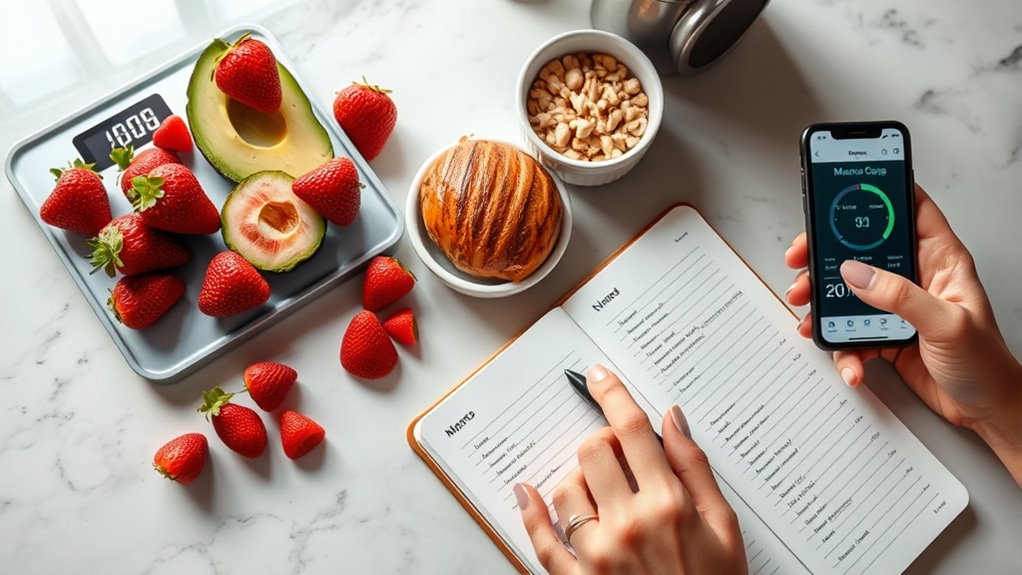
Have you ever wondered how to determine the right balance of nutrients for your goals? The key lies in understanding your macro distribution and how calorie counting plays an essential role in tailoring your diet. When you start tracking your macros, you’re fundamentally figuring out how much protein, carbs, and fats you should consume daily to support your fitness or health targets. This process isn’t complicated, but it does require some initial planning and awareness of your body’s needs.
First, you need to calculate your total daily calorie intake. This depends on factors like age, gender, activity level, and your specific goals—whether that’s losing weight, gaining muscle, or maintaining your current weight. Once you know your calorie target, you can begin to divide those calories into macronutrients. Your macro distribution determines the percentage of calories coming from protein, carbs, and fats. For example, someone aiming for muscle gain might set a macro split of 40% carbs, 30% protein, and 30% fats, while someone focusing on fat loss might prefer a different ratio. These percentages are flexible and should reflect your personal goals and how your body responds.
Tracking your calories and macros daily helps you stay aligned with your goals and see where adjustments are needed. When calorie counting, you record every piece of food you eat, paying close attention to portion sizes. This helps make certain you’re not unintentionally overeating or undershooting your macro targets. Use a nutrition app or food diary to simplify this process, making it easier to log and analyze your intake. Over time, you’ll notice patterns and can tweak your macro distribution to better suit your changing needs or preferences.
Track daily food intake and use apps to adjust your macros effectively over time.
Understanding macro distribution isn’t just about hitting numbers; it’s about creating a sustainable eating pattern that fuels your body effectively. For instance, if you notice you’re lacking energy during workouts, you might increase your carbohydrate intake. Conversely, if you’re not seeing fat loss despite calorie counting, you might want to adjust your fat or carbohydrate ratios. Additionally, the role of calorie counting is essential in ensuring your overall intake aligns with your goals. Remember, the goal is to find a balance that supports your lifestyle and helps you reach your goals without feeling deprived or overwhelmed.

Etekcity Smart Food Kitchen Scale with Nutritional Calculator, Free App with 19 Nutrients Tracking, Calorie, Marco, Digital grams and ounces for weight loss, Premium Stainless Steel, 11lb
𝗬𝗼𝘂𝗿 𝗛𝗲𝗮𝗹𝘁𝗵 𝗘𝘅𝗽𝗲𝗿𝘁: Easily track your intake of up to 19 nutrients, monitor trends, create daily, weekly and…
As an affiliate, we earn on qualifying purchases.
As an affiliate, we earn on qualifying purchases.
Frequently Asked Questions
How Often Should I Update My Macro Goals?
You should update your macro goals every 4 to 6 weeks, especially if your meal timing or activity levels change. Regular adjustments help maintain macro flexibility, ensuring your diet supports your evolving goals. Keep an eye on progress and how your body responds, then tweak your macros accordingly. This way, you stay on track, optimize results, and keep your meal timing aligned with your lifestyle.
Can I Customize My Macros for Specific Diets?
Yes, you can customize your macros for specific diets. Macronutrient customization allows you to tailor your diet-specific macros based on your goals and dietary preferences, such as keto, paleo, or vegan. By adjusting your carbohydrate, protein, and fat intake, you optimize your nutrition for better results. Always consider your individual needs and consult a professional if needed to guarantee your diet-specific macros support your health and fitness objectives.
What Are Signs of Macro Imbalances?
You might notice fatigue, constant hunger, or mood swings—clear signs of imbalance. These symptoms often indicate macronutrient deficiencies or an uneven intake. While your body signals these signs, ignoring them can lead to more serious health issues. Pay attention to persistent cravings, digestive issues, or weight changes, as they reveal signs of imbalance. Regularly monitoring your macros helps prevent deficiencies and keeps your energy steady, ensuring overall well-being.
How Do I Track Macros Without a Scale?
You can track macros without a scale by focusing on meal prep and food journaling. Use measuring cups and visual cues to estimate portion sizes, then log your meals daily. Keep a food journal to monitor your intake and make adjustments as needed. This approach helps you stay mindful of your macros, even without precise weight measurements, ensuring you meet your nutritional goals consistently.
Are There Apps That Automatically Calculate Macros?
Yes, there are apps that automatically calculate your macros, making diet customization easier. Apps like MyFitnessPal, Lose It!, and Cronometer sync with your food entries and track macro calculation in real-time. They analyze your daily intake and suggest adjustments based on your goals, helping you stay on track without manual calculations. These tools simplify macro tracking, so you can focus on your progress and maintain a personalized diet plan effortlessly.
Etekcity Smart Food Kitchen Scale with Nutritional Calculator, Free App with 19 Nutrients Tracking, Calorie, Marco, Digital grams and ounces for weight loss, Premium Stainless Steel, 11lb
𝗬𝗼𝘂𝗿 𝗛𝗲𝗮𝗹𝘁𝗵 𝗘𝘅𝗽𝗲𝗿𝘁: Easily track your intake of up to 19 nutrients, monitor trends, create daily, weekly and…
As an affiliate, we earn on qualifying purchases.
As an affiliate, we earn on qualifying purchases.
Conclusion
Tracking your macros helps you stay on top of your health goals. Did you know that research shows people who monitor their intake are 30% more likely to stick with healthy habits? By calculating your macros accurately, you gain better control over your diet and see real progress. So, keep tracking, adjusting, and stay consistent—you’re on your way to reaching your fitness goals faster and more effectively!

Calorie Counter Log Book: Daily Nutrition Intake Tracker Of Your Meals, Calories, Protein, Fat, Carbs, Fiber, Sugar, Sodium
As an affiliate, we earn on qualifying purchases.
As an affiliate, we earn on qualifying purchases.

Bentgo Prep – 20-Piece 1-Compartment Reusable Meal Prep Containers with Lids, PFAS & BPA Free Materials, Durable, Microwave, Freezer, & Dishwasher Safe To Go Food Storage (Blush Pink)
#1 Brand Pick for Meal Prep Containers: Bentgo is the top pick for meal prep containers!* This lightweight,…
As an affiliate, we earn on qualifying purchases.
As an affiliate, we earn on qualifying purchases.