
If you’re choosing between dumbbells and kettlebells for strength training, consider their design and how they affect muscle engagement. Dumbbells offer centralized weight and precise control, making them great for targeted exercises and building strength steadily. Kettlebells, with their off-center weight and textured handle, challenge your stabilizer muscles and support dynamic, full-body movements. Both have benefits—exploring these differences can help you find the best fit for your goals and take your training further.

Get workout gear delivered free with Prime
- Fast, free delivery on millions of items
- Prime Video, Amazon Music and more included
- Member-only deals all year
Key Takeaways
- Dumbbells offer controlled, precise movements ideal for targeted strength training, while kettlebells excel in dynamic, functional exercises.
- Dumbbells have centralized weight for stability, making them easier to handle for isolated muscle work; kettlebells require stabilizer engagement.
- Both tools enhance strength but serve different goals: dumbbells for muscle isolation, kettlebells for explosive, full-body power.
- Incorporating both increases workout versatility, combining controlled strength with functional, ballistic movements.
- The better choice depends on individual goals: dumbbells for muscle building, kettlebells for functional and power training.
Products Worth Considering

Bowflex SelectTech 840 Adjustable Kettlebell

BowFlex Results Series SelectTech Dumbbells

OMRON VIVA 360+ Body Composition Monitor and Smart Scale
As an affiliate, we earn on qualifying purchases.
Key Differences in Design and Handling

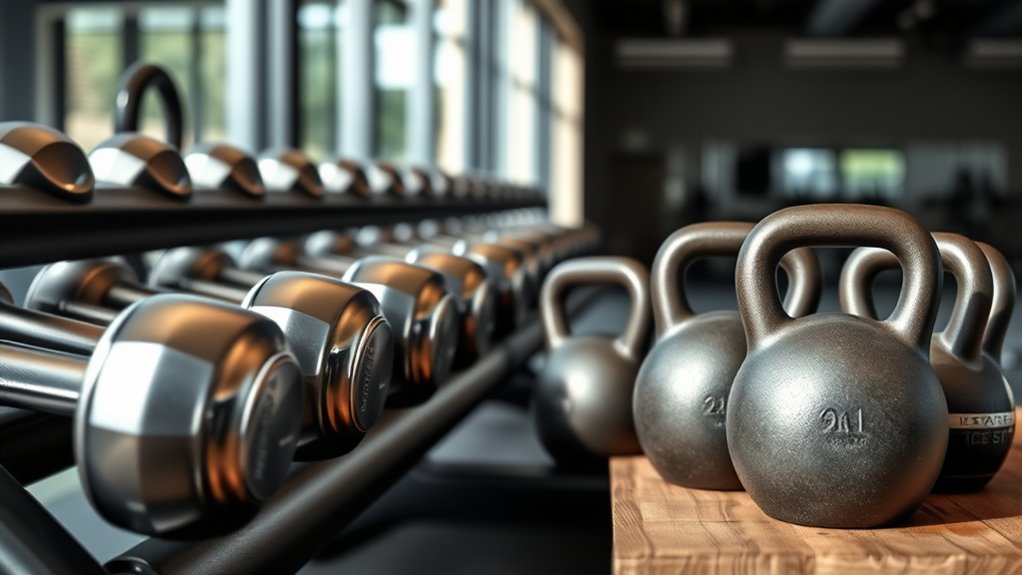
When comparing dumbbells and kettlebells, the most noticeable difference lies in their design and handling. Dumbbells feature an ergonomic grip that’s straight and easy to hold, providing stability during lifts. Their weight distribution is centralized, with the weight evenly spread on either side of the handle, making them straightforward to control. Kettlebells, on the other hand, have a handle that curves over a solid, rounded weight, which shifts the center of mass away from the grip. This design requires you to engage different stabilizer muscles for balance and control. The ergonomic grip on kettlebells is thicker and sometimes textured, helping you grip securely during dynamic movements. Additionally, kettlebells are often used for dynamic exercises that improve explosive strength and endurance. Overall, both tools offer unique handling experiences driven by their distinct design and weight distribution.
Impact on Muscles and Workout Versatility
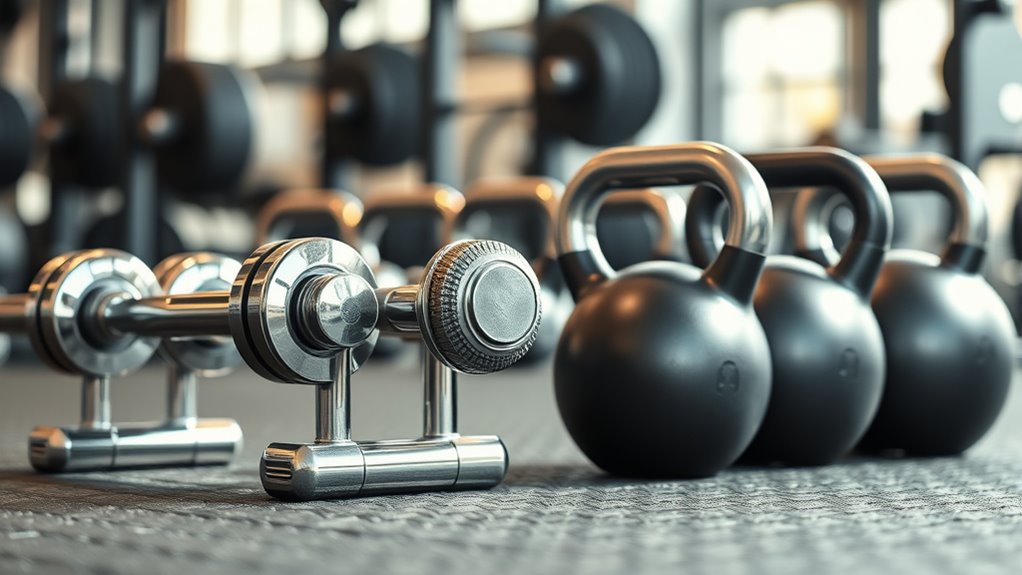
The design differences between dumbbells and kettlebells directly influence how they target muscles and expand your workout options. Dumbbells typically allow for more precise muscle activation, enabling you to isolate specific muscles through controlled movements. Kettlebells, on the other hand, engage multiple muscle groups simultaneously, especially during dynamic, ballistic exercises. This difference enhances your exercise variety, offering diverse routines that challenge stability and coordination. Dumbbells are great for building strength and focusing on form, while kettlebells excel in improving functional fitness and explosive power. Incorporating both tools can lead to a more balanced and comprehensive workout, maximizing muscle engagement and exercise variety. Both tools contribute uniquely to your workout versatility, helping you target muscles effectively and keep your routines fresh. Choosing between them depends on your goals, but incorporating both maximizes muscle activation and exercise variety.
Frequently Asked Questions
Which Is More Suitable for Beginners: Dumbbells or Kettlebells?
For beginners, dumbbells are more suitable because they offer better weight selection and grip comfort, making it easier to learn proper form. You can start with lighter weights and gradually increase as you gain strength. Dumbbells allow controlled movements, reducing injury risk. Their ergonomic grip helps you feel more secure, encouraging consistency. Once comfortable, you can explore kettlebells for dynamic exercises, but beginners should start with dumbbells first.
Can Kettlebells Replace Traditional Weightlifting Routines?
Can kettlebells replace traditional weightlifting routines? Think of kettlebells as a versatile tool, but they don’t fully replace traditional weightlifting for muscle isolation. While they add workout variety and improve functional strength, they lack the precise targeting of muscles that dumbbells provide. To maximize results, combine both, using kettlebells for dynamic movements and traditional weights for focused muscle building. Balance is key to a complete strength training program.
Are There Any Safety Concerns Specific to Kettlebell Exercises?
Yes, there are safety concerns with kettlebell exercises if you don’t use proper grip and swing safety. You might slip or lose control, risking injury to yourself or others. To stay safe, always grip the kettlebell firmly, focus on controlled swings, and start with lighter weights to master the technique. Pay attention to your surroundings and avoid hurried movements to prevent accidents.
How Do Dumbbells and Kettlebells Compare in Cost and Availability?
Think of dumbbells and kettlebells as two shops in your fitness mall. Dumbbells often have a lower price comparison and come with a broader brand variety, making them more accessible for most budgets. Kettlebells, while sometimes pricier, offer unique shapes and styles that might appeal to enthusiasts. Overall, dumbbells are generally more affordable and widely available, but both options fit different needs and preferences in your strength training journey.
Which Equipment Is Better for Improving Cardiovascular Fitness?
Kettlebells are better for improving your cardiovascular fitness because they boost aerobic capacity through dynamic, full-body movements. Incorporating kettlebell swings, snatches, and clean and presses into your routine enhances endurance training and burns more calories, helping you build stamina faster. Dumbbells can also contribute, but kettlebells’ swinging motions engage more muscles simultaneously, making them more effective for elevating your heart rate and improving overall cardiovascular health.
Conclusion
Ultimately, choosing between dumbbells and kettlebells is like picking your perfect dance partner—each offers a unique rhythm to challenge your muscles. Dumbbells are steady, reliable partners that let you sculpt with precision, while kettlebells swing into your routine like a wild gust, igniting explosive strength. Whichever you choose, embrace the journey—each rep is a brushstroke painting your strongest self, turning your workout into a powerful masterpiece.