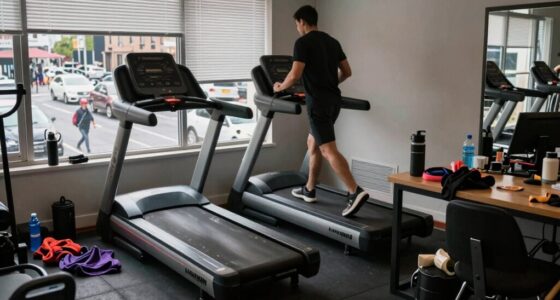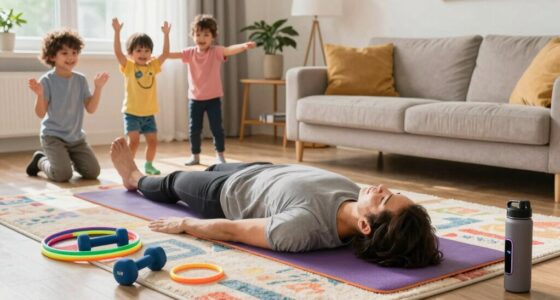

Non-exercise activities like standing, walking, and stretching are often overlooked but are essential for your health. They help improve circulation, boost metabolism, and prevent the negative effects of prolonged sitting. Incorporating these small movements into your daily routine can support cardiovascular health, maintain a healthy weight, and increase your energy levels. By understanding how simple actions add up, you’ll discover easy ways to make lasting improvements—keep exploring to uncover even more benefits.

Get workout gear delivered free with Prime
- Fast, free delivery on millions of items
- Prime Video, Amazon Music and more included
- Member-only deals all year
Key Takeaways
- Non-exercise activities like standing, walking, and stretching significantly improve circulation and metabolic health.
- Incorporating movement into daily routines reduces health risks associated with prolonged sedentary behavior.
- Small, consistent movements support cardiovascular health and weight management over time.
- Movement during work tasks enhances energy levels and prevents muscle stiffness.
- Lifestyle choices emphasizing frequent, minor activities provide long-term health benefits similar to strategic investments.

Have you ever wondered how everyday movements impact your health? It’s easy to overlook the small actions that fill your day—standing, walking, stretching—as insignificant. But these non-exercise activities play a crucial role in your overall well-being. Many people spend hours glued to screens or sitting at desks, engaging in sedentary behavior that slowly chips away at their health. The good news is, even small changes in your daily routine can make a difference. Incorporating more occupational movement, like walking during breaks or standing while working, can counteract the negative effects of prolonged sitting. Every time you stand up to stretch or take a quick walk, you’re engaging in non-exercise activity that benefits your body.
Your daily environment offers numerous opportunities to boost your activity levels without hitting the gym. Think about your workday: are you sitting most of the time, or do you move around? If your job involves a lot of sitting, consider strategies to break up the sedentary periods. Simple actions like standing while on phone calls, using a sit-stand desk, or taking short walks to grab water can accumulate into significant physical activity. These movements, often overlooked, contribute to your total daily activity and help improve circulation, reduce muscle stiffness, and maintain metabolic health. The key is to recognize that occupational movement doesn’t have to be structured exercise; it’s about integrating movement into your routine naturally. Incorporating non-exercise activity into your day can significantly boost your overall health and energy levels, especially when combined with an awareness of existential themes that motivate healthier lifestyle choices.
Furthermore, these small, consistent movements can have a compounding effect over time. They help combat the health risks associated with sedentary behavior and make your day more active without requiring extra time or effort dedicated solely to exercise. Recent research highlights the importance of daily movement patterns in reducing health risks associated with inactivity. Instead, you learn to see movement as a part of your lifestyle, seamlessly blending activity into daily tasks. By intentionally choosing to stand more, walk more, and move during your workday, you’re actively supporting your cardiovascular health, boosting your energy levels, and maintaining a healthier weight. Remember, it’s not just about intense workouts; it’s about the cumulative power of non-exercise activity that keeps your body functioning at its best. Small, consistent occupational movements can lead to big health benefits, making everyday life a powerful tool for wellness. Additionally, engaging in outdoor activities and landscaping can further enhance your physical activity levels and mental well-being. Incorporating insights from the Gold IRA markets demonstrates how strategic, incremental investments—whether in precious metals or health—can yield long-term benefits.
As an affiliate, we earn on qualifying purchases.
Frequently Asked Questions
How Much Non-Exercise Activity Is Needed for Health Benefits?
You should aim for at least 2 hours of non-exercise activity daily to combat sedentary habits and boost health. Incorporate movement into your routine by standing regularly, stretching, and using workplace ergonomics like sit-stand desks. Small activities like walking during breaks, taking stairs, or shifting positions frequently help reduce the risks associated with prolonged sitting, improving circulation, posture, and overall well-being.
Can Non-Exercise Activity Replace Regular Workouts?
Non-exercise activity can’t fully replace regular workouts, but it substantially combats sedentary habits. By increasing your daily steps and staying active throughout the day, you boost your overall health. While structured exercise offers targeted benefits like strength and endurance, staying consistently active helps improve circulation, reduce health risks, and keeps you energized. So, incorporate both non-exercise activity and workouts for ideal health benefits.
What Are the Best Ways to Increase Daily Movement?
To increase daily movement, focus on incorporating incidental movement and active commuting into your routine. Take the stairs instead of elevators, park farther from stores, and stretch during breaks. Walk or bike for errands instead of driving, and consider walking or biking to work if possible. These small changes add up, boosting your overall activity level without formal workouts, and substantially benefit your health over time.
Does Non-Exercise Activity Affect Mental Health?
Non-exercise activity can boost your mental health like a gentle breeze clearing fog. When you stay active through simple actions, you’re more likely to engage in mindfulness practices and social interactions, which reduce stress and improve mood. For example, taking a walk with friends or stretching during breaks helps you feel connected and present. These small movements can markedly enhance your overall mental well-being, making each day brighter and more balanced.
Are There Age-Specific Recommendations for Non-Exercise Activity?
Yes, age-related activity guidelines suggest you should adjust your non-exercise activity based on your age. For children and teens, staying active through play and daily movement is essential. Adults should aim for regular movement, like walking or standing, to meet health recommendations. Older adults benefit from age-specific activities like gentle walking or stretching. Follow these activity guidelines to maintain your health and mobility as you age.
As an affiliate, we earn on qualifying purchases.
Conclusion
By now, you see that non-exercise activity is like the secret ingredient in your health recipe—easy to overlook but essential for flavor. Embracing small movements throughout your day can boost your well-being more than you realize, turning your daily routine into a powerful health ally. So, don’t wait for the perfect workout; sprinkle activity into your life like sunshine, and watch your health blossom from the tiniest sparks of movement.
As an affiliate, we earn on qualifying purchases.
As an affiliate, we earn on qualifying purchases.
Halloween Picks
halloween
As an affiliate, we earn on qualifying purchases.