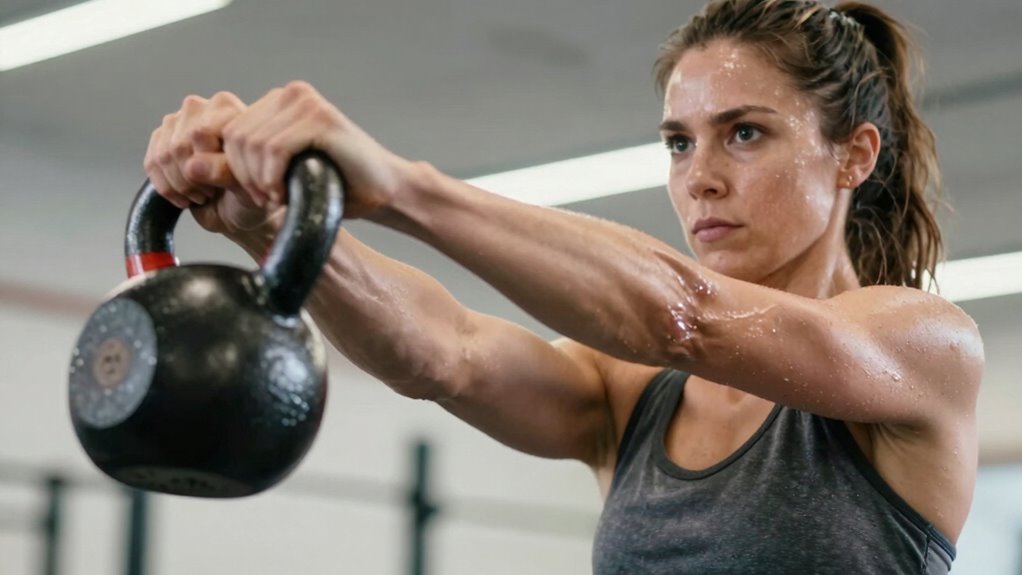

The secret to better kettlebell swing mechanics is mastering the hip hinge and engaging your core. Focus on pushing your hips back, not bending at the waist, to generate power from your posterior chain. Keep your spine neutral and brace your abs like you’re preparing for a gentle punch. Steady breath control and fluid, controlled movements will improve safety and effectiveness. Keep refining these key elements, and you’ll discover even more ways to perfect your swing skill.

Get workout gear delivered free — and shop member deals
- Fast, free delivery on millions of items
- Access to Prime Big Deal Days deals on October 6–7
- Prime Video, Amazon Music and more included
Key Takeaways
- Master the hip hinge by pushing hips back and avoiding excessive knee bend to generate power efficiently.
- Engage and brace your core to stabilize the spine and maintain proper posture throughout the swing.
- Set up with feet shoulder-width, neutral spine, and a slight outward toe angle for optimal balance.
- Practice controlled, fluid hip drives and focus on muscle memory to improve consistency and technique.
- Coordinate breathing with movement, exhaling sharply at the top to enhance stability and control.

Mastering the kettlebell swing starts with understanding the key mechanics that make the movement both effective and safe. One of the most critical aspects is mastering the hip hinge. This movement pattern involves bending at your hips, not your waist, and pushing your hips backward as if you’re closing a door with your glutes. When you perform a proper hip hinge, you engage your posterior chain—your hamstrings, glutes, and lower back—making the swing powerful and efficient. Many beginners tend to squat or bend their knees excessively, but focusing on a controlled hip hinge ensures you generate force from your hips rather than your arms or lower back. Ensuring proper hip hinge mechanics is essential for both safety and effectiveness.
Master the hip hinge to perform powerful, safe kettlebell swings with proper posterior chain engagement.
Maintaining core stability is equally essential. Your core acts as the foundation for your entire swing, keeping your spine safe and transferring power effectively. When you set up for the swing, brace your abs as if preparing for a gentle punch. This engagement keeps your torso upright and prevents rounding of your back. As you swing, your core helps control the movement, preventing excessive forward lean or collapse at the hips. Think of your core as a tight, supportive corset that stabilizes your entire body during each rep. Without proper core stability, you risk injury and lose the efficiency of the swing. Incorporating proper technique and consistent practice will help you develop better muscle memory and coordination.
To enhance your mechanics, start with your setup. Stand with your feet shoulder-width apart, toes slightly pointed outward. Hinge at your hips, push your hips back, and grab the kettlebell with both hands. Keep your spine neutral, chest up, and shoulders down. As you lift the kettlebell, drive through your hips by extending them forward, not pulling with your arms. Your arms should remain relaxed, acting as hooks rather than active movers. Focus on the hip hinge to generate power, and use your core to maintain a straight back and upright torso throughout the movement. Developing muscle memory through consistent practice will also improve your timing and fluidity during swings. Additionally, focusing on body awareness can help you fine-tune your form and prevent common mistakes.
Practicing visualization techniques can further enhance your understanding of proper form and coordination. As you swing, breathe steadily—exhale sharply at the top of the movement, engaging your core even more. This breath control helps maintain stability and prevents your body from becoming loose or overextended. Be mindful of your form, especially during repetitions; a common mistake is overusing the arms or letting the hips rise too quickly or too slowly. Instead, think of the swing as a fluid, controlled hip hinge that propels the kettlebell upward, driven by your hips and stabilized by your core. When you consistently practice these mechanics, you’ll notice improved strength, better endurance, and safer, more effective swings.
Frequently Asked Questions
How Often Should I Practice Kettlebell Swings for Progress?
You should practice kettlebell swings 2 to 3 times a week, allowing your muscles time to recover and grow stronger. Focus on maintaining proper form during each session to maximize progress. Track your progress by noting reps, weight, and how you feel after each workout. Consistent training frequency and diligent progress tracking help you improve your swing mechanics safely and effectively over time.
What Are Common Mistakes Beginners Make With Kettlebell Swings?
You often make mistakes like using a poor grip variation, which can hinder your swing, or rushing your swing tempo, causing loss of control. Focus on maintaining a firm grip and controlling your movement with a steady rhythm. Avoid overextending your back or squatting too much. Practice slow, deliberate swings to master proper form, then gradually increase speed while keeping control, ensuring safer and more effective progress.
Can Kettlebell Swings Help Improve Athletic Performance?
Yes, kettlebell swings can boost your athletic performance by improving cardiovascular endurance and muscle activation. As you swing, your heart rate increases, enhancing stamina for high-intensity activities. Additionally, the movement targets key muscles like glutes, hamstrings, and core, increasing strength and power. This combination of cardiovascular and muscular benefits translates to better performance in sports, running, and other physically demanding tasks, making swings a valuable addition to your training routine.
Is It Safe to Do Kettlebell Swings Daily?
Kettlebell swings are like a fast-moving river—you can enjoy them daily, but you need to stay alert. It’s generally safe if you follow proper safety precautions, such as using correct technique adjustments and listening to your body. Make sure you warm up, maintain good form, and don’t overdo it. If you experience pain or discomfort, take a break. Consistency with safety makes daily swings both effective and safe.
How Do I Choose the Right Kettlebell Weight for Me?
To choose the right kettlebell weight, start with a manageable size that allows you to maintain proper grip and a consistent swing rhythm. You should feel challenged but not overwhelmed. If your form starts to falter or you can’t control the weight, it’s too heavy. Focus on mastering technique first, then gradually increase weight. Proper grip and swing rhythm are key to safe, effective kettlebell swings.
Conclusion
Now, picture yourself mastering the perfect kettlebell swing, each movement flowing like a wave of strength through your body. Feel the power in your hips, the control in your core, and the rhythm that pushes you forward. With better mechanics, you’ll discover a new level of confidence and resilience. Keep practicing, stay mindful, and watch as your swings transform into a dance of unstoppable energy, fueling your progress and inspiring greatness in every rep.
Fall Picks
fall essentials
As an affiliate, we earn on qualifying purchases.