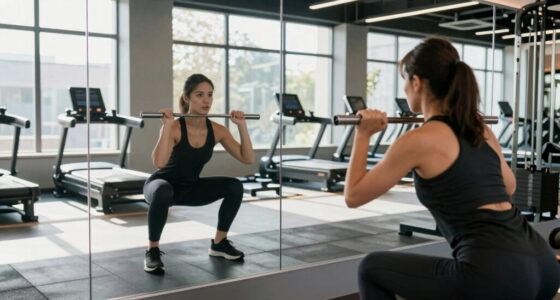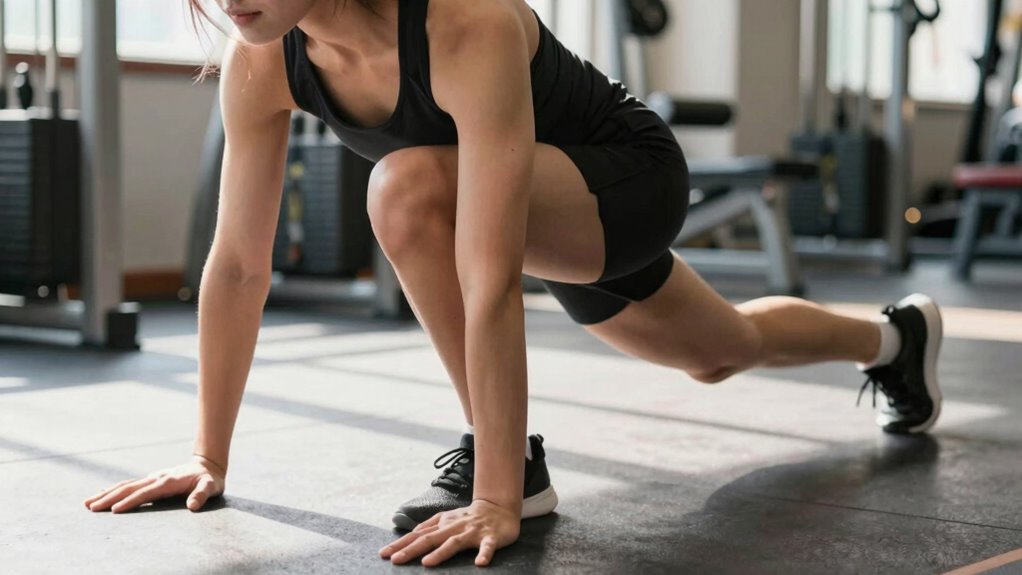

To make lunges feel more stable and effective, focus on engaging your core before stepping into each lunge to boost balance. Choose supportive, flat-soled shoes with good traction and exercise on even or uneven surfaces accordingly. Keep your gaze fixed on a point in front to help with alignment. Incorporating static holds and mental cues to tighten your abdominal muscles can further improve stability. Keep practicing these tips, and you’ll discover more ways to enhance your lunges.

Get workout gear delivered free — and shop member deals
- Fast, free delivery on millions of items
- Access to Prime Big Deal Days deals on October 6–7
- Prime Video, Amazon Music and more included
Key Takeaways
- Engage your core muscles before stepping into the lunge for improved stability.
- Fix your gaze on a point in front to maintain proper alignment.
- Wear supportive, flat-soled shoes with good traction for balance.
- Practice static holds to strengthen stabilizer muscles and enhance control.
- Choose stable, even surfaces to reduce slipping and increase confidence.
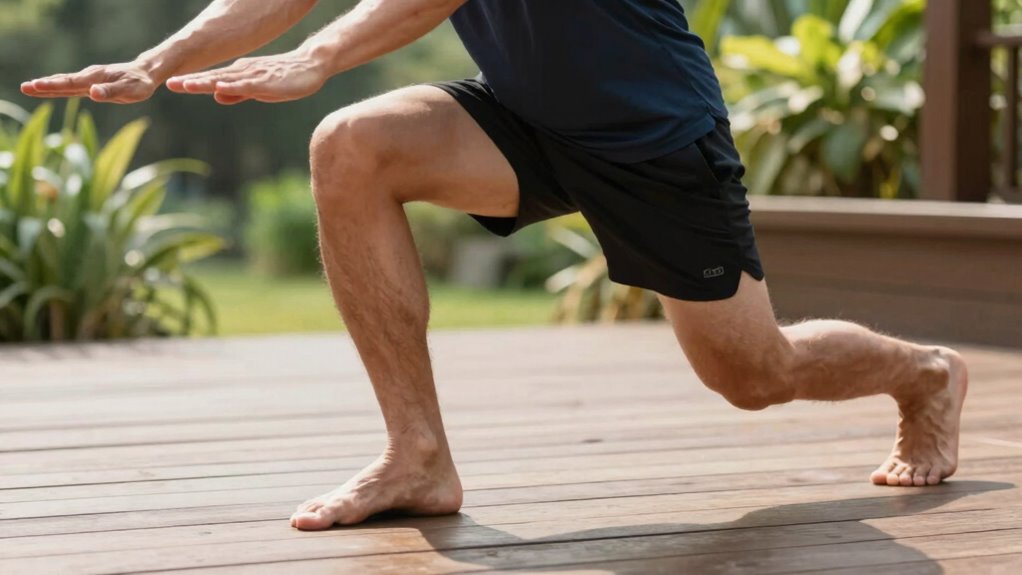
Lunges are a fantastic exercise for building strength and stability in your legs, but if they don’t feel balanced or effective, it’s easy to lose confidence or motivation. To make your lunges feel more controlled, focus on improving your balance. Start by engaging your core before you step forward or backward. A strong core acts as the foundation for stability, helping you maintain proper posture and preventing wobbling. When you lunge, keep your gaze fixed on a point in front of you to help with alignment, and imagine tightening your abdominal muscles. This mental cue can improve your overall balance and make each movement more precise. Additionally, practicing static holds, such as holding a lunge position for 10-15 seconds, can strengthen the stabilizer muscles that keep you steady. Over time, these small adjustments will translate into more balanced and confident lunges. Incorporating core engagement strategies can further enhance your stability during this exercise.
Footwear choice also plays an essential role in how stable and effective your lunges feel. Wearing the right shoes provides proper support and cushioning, reducing the risk of slipping or undue strain. Opt for athletic shoes with a firm, flat sole that offers good grip and stability. Avoid running shoes with overly cushioned or curved soles, as they can make balancing more difficult during lunges. If you’re doing lunges on uneven surfaces, consider investing in footwear designed for outdoor exercise, which often features enhanced traction. Proper footwear not only prevents injuries but also helps you feel more secure in each step, allowing you to focus on your form rather than worrying about slipping.
Frequently Asked Questions
Can Lunges Help Improve My Overall Balance?
Yes, lunges can help improve your overall balance. As you perform lunges, you enhance balance through balance enhancement and by engaging your core muscles. The movement challenges your stability, forcing you to activate your core for support. Over time, this strengthens your stabilizer muscles and improves coordination. Incorporate lunges into your routine regularly, and you’ll notice better balance, stability, and overall functional movement.
How Often Should I Do Lunges for Best Results?
You should do lunges 2-3 times a week for the best results. Incorporate various lunge variations, like walking lunges or reverse lunges, to target different muscles and boost engagement. This variety keeps your workout effective and prevents boredom. Consistency is key, so listen to your body, gradually increase reps, and focus on proper form for ideal muscle engagement and improved stability over time.
Are Lunges Safe for Knee Pain Sufferers?
Lunges can be safe for knee pain sufferers if you focus on proper form and listen to your body. They help with knee stabilization and joint protection when performed correctly, reducing strain on your knees. Start with shallow lunges and gradually increase depth, ensuring your knee stays aligned over your ankle. If pain persists, consult a healthcare professional before continuing. Proper technique minimizes risk and enhances benefits.
Should I Use Weights During Lunges?
Using weights during lunges is like adding fuel to a fire — it boosts your workout, but you need to control it. Incorporate weighted resistance carefully, focusing on proper body positioning to maintain stability. Start with light weights, ensuring your form stays perfect. As you gain confidence, gradually increase resistance. This approach makes your lunges more effective, helping you build strength without compromising safety or stability.
What’s the Difference Between Forward and Reverse Lunges?
Forward lunges step your front foot ahead, engaging your quadriceps and glutes more, but can strain your knee if alignment isn’t perfect. Reverse lunges, stepping backward, reduce knee stress and improve balance, focusing on hamstring and glute engagement. Both require proper knee alignment to prevent injury and maximize muscle activation. Choose based on your goals—forward for power, reverse for stability—and guarantee proper form for effective results.
Conclusion
So, next time you lunge, think of it as a gentle dance with your balance—patience and practice are your best friends. With small tweaks and a bit of mindful effort, those lunges will feel more like a natural rhythm, giving you confidence and strength. Remember, even the tiniest steps forward count. Keep at it, enjoy the journey, and soon, stability will become second nature—your body’s quiet, steady partner.
Fall Picks
fall essentials
As an affiliate, we earn on qualifying purchases.