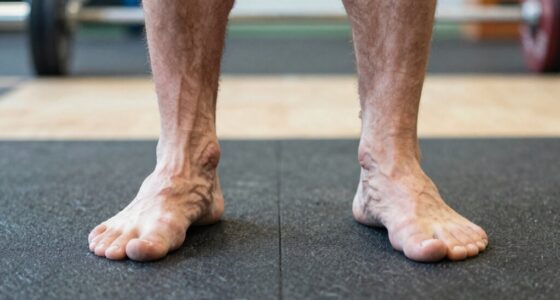

To improve your running form without overthinking, focus on maintaining good posture with a slight forward lean from the ankles and keep your arms relaxed, swinging naturally at your sides. Pay attention to your stride length and cadence, aiming for smooth, quick steps that land softly beneath your hips. Stay aware of your body’s movements, making gentle adjustments as needed. Developing this mindful awareness helps your form become more efficient effortlessly—keep going to discover even more tips for better running.

Get workout gear delivered free — and shop member deals
- Fast, free delivery on millions of items
- Access to Prime Big Deal Days deals on October 6–7
- Prime Video, Amazon Music and more included
Key Takeaways
- Focus on maintaining a relaxed, natural posture with a slight forward lean from the ankles.
- Keep your cadence steady around 170-180 steps per minute for effortless rhythm.
- Land softly beneath your hips with a shorter, efficient stride to reduce impact.
- Swing your arms naturally, close to your sides, supporting a balanced gait.
- Practice deep, relaxed breathing to enhance muscle engagement without overthinking movement.

Are you running with efficiency and comfort in mind? Improving your running form doesn’t have to be complicated or overly technical. Small adjustments can lead to significant improvements in how you move, helping you run faster and with less fatigue. One key aspect to focus on is gait efficiency, which is how smoothly your body moves with each step. When your gait is efficient, you use less energy, and that means you can run longer and more comfortably. A essential element of gait efficiency is stride length, the distance covered from one foot strike to the next. Too long a stride can cause overreaching and increase impact forces, while too short a stride can waste energy with excessive steps. Striking the right balance helps you maximize speed without sacrificing comfort.
Optimizing stride length balances speed and comfort, reducing impact while conserving energy for longer, easier runs.
You might notice that your stride length naturally adjusts as you become more aware of your running. Instead of forcing a longer stride, focus on running with a relaxed, natural rhythm. Think about landing softly beneath your hips rather than reaching out in front of your body. This promotes better gait efficiency because your muscles work more effectively when your foot strikes closer to your center of mass. As you do this, your stride length will naturally improve, making your running more economical. Keep your cadence—steps per minute—consistent and aim for a cadence around 170-180 steps per minute. A higher cadence often correlates with a shorter, quicker stride, which reduces the risk of overstriding and impacts on your joints.
Posture also plays an essential role in refining your running form. Keep your torso upright with a slight forward lean from the ankles, not the waist. This position encourages a forward momentum and helps you land with your foot directly underneath you. Avoid over-leaning or leaning too far forward, as that can disrupt your gait efficiency and cause you to overstride. Your arms should swing naturally, close to your sides, with relaxed shoulders. This movement helps maintain a steady rhythm and supports a balanced gait. When your arms move efficiently, your legs tend to follow suit, resulting in a more fluid stride. Additionally, paying attention to your natural movement patterns can help you refine your form without overthinking, making your running more comfortable and sustainable. Recognizing and understanding gait mechanics can further enhance your running efficiency over time. Developing an awareness of your biomechanics can also help you make small, effective adjustments naturally. Incorporating mindful body awareness during your runs can lead to more consistent improvements in your technique.
Lastly, be mindful of your breathing. Deep, controlled breaths support sustained effort and keep your muscles oxygenated. When you breathe well, you’re less likely to tense up or lose focus on your form. Remember, improving your running form isn’t about overthinking every step but about becoming more conscious of how your body moves naturally. Small, intentional tweaks—like adjusting your stride length, maintaining good posture, and controlling your breathing—can make a significant difference in running comfortably and efficiently. Additionally, understanding muscle engagement can help you activate the right muscles for better stability and power during your runs.
Frequently Asked Questions
How Often Should I Focus on Form During Runs?
You should focus on your running form during every run, but keep it brief—about once every mile or so. Pay attention to your running cadence to maintain a steady rhythm, and incorporate breathing techniques to stay relaxed. When you notice your form slipping, gently correct it without overthinking. This way, you improve naturally while maintaining comfort and efficiency, preventing fatigue and injury over time.
Can Poor Running Form Cause Injuries?
Poor running form can cause injuries faster than a speeding bullet. When your running technique isn’t optimized, it leads to improper muscle engagement, overloading certain muscles and straining joints. This imbalance increases the risk of stress fractures, shin splints, and knee pain. To stay injury-free, focus on maintaining proper posture, landing softly, and engaging the correct muscles. Better muscle engagement supports your body and keeps you running smoothly.
Is It Better to Run Barefoot or With Shoes?
It’s better to run barefoot or with minimalist footwear if you want a natural feel, but switch gradually. Barefoot running can strengthen foot muscles and improve form, but it may cause injuries if done too quickly. Minimalist footwear offers protection while maintaining a barefoot-like experience. Listen to your body, start slowly, and build up your mileage to avoid overuse injuries and enjoy the benefits of natural running.
How Do I Maintain Proper Posture Over Long Distances?
To maintain proper posture over long distances, focus on posture alignment by keeping your head up, shoulders relaxed, and core engaged. Use breathing techniques like deep, rhythmic breaths to stay relaxed and steady. Check in with your body regularly, making small adjustments to avoid slouching or leaning forward. This mindfulness helps you sustain good posture naturally, reducing fatigue and injury over extended runs.
Should I Incorporate Strength Training for Better Form?
Yes, incorporating strength training acts like a secret weapon to improve your running form. It boosts your running cadence, making your strides more efficient, and enhances your breathing techniques by building core stability. Focus on exercises that target your legs, hips, and core to support better posture and reduce fatigue. Strength training helps your body adapt, so you can run longer and smoother without overthinking every step.
Conclusion
Now that you know the basics, imagine what subtle tweaks could reveal your true running potential. The secret isn’t in overhauling your form overnight but in discovering what feels right for you—almost like a quiet whisper guiding your every stride. Will you listen closely enough to catch it? Keep practicing, stay mindful, and the breakthrough might be just a step away. Are you ready to find out what’s next on your running journey?
Fall Picks
fall essentials
As an affiliate, we earn on qualifying purchases.