

To fix push-up form problems fast, focus on proper hand placement, keeping your hands slightly wider than shoulder-width and fingers pointing forward. Maintain a straight body line by engaging your core and glutes, avoiding sagging or raised hips. Breathe rhythmically—inhale as you lower, exhale as you push up—and keep elbows at about 45 degrees to protect your shoulders. Start with modified versions like knee or incline push-ups as you build strength. Keep these tips in mind, and you’ll see improvements quickly.

Get workout gear delivered free with Prime
- Fast, free delivery on millions of items
- Prime Video, Amazon Music and more included
- Member-only deals all year
Key Takeaways
- Ensure hands are placed slightly wider than shoulder-width with fingers pointing forward for proper alignment.
- Keep your body in a straight line from head to heels by engaging your core and glutes.
- Breathe rhythmically—inhale on lowering, exhale on pushing up—to maintain control and reduce fatigue.
- Maintain elbows at about 45 degrees to your torso to prevent shoulder strain and improve form.
- Use modifications like knee or incline push-ups to build strength gradually before progressing to full push-ups.
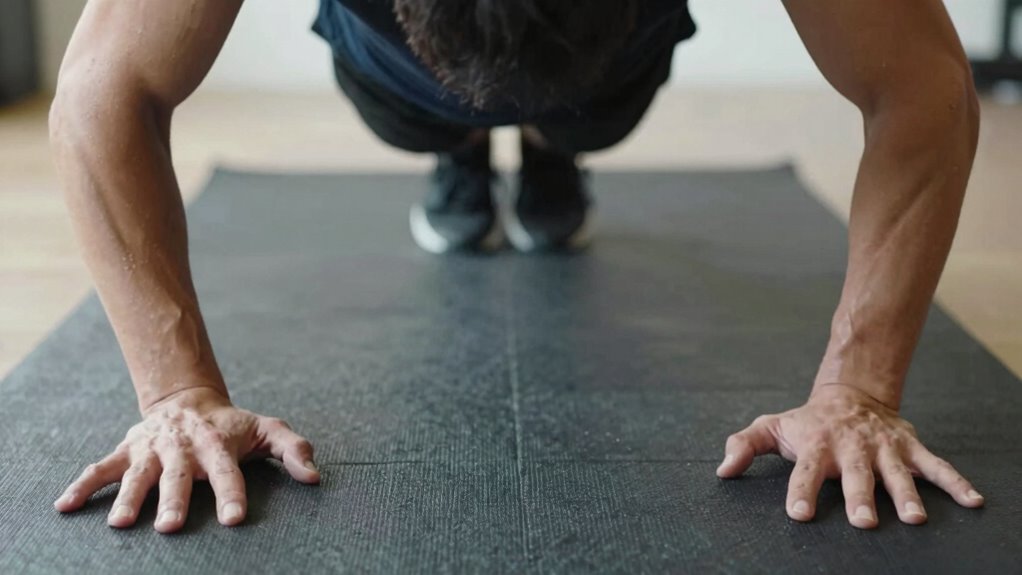
If you want to get the most out of your push-ups and avoid injury, it’s essential to correct common form issues quickly. Many people struggle with maintaining proper technique, which can lead to strain or even injury over time. Fortunately, you can fix these problems with simple adjustments, starting with understanding effective push-up modifications and mastering proper breathing techniques. These adjustments will not only improve your form but also make your workouts more efficient and safer.
First, focus on your hand placement. Your hands should be slightly wider than shoulder-width apart, with fingers pointing forward. If your hands are too close or too far apart, you risk shoulder strain or reduced chest activation. To correct this, try push-up modifications like knee push-ups or wall push-ups, which help you practice proper hand positioning without overloading your shoulders. Once your form improves, gradually shift to standard push-ups with correct hand placement.
Ensure hands are slightly wider than shoulders, gradually progress from knee or wall push-ups for proper form.
Next, pay attention to your body alignment. Your body should form a straight line from your head to your heels. If your hips sag or rise too high, you’re not engaging the right muscles or maintaining proper posture. To fix sagging hips, tighten your core and glutes during the movement. You can also perform push-up modifications like incline push-ups against a bench or elevated surface to build strength and stability before progressing to full push-ups. This helps reinforce proper alignment and prevents strain on your lower back. Additionally, understanding the importance of body alignment can prevent common mistakes and injuries during push-ups. Developing awareness of your body position ensures you’re consistently practicing safe and effective movement patterns.
Proper breathing techniques are often overlooked but vital for maintaining good form. Inhale as you lower your chest toward the ground, and exhale as you push back up. This rhythmic breathing supports core stability and ensures you’re not holding your breath, which can cause unnecessary tension and fatigue. When you master proper breathing, you’ll find it easier to maintain control and avoid rushing through reps, which often leads to sloppy form.
Finally, pay attention to your elbows. They should be at about a 45-degree angle relative to your torso, not flared out to the sides. Flared elbows increase shoulder stress and can lead to injury. To fix this, consciously keep your elbows closer to your body during push-ups, and incorporate push-up modifications like knee or incline variations to develop strength gradually. As your muscles adapt, you’ll be able to perform standard push-ups with elbows in proper position. Consistent practice and awareness of elbow positioning are key to preventing shoulder strain and ensuring proper technique.
As an affiliate, we earn on qualifying purchases.
Frequently Asked Questions
Can I Do Push-Ups if I Have Wrist Pain?
If you have wrist pain, it’s best to avoid standard push-ups until you address the discomfort. Doing push-up alternatives like wall push-ups or incline push-ups can reduce wrist strain and keep you active. You might also consider using push-up handles or wrist supports. Always listen to your body, and if pain persists, consult a healthcare professional to prevent further injury and find suitable exercises.
How Do I Modify Push-Ups for Shoulder Injuries?
Think of your shoulder injury as a fragile bird needing gentle care. To modify push-ups, use techniques like wall push-ups or knee push-ups, which reduce strain and help injury prevention. Keep your arms closer to your body, and avoid deep presses. These modifications protect your shoulders while maintaining strength. Always listen to your body, progress gradually, and consult a professional if pain persists. Your safety comes first in every move.
What’s the Best Way to Increase Push-Up Reps Quickly?
To increase your push-up reps quickly, focus on improving your push-up techniques and consistent rep progression. Start by doing sets within your comfort zone, then gradually add more reps each session. Incorporate variations like knee push-ups or incline pushes to build strength. Keep proper form, engage your core, and progressively challenge yourself with higher reps to boost endurance and stamina efficiently.
Should I Wear Gloves or Wrist Wraps During Push-Ups?
You don’t need gloves or wrist wraps during push-ups unless your grip comfort or hand positioning feels uncomfortable or painful. Wearing gloves can improve grip and reduce sweat, but they might slip and hinder control. Wrist wraps provide extra support if you experience wrist pain or instability, yet they can restrict natural movement. Focus on proper hand positioning and grip to avoid issues, and only consider accessories if they genuinely enhance your comfort and performance.
How Do I Prevent Push-Up Boredom or Plateauing?
To prevent push-up boredom or plateauing, you should incorporate push-up variations like decline, wide grip, or plyometric push-ups to challenge yourself differently. Mix in motivation techniques such as setting specific goals, tracking progress, or rewarding milestones. Changing your routine keeps things fresh and engaging, helping maintain your enthusiasm and push your limits. This variety not only prevents boredom but also promotes continued strength gains and muscle development.
As an affiliate, we earn on qualifying purchases.
Conclusion
Just like a master painter refines each stroke, perfecting your push-up form takes patience and attention. Remember, every rep is a step toward strength, turning struggles into harmony. Embrace the process, stay mindful, and don’t rush the journey. As the river carves the canyon, consistent effort shapes your progress. Keep pushing, correct your course, and soon your form will be as smooth as a well-composed symphony—strong, steady, and unstoppable.
As an affiliate, we earn on qualifying purchases.
As an affiliate, we earn on qualifying purchases.
Halloween Picks
halloween
As an affiliate, we earn on qualifying purchases.