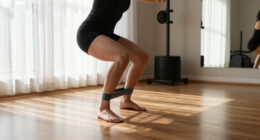

To use your range of motion the right way, focus on controlled, smooth movements that follow your natural joint limits. Avoid rushing reps and pushing through pain, as this can cause injuries. Adjust weights to allow full, proper movement, like squatting below parallel or fully extending during curls. Always prioritize technique and listen to your body to prevent strain. Mastering these tips helps you train smarter and safer, and there’s more to discover on how to optimize your workouts.

Get workout gear delivered free — and shop member deals
- Fast, free delivery on millions of items
- Access to Prime Big Deal Days deals on October 6–7
- Prime Video, Amazon Music and more included
Key Takeaways
- Always perform movements within your natural joint limits to maximize muscle engagement and prevent injury.
- Focus on slow, controlled reps to ensure proper form and full range of motion.
- Adjust weights and resistance to allow complete movement without discomfort or compromise.
- Recognize and respect your body’s signals, avoiding pushing through pain or excessive discomfort.
- Incorporate mobility exercises regularly to improve flexibility and support safe, effective range of motion.

Understanding how to effectively use range of motion in your training can greatly enhance your strength, flexibility, and injury prevention. When you focus on proper range of motion, you’re not just moving weights or your body through the motions—you’re actively engaging your muscles and ensuring each movement maximizes benefits. Proper range of motion ensures your muscles are fully activated and engaged throughout each exercise, which leads to better muscle engagement. This encourages balanced development and reduces the risk of muscular imbalances that can cause injuries over time. When you perform movements with controlled, complete ranges, you’re also less likely to rely on momentum or compensation, which often leads to poor form and injury.
Using proper range of motion maximizes muscle engagement, supports balanced development, and helps prevent injuries during training.
To use range of motion correctly, it’s essential to start with awareness of your body’s limits. Don’t push through pain or discomfort—these are signs you’re exceeding safe boundaries or not aligning your joints properly. Instead, focus on moving through a controlled, smooth motion that follows your natural joint angles. This not only enhances muscle engagement but also reinforces joint stability, contributing to injury prevention. When your joints move within their optimal range, you reduce undue stress on ligaments and tendons, lowering your chances of strains, sprains, or overuse injuries. Incorporating proper technique is crucial for maximizing effectiveness and safety during training. Additionally, understanding your joint mobility can help tailor your workouts to better suit your individual needs. A greater understanding of muscle activation can also help improve your overall training efficiency and results.
Incorporate full range of motion into your training by adjusting your technique and choosing appropriate weights or resistance levels. For example, in a squat, go down until your thighs are parallel to the ground or slightly below, rather than stopping halfway. In a bicep curl, fully extend your arm at the bottom and curl all the way up to your shoulder. These small adjustments might seem simple, but they make a big difference in muscle activation and joint health. Remember, slow and controlled movements are key; rushing through reps often results in sacrificing proper form and limiting muscle engagement. Joint flexibility also plays a vital role in allowing you to perform movements through their full range without discomfort or restriction. To further support this, practicing range of motion exercises can help improve your joint health and mobility over time.
Finally, consistent practice with attention to range of motion helps to develop joint mobility and flexibility over time. As your range improves, you’ll notice better muscle engagement during all your exercises, which leads to more efficient workouts and a lower risk of injury. By prioritizing proper range of motion, you’re creating a training routine that’s smarter, safer, and more effective—helping you reach your goals while safeguarding your body for the long haul.
full range of motion resistance bands
As an affiliate, we earn on qualifying purchases.
As an affiliate, we earn on qualifying purchases.
Frequently Asked Questions
Can Range of Motion Improve Athletic Performance?
Yes, improving your range of motion can boost athletic performance. When you enhance muscle flexibility and joint mobility, you move more efficiently and with greater control. This reduces injury risk and allows you to generate more power during movements. Incorporating proper stretching and mobility exercises helps you achieve the ideal range of motion, leading to better agility, strength, and overall performance in your sport or physical activities.
How Often Should I Vary My Range of Motion?
You should vary your range of motion weekly or bi-weekly, depending on your progression planning and flexibility assessment. Regularly changing your range keeps your muscles challenged and prevents plateaus. Incorporate different angles and intensities to promote balanced development. Always assess your flexibility first, then adjust your range accordingly. This approach guarantees continuous improvement while minimizing injury risk, making your training more effective and sustainable over time.
Does Full Range of Motion Increase Injury Risk?
Using full range of motion can slightly increase injury risk if your joint flexibility isn’t adequate or if you perform exercises with poor form. However, when done correctly, it promotes better joint health and injury prevention by strengthening muscles through their full length. Focus on proper technique and gradually improve your joint flexibility to safely incorporate full range of motion, reducing the risk of strains or overuse injuries.
How Do I Know My Ideal Range of Motion?
Imagine feeling every movement ripple through your joints and muscles, revealing your ideal range of motion. To find it, focus on your joint flexibility and muscle activation, gently exploring your limits without pain. Start with controlled, gradual movements, and listen closely to your body. Your ideal range is where your muscles stretch comfortably, and your joints move freely. Stay mindful, and you’ll discover the perfect balance for safe, effective training.
Can Limited Range of Motion Lead to Imbalances?
Yes, limited range of motion can lead to muscle imbalance and affect joint stability. When you don’t move through a full range, some muscles may weaken while others overcompensate, creating imbalances. These imbalances can compromise joint stability, increasing injury risk. To prevent this, make sure you perform exercises that promote a full, controlled range of motion, helping your muscles work harmoniously and maintaining healthy joint function.
As an affiliate, we earn on qualifying purchases.
Conclusion
Mastering range of motion in your training is like tuning a finely crafted instrument; when you find the perfect balance, every movement resonates with power and grace. By respecting your body’s limits and pushing just enough, you reveal the symphony of strength within. Remember, it’s not about the distance traveled but the quality of each movement. When you train with intention, your gains will flourish like a garden in full bloom—vibrant, resilient, and awe-inspiring.
As an affiliate, we earn on qualifying purchases.
As an affiliate, we earn on qualifying purchases.
Fall Picks
fall essentials
As an affiliate, we earn on qualifying purchases.