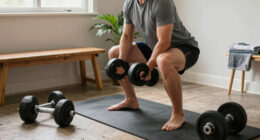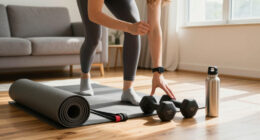

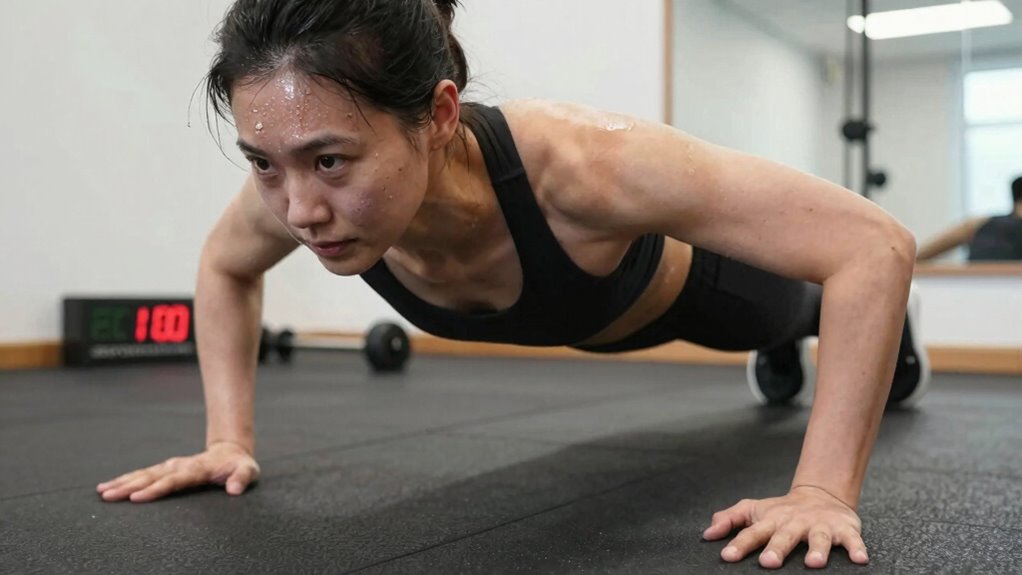
To fix common plank mistakes, focus on maintaining a straight line from head to heels, avoiding hips sagging or piking up. Keep your head neutral by looking slightly ahead, not up or down, and make sure your shoulders are over your wrists. Engage your core by pulling your belly button toward your spine. Prioritize proper form over duration, holding each position with control. If you keep these tips in mind, you’ll develop better technique and prevent wasted effort—plus, there’s more to improve upon as you progress.

Get workout gear delivered free — and shop member deals
- Fast, free delivery on millions of items
- Access to Prime Big Deal Days deals on October 6–7
- Prime Video, Amazon Music and more included
Key Takeaways
- Always check and maintain a straight line from head to heels, engaging your core to prevent hips sagging or piking.
- Keep your neck neutral by gazing slightly ahead, avoiding looking excessively up or down.
- Position shoulders directly over wrists, pulling shoulder blades back and down for stability.
- Focus on proper form over duration, holding plank correctly for at least 20 seconds before increasing time.
- Regularly assess your posture during the plank to correct misalignments and prevent injury.
Have you ever struggled to hold a plank correctly or noticed you’re making common mistakes? If so, you’re not alone. Many people underestimate how challenging maintaining proper form can be, especially when trying to build core stability. Poor technique not only reduces the effectiveness of your workout but also increases the risk of injury. Understanding and fixing these mistakes is vital to get the most out of your plank exercises and protect your body in the long run.
One of the most frequent errors is letting your hips sag or pike up. When your hips drop, it creates unnecessary strain on your lower back, compromising your core stability and increasing injury risk. Conversely, lifting your hips too high takes the focus off your core and shifts it to your shoulders and arms, making the exercise less effective. To fix this, focus on engaging your core muscles and keep your body in a straight line from your head to your heels. Imagine pulling your belly button toward your spine; this cue helps activate your core and maintain proper alignment. Additionally, focusing on body awareness can help you better recognize and correct these mistakes during your workout.
Another common mistake is holding your neck in an awkward position. Looking up or down excessively strains your neck and disrupts your spinal alignment. Instead, keep your head in a neutral position by gazing slightly ahead of your hands. This small adjustment ensures your neck remains relaxed and aligned with your spine, preventing unnecessary tension. Proper alignment is essential for injury prevention and helps you maintain stability throughout the exercise.
Many people also struggle with shoulder positioning. Allowing your shoulders to creep up toward your ears or sinking too low can cause discomfort and diminish core engagement. Your shoulders should be directly over your wrists, with your shoulder blades gently pulled back and down. This positioning not only stabilizes your upper body but also enhances core activation, making your plank more effective. Engaging your shoulder girdle properly prevents unnecessary strain and promotes better posture.
Finally, rushing through your plank or holding it for too short a time diminishes its benefits. Proper form is more important than duration; even a 20-second hold with perfect alignment beats a longer, sloppy one. As you improve, gradually increase your hold time, but always prioritize form over duration. This disciplined approach ensures you build core stability safely and effectively, reducing the chances of injury over time. Additionally, incorporating proper technique and understanding how to prevent common mistakes can significantly enhance your workout results.
As an affiliate, we earn on qualifying purchases.
Frequently Asked Questions
How Often Should I Practice Planks for Optimal Results?
You should practice planks about three to four times a week for the best results. Incorporate plank variations like side planks and forearm planks to target different muscles. Make sure to give your muscles time to recover between sessions. Also, follow nutrition tips such as staying hydrated and eating protein-rich foods to support muscle growth and endurance. Consistency and proper technique are key to seeing improvements without wasting your time.
Can I Modify Planks for Different Fitness Levels?
Did you know that over 60% of beginners avoid planks due to difficulty? Yes, you can modify planks for different fitness levels easily. Use modification techniques like dropping to your knees or reducing hold time for beginners, and progress with harder variations like side planks or adding leg lifts as you improve. These fitness level adaptations guarantee you stay challenged without risking injury, making your workout effective and safe.
What Equipment Can Help Improve My Plank Form?
Using equipment options like a mirror, foam roller, or yoga blocks can greatly improve your plank form. A mirror helps with posture correction by allowing you to monitor and adjust your alignment. Foam rollers support your forearms or hips, maintaining proper positioning. Yoga blocks can elevate your hands or feet, making it easier to hold correct posture. Incorporating these tools guarantees proper technique, reduces injury risk, and enhances your overall core strength.
Are There Common Mistakes Beginners Make in Planks?
Many beginners assume they need to hold a perfect form instantly, but common mistakes include neglecting core engagement and improper breathing techniques. You might sag your hips or hold your breath, reducing effectiveness and risking injury. To avoid this, focus on engaging your core throughout the plank and breathe steadily. These small adjustments can make a big difference, helping you build strength safely and efficiently from the start.
How Do I Prevent Lower Back Pain During Planks?
To prevent lower back pain during planks, focus on core engagement—tighten your abs and glutes to support your spine. Keep your hips in line with your shoulders and avoid sagging or piking. Use proper breathing techniques—inhale and exhale steadily—to maintain stability. If you feel discomfort, lower your knees or modify the plank until your core becomes stronger. Consistent practice with proper form helps protect your lower back.
core stability training equipment
As an affiliate, we earn on qualifying purchases.
As an affiliate, we earn on qualifying purchases.
Conclusion
So, next time you hit a snag with your plank form, remember that fixing these common mistakes can save you time and boost your progress. Sometimes, all it takes is a small adjustment—like engaging your core or maintaining proper alignment—to make a big difference. Coincidentally, many of these corrections are simple and quick to implement, so don’t let small errors hold you back. Keep practicing, stay mindful, and you’ll see improvement before you know it.
adjustable yoga blocks for plank support
As an affiliate, we earn on qualifying purchases.
As an affiliate, we earn on qualifying purchases.
fitness posture correction tools
As an affiliate, we earn on qualifying purchases.
As an affiliate, we earn on qualifying purchases.
Fall Picks
fall essentials
As an affiliate, we earn on qualifying purchases.