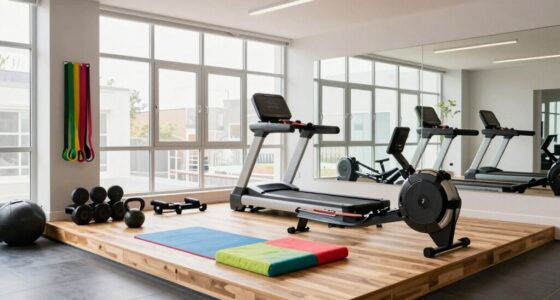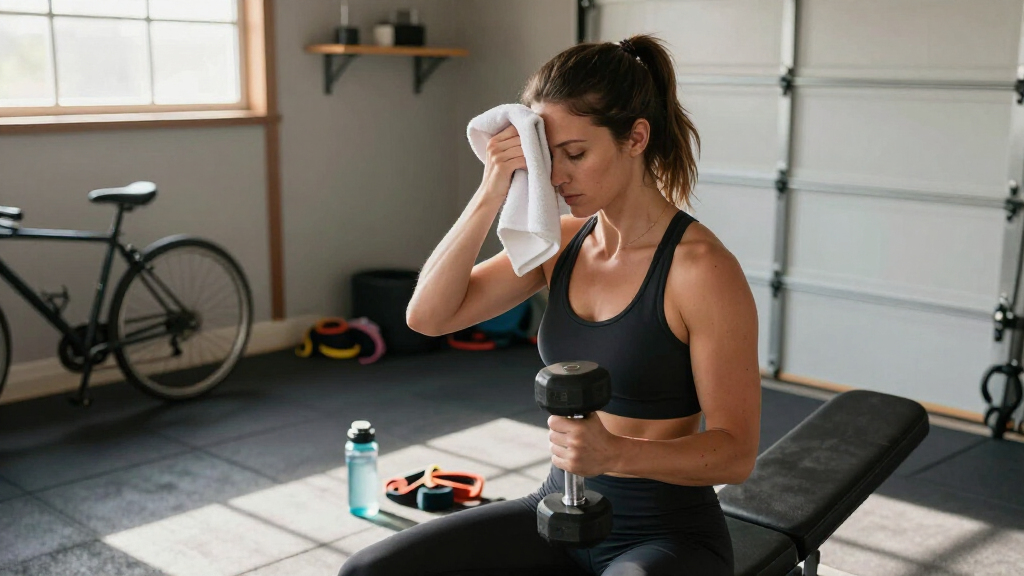

For home weight loss, the real choice is not which machine burns the most calories in a perfect workout. It is which one you can use often enough, at an intensity you can sustain, without creating problems for your joints, schedule, or living space. Treadmills and exercise bikes can both support calorie-burning cardio, but they ask different things of your body and your home.

Get workout gear delivered free with Prime
- Fast, free delivery on millions of items
- Prime Video, Amazon Music and more included
- Member-only deals all year

YOTTOY Cordless and Corded Jump Rope with LCD Display
- ✔ Display: LCD
- ✔ Tracking: Time, weight, calories, and jump count
- ✔ Rope: Adjustable steel rope with PVC coating

MERACH Adjustable Foldable Ab Trainer
- ✔ Model: MR-2314
- ✔ Incline settings: 2
- ✔ Height adjustments: 5

JKSHMYT Weighted Fitness Hoop with Gravity Ball
- ✔ Brand: JKSHMYT
- ✔ Model: ZDC-02
- ✔ Material: ABS plastic
A treadmill is the more versatile choice: it accommodates walking and running, and it can suit people who want weight-bearing exercise or a familiar way to build daily steps. An exercise bike is generally gentler on the joints and easier to fit into a smaller room; seated workouts can also feel more approachable for people returning to exercise. The comparison below focuses on the differences that affect routine, comfort, cost, and value. Neither machine causes weight loss on its own: lasting progress depends on a manageable calorie deficit, regular activity, and a routine you can maintain.
At a Glance
| Criteria | Treadmill | Exercise bike | Winner |
|---|---|---|---|
| Workout variety and intensity | Walking, incline walking, jogging, or running; broad intensity range | Steady rides, intervals, and resistance changes; no running option | A |
| Joint impact and accessibility | Weight-bearing and higher impact, especially when running | Low impact, seated movement, with comfort depending on fit and posture | B |
| Calorie-burning potential | Can support vigorous sessions, but results depend on pace, duration, and effort | Can support sustained or interval workouts; actual effort matters more than machine type | Depends |
| Ease of consistent use | Familiar movement; useful for step goals, though running may feel demanding | Seated sessions may feel approachable and easy to fit into a routine | B |
| Space and storage | Usually larger and harder to store | Usually more compact; some models fold or move more easily | B |
| Cost and ongoing value | Often costs more for a stable running model; useful if its range gets regular use | Often lower cost, though quality, resistance, and features vary | B |
YOTTOY Cordless and Corded Jump Rope with LCD Display
The YOTTOY jump rope takes the top spot because it can adapt to two common home-workout constraints: limited clearance and a preference for a conventional rope rhythm. Use it corded when there is room to swing, or switch to the cordless weighted balls when a full rope could catch furniture or nearby objects. That flexibility gives it a broader role than the MERACH ab trainer, which concentrates on core movements, and more workout variation than the JKSHMYT hoop. Its LCD tracks time, jump count, weight, and calories, offering simple session feedback; calorie readings should be treated as estimates rather than precise measures of fat loss.The adjustable steel rope has a PVC coating, while 360-degree ball bearings are intended to support smooth rotation. Silicone handles and two removable counterweights add grip and resistance choices, so we can tune the feel without changing equipment. Those details make this the strongest all-around choice for someone who wants a compact cardio tool and plans to build a routine around intervals or steady jumping. The tradeoff is impact: repeated jumping is not a low-impact substitute for the MERACH’s controlled rolling movements. The product details also omit the rope’s length range and display power source, which makes fit and ongoing display use harder to assess before purchase.
Pros:
- Switches between corded and cordless use for different room setups.
- LCD tracks time, jump count, weight, and calories.
- Two removable counterweights let us adjust resistance.
- Silicone handles and 360-degree ball bearings support grip and rope movement.
Cons:
- Repeated jumping may not suit people who need low-impact exercise.
- The rope’s length range is not specified.
- Display battery or power details are not provided.
Best for: Home exercisers who want a compact cardio option with corded and cordless modes, adjustable resistance, and basic workout tracking.
Not ideal for: People who need low-impact movement, have limited tolerance for jumping, or require confirmed rope sizing and display battery details before buying.
Bottom line: For buyers comfortable with jumping, the YOTTOY is the most adaptable pick in this lineup, with meaningful mode and resistance choices that the hoop and ab trainer do not offer.
“For buyers comfortable with jumping, the YOTTOY is the most adaptable pick in this lineup, with meaningful mode and resistance choices that the hoop and ab trainer do not offer.”
MERACH Adjustable Foldable Ab Trainer
The MERACH ab trainer is the clearest choice for buyers who want structured core-focused movement rather than a cardio tool. Two incline settings and five height adjustments create several ways to tune the challenge, a useful distinction from the JKSHMYT hoop’s fixed movement style and the YOTTOY’s jump-based sessions. Padded knee and elbow supports are intended to make repeated reps more comfortable, while quiet rollers may be helpful in shared living spaces. Its LCD reports counts, time, and calories, giving us a way to mark a session without relying on a separate timer.This model’s foldable design is a practical advantage over equipment that must stay assembled and out of the way, although no folded dimensions are supplied. It also requires assembly, so buyers should account for setup and verify that the available floor area accommodates the trainer in use. The ab trainer offers a more controlled alternative to jumping, but its focus is narrower: it does not provide the same jump-based cardio emphasis as the YOTTOY or the simple continuous movement of a hoop. For weight-loss goals, it makes most sense as one part of a broader routine, not as a complete substitute for varied activity.
Pros:
- Two incline settings and five height adjustments vary exercise difficulty.
- Padded knee and elbow supports are designed for comfort.
- LCD tracks exercise counts, time, and calories.
- Folds for storage and transport.
Cons:
- Assembly is required.
- Product details do not provide dimensions or folded size.
- Core-focused movement is narrower in scope than the jump rope’s cardio use.
Best for: People who want adjustable, guided core exercises at home and value padded contact points and fold-away storage.
Not ideal for: Buyers seeking a cardio-centered tool, a ready-to-use product with no assembly, or confirmed operating and folded dimensions before purchase.
Bottom line: Choose the MERACH when adjustable core training and foldability matter more than cardio versatility or immediate setup.
“Choose the MERACH when adjustable core training and foldability matter more than cardio versatility or immediate setup.”
JKSHMYT Weighted Fitness Hoop with Gravity Ball
The JKSHMYT weighted fitness hoop is the most approachable-looking entry in this group for buyers who want a simple movement routine rather than adjustable core equipment or jumping intervals. Its 24 detachable links let us size the hoop, with a stated waist range of 26 to 47 inches, and its 0.7-pound gravity ball provides the weighted component. Compared with the YOTTOY rope, it avoids the need to coordinate repeated jumps and rope timing; compared with the MERACH, it has no incline or height settings to work through. That simplicity can make it easier to start, though it also means fewer ways to progress or vary the workout.The hoop uses ABS plastic and is presented for beginner use, with the manufacturer recommending 30 minutes of exercise per day. That recommendation is not a personalized training prescription, and buyers should choose a duration and pace that suit their own capacity. The product is not recommended for elderly users, and children should use it only with an adult. This pick is therefore best for adults who are comfortable with its waist movement and want a straightforward, repeatable option. It is less suitable for anyone wanting low-joint-impact assurances, measurable workout tracking, or a broader range of exercises; its product details do not include a display or specific session metrics.
Pros:
- 24 detachable links allow fit adjustment.
- Stated waist range spans 26 to 47 inches.
- 0.7-pound gravity ball adds a weighted element.
- Designed for beginner use and made with ABS plastic.
Cons:
- Not recommended for elderly users.
- Children should use it only with an adult.
- Offers fewer workout adjustments and no tracking display in the supplied details.
Best for: Adult beginners who want an adjustable, straightforward hoop routine and fall within the stated waist-size range.
Not ideal for: Elderly users, buyers who want workout tracking or multiple exercise settings, and households where children would use it without adult supervision.
Bottom line: The JKSHMYT is a simple beginner-oriented movement pick, but the YOTTOY and MERACH offer more ways to adjust or track a workout.
“The JKSHMYT is a simple beginner-oriented movement pick, but the YOTTOY and MERACH offer more ways to adjust or track a workout.”
As an Amazon Associate we earn from qualifying purchases.
Key Differences
The treadmill wins on movement range. You can walk at an easy pace, raise the incline, or progress toward jogging and running without changing machines. That range can make it a strong fit for someone who enjoys walking and wants an indoor option for daily steps. The exercise bike keeps the movement seated and low impact, which may make it easier to start or return to cardio when running is uncomfortable. The bike sacrifices walking and running, but its narrower purpose can be an advantage if a straightforward ride is more appealing than a broader set of choices.
There is no universal calorie-burn winner. A vigorous treadmill session can demand more effort than a gentle ride, while a hard bike interval can be more demanding than an easy walk. Duration, resistance, pace, body size, and consistency all affect energy use. For weight loss, the practical winner is the machine that lets you exercise regularly while supporting eating habits that create a sustainable calorie deficit. Space and comfort matter because an awkward machine or painful workout is unlikely to become a lasting habit.
For many households, the bike is the more practical value: it tends to need less room, involves less impact, and can cost less. The treadmill earns its higher footprint and potential price when walking or running is central to the plan, or when its variety makes workouts more appealing. Pay extra for the treadmill only if you will use its walking, incline, or running features; choose the bike when comfort, low impact, or a smaller home matters more.
Detailed Comparison
Workout variety and intensity (Treadmill wins — moderate)
The treadmill wins by a moderate margin because it supports walking, incline walking, jogging, and running. That makes it easier to vary pace and build from gentle movement toward more demanding sessions. A bike can still vary resistance and cadence for intervals or steady rides, but it cannot reproduce walking or running. Choose the treadmill if that progression is important; choose the bike if cycling itself is enough variety.
Joint impact and accessibility (Exercise bike wins — major)
The bike wins by a major margin for people who need lower-impact cardio: its seated pedaling avoids the repeated foot strikes of running. A treadmill can still be used for walking, but its impact rises with speed and running. Bike comfort depends on correct seat height and posture, and a suitable setup can take adjustment. If exercise causes pain or you have a health concern, get individual medical guidance before choosing a routine.
Calorie-burning potential (moderate difference)
This is a genuine tie because neither machine guarantees a higher calorie burn. A brisk incline walk or run may use more energy than a relaxed ride, but a demanding bike interval can exceed an easy treadmill walk. Machines and fitness trackers estimate rather than precisely measure calories. For weight loss, compare workouts by the effort you can safely sustain and repeat, not by a single display number.
Ease of consistent use (Exercise bike wins — moderate)
The bike has a moderate practical edge for people who prefer seated exercise or want to begin with low-impact cardio. A treadmill may be easier for people who already enjoy walking and want to turn indoor time into daily steps. Habit fit varies: boredom, noise, comfort, and access all matter. Try the movement where possible and choose the one you can picture using through ordinary busy weeks.
Space and storage (Exercise bike wins — moderate)
The bike wins by a moderate margin in most homes. Many bikes occupy less floor space than treadmills, and some are easier to move or store. Exact dimensions vary, so check the machine’s footprint, required clearance, and whether it can be relocated safely before buying. A treadmill may still be the right choice if you have a dedicated workout area and value its walking surface more than reclaiming floor space.
Cost and ongoing value (Exercise bike wins — moderate)
The bike usually wins on upfront value because a basic exercise bike can cost less than a treadmill built for regular walking or running. The gap is minor if you are comparing similarly equipped models, and bargain equipment may lack stability or a comfortable fit. A treadmill is worth paying more for only when its wider speed range, incline, or running capacity will see regular use. Compare durability, warranty, noise, and delivery costs alongside the sticker price.
Treadmill: Pros and Cons
Pros:
- Supports walking, incline work, jogging, and running on one machine.
- Can help build indoor step routines in poor weather.
- Offers a clear path from gentle walking to more intense cardio.
Cons:
- Running creates more impact than cycling and may not suit everyone.
- Usually takes more floor space and can be harder to move.
- Higher-capacity or feature-rich models can require a larger investment.
Exercise bike: Pros and Cons
Pros:
- Seated pedaling is low impact compared with running.
- Often takes less space and may be easier to place in a home.
- Can support steady rides and challenging resistance intervals.
Cons:
- Does not offer walking, incline walking, or running.
- Seat and posture may be uncomfortable until the fit is adjusted.
- Lower-cost models can lack stability, resistance range, or useful adjustments.
Who Should Choose What
Choose Treadmill if:
- You enjoy walking or running and want a familiar way to exercise indoors.
- You want one machine that can support easy walks and more intense running sessions.
- You have the room and expect to use the treadmill’s speed or incline range regularly.
Choose Exercise bike if:
- You want lower-impact cardio or prefer not to run.
- A seated workout feels more approachable and likely to become a routine.
- You have limited floor space or want to spend less while starting home cardio.
Skip both if: Skip both if the ongoing cost, space, or machine-based movement makes regular use unlikely. Outdoor walking, bodyweight circuits, or another form of cardio you enjoy may fit better.
Value for Money
The exercise bike is the better value for most buyers who want a compact, low-impact way to add cardio at home. It costs less in many comparisons and asks for less space, so paying extra for a treadmill is hard to justify if you expect to use it only for occasional easy walks. A lower price is useful only if the machine is comfortable and sturdy enough that you will ride it regularly; check adjustability, resistance, weight capacity, and warranty before buying.
Pay more for a treadmill if you specifically want indoor walking, incline sessions, or running and know those features will keep you active. Those benefits may justify the added footprint and expense for a committed walker or runner. For weight loss alone, the premium does not promise faster results. A consistently used, appropriately challenging bike can be better value than a treadmill that sits unused, and the reverse is true for someone who loves walking but dislikes cycling.
Final Verdict
For most people choosing home cardio primarily to support weight loss, the exercise bike is the more practical starting point: it is commonly less demanding on the joints, easier to fit into a small home, and often less expensive. Choose it if seated, repeatable rides sound like a habit you can keep. The treadmill is the better choice for people who already enjoy walking or running and will use its range regularly. The deciding factor is not a calorie number on a console; it is which machine makes frequent, sustainable exercise more realistic for you.
Frequently Asked Questions
Which is better for weight loss, a treadmill or an exercise bike?
Neither is automatically better. Both can support weight loss when they help you exercise consistently as part of a sustainable calorie deficit. Your pace, effort, workout length, and routine matter more than the machine label.
Does a treadmill burn more calories than an exercise bike?
Not in every workout. Running or incline walking can be demanding, while an easy bike ride may be gentle; hard cycling intervals can also be strenuous. Treat console calorie figures as estimates and compare effort and consistency instead.
Is an exercise bike easier on the knees?
Cycling is generally lower impact than running because it avoids repeated foot strikes. Comfort still depends on bike fit and how your body responds. If you have knee pain or a medical condition, ask a clinician for advice tailored to you.
Is a treadmill worth paying more for?
It can be if you regularly want indoor walking, incline work, or running and have space for the machine. If you mainly want accessible cardio in a compact home, a bike is often the stronger value.
Halloween Picks
halloween
As an affiliate, we earn on qualifying purchases.