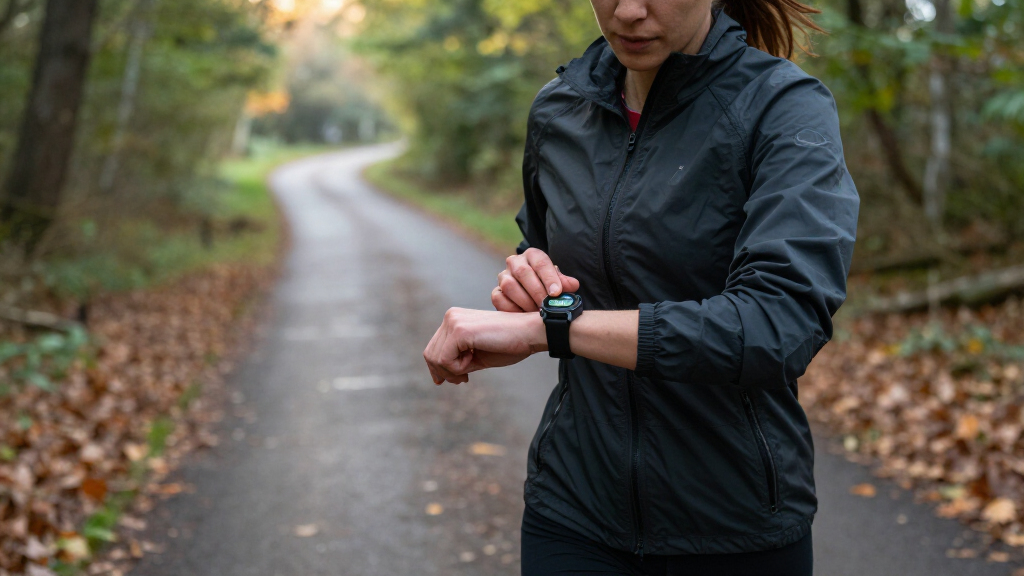

The best running smartwatches balance dependable run tracking, useful training feedback, and a comfortable fit without adding features you will not use. I name the Garmin Forerunner 970 my best overall pick for its advanced multisport focus, while the COROS PACE 4 stands out as a lightweight sport-first alternative and the Garmin Forerunner 55 keeps the basics approachable. The main tradeoffs are between advanced training tools and simplicity, plus screen size, smartwatch extras, and how much watch you want on your wrist. A premium model may suit structured training, but a beginner can get more value from a straightforward GPS watch. Read on for the full breakdown and help choosing the right fit for your running.

Get workout gear delivered free with Prime
- Fast, free delivery on millions of items
- Prime Video, Amazon Music and more included
- Member-only deals all year
Complete the kit


Key Takeaways
- The Forerunner 970 leads for runners who also train across sports: its premium multisport positioning sets it apart from the simpler Forerunner 55 and 165.
- The Forerunner 55 is the clearest basic-training choice: it prioritizes core running use over the broader feature sets of the 265S and 970.
- The COROS PACE 4 makes weight a central distinction: runners who value a light sport watch may prefer its focus over an everyday-oriented smartwatch.
- Compact options matter as much as feature depth: the Forerunner 265S, Forerunner 70, and vívoactive 5 offer smaller 42–43 mm cases than the 47 mm Forerunner 970.
- The two Forerunner 55 listings appear to be duplicate variants: compare the exact listing and included configuration before treating them as different choices.
| Garmin Forerunner 970 GPS Running and Triathlon Smartwatch, 47 mm, Carbon Gray DLC Titanium, Black/Whitestone |  | Best Premium Running and Triathlon Watch | Case size: 47 mm | Display: AMOLED touchscreen with button controls | Bezel and lens: DLC titanium bezel; sapphire lens | VIEW LATEST PRICE | See Our Full Breakdown |
| Garmin Forerunner 55 GPS Running Smartwatch, Black |  | Best for Beginner Runners | Display: 1.04 inches | Weight: 37 g | Satellite systems: GPS, GLONASS, Galileo | VIEW LATEST PRICE | See Our Full Breakdown |
| Garmin Forerunner 55 GPS Running Watch, Black |  | Best Value for Everyday Training | Display: 1.04 inches; 208-pixel resolution | Battery life: Up to 2 weeks smartwatch mode; up to 20 hours GPS mode | Navigation: GPS | VIEW LATEST PRICE | See Our Full Breakdown |
| COROS PACE 4 Ultralight Sport GPS Watch (White Silicone, Standard) |  | Best for Long GPS Sessions | Weight: 32 g | Display: 1.2-inch AMOLED; 608 × 696 resolution | Battery life: Up to 41 hours GPS use; up to 19 days daily battery life | VIEW LATEST PRICE | See Our Full Breakdown |
| Garmin Forerunner 70 GPS Running Smartwatch, 43 mm, Black |  | Best AMOLED Upgrade for Everyday Runners | Case size: 43 mm | Display: 1.2-inch AMOLED touchscreen; 390 × 390 resolution | GPS: Built-in GPS | VIEW LATEST PRICE | See Our Full Breakdown |
| Garmin Forerunner 265S Running Smartwatch 42mm Whitestone/Neo Tropic |  | Best Compact Watch for Serious Training | Case size: 42 mm | Display: AMOLED touchscreen with button controls | Battery life: Up to 15 days in smartwatch mode; up to 24 hours in GPS mode | VIEW LATEST PRICE | See Our Full Breakdown |
| Amazfit Bip Max Smartwatch with 2.07-Inch AMOLED Display and GPS |  | Best for Big-Screen Navigation and Everyday Battery Life | Display: 2.07-inch AMOLED, 416 × 416 resolution | Maximum brightness: 3000 nits | Battery life: Up to 20 days of typical use | VIEW LATEST PRICE | See Our Full Breakdown |
| Garmin Forerunner 165 GPS Running Smartwatch, 43 mm, Black |  | Best for Newer Runners Building a Routine | Case size: 43 mm | Display: AMOLED touchscreen with button controls | Battery life: Up to 11 days in smartwatch mode; up to 19 hours in GPS mode | VIEW LATEST PRICE | See Our Full Breakdown |
| Garmin vívoactive 5 GPS Smartwatch, 42 mm, Black |  | Best for Running Plus Everyday Wellness | Case size: 42 mm | Display: AMOLED | Battery life: Up to 11 days in smartwatch mode | VIEW LATEST PRICE | See Our Full Breakdown |
| running smartwatch | Display | Battery life | Water resistance | Case size |
|---|---|---|---|---|
| Garmin Forerunner 970 GPS Runn | AMOLED touchscreen with button controls | Up to 15 days smartwatch mode; up to 26 hours GPS mode | 50 meters | 47 mm |
| Garmin Forerunner 55 GPS Runni | 1.04 inches | — | 50 meters | — |
| Garmin Forerunner 55 GPS Runni | 1.04 inches; 208-pixel resolution | Up to 2 weeks smartwatch mode; up to 20 hours GPS mode | — | — |
| COROS PACE 4 Ultralight Sport | 1.2-inch AMOLED; 608 × 696 resolution | Up to 41 hours GPS use; up to 19 days daily battery life | Listed depth: 5 meters | — |
| Garmin Forerunner 70 GPS Runni | 1.2-inch AMOLED touchscreen; 390 × 390 resolution | Up to 13 days smartwatch mode; up to 23 hours GPS mode | 5 ATM; rated to 50 meters | 43 mm |
| Garmin Forerunner 265S Running | AMOLED touchscreen with button controls | Up to 15 days in smartwatch mode; up to 24 hours in GPS mode | 50 meters | 42 mm |
| Amazfit Bip Max Smartwatch wit | 2.07-inch AMOLED, 416 × 416 resolution | Up to 20 days of typical use | 50 meters | — |
| Garmin Forerunner 165 GPS Runn | AMOLED touchscreen with button controls | Up to 11 days in smartwatch mode; up to 19 hours in GPS mode | 50 meters | 43 mm |
| Garmin vívoactive 5 GPS Smartw | AMOLED | Up to 11 days in smartwatch mode | — | 42 mm |
More Details on Our Top Picks
Garmin Forerunner 970 GPS Running and Triathlon Smartwatch, 47 mm, Carbon Gray DLC Titanium, Black/Whitestone
The Forerunner 970 is the most capable pick here for runners who also train across sports and want navigation on their wrist. Its multi-band GPS and full-color maps are a step beyond the Forerunner 70’s built-in GPS, helping make route guidance and tracking more useful on unfamiliar courses. The sapphire lens, titanium bezel, and built-in flashlight add durability and practical visibility, while the AMOLED screen keeps maps and workout data easy to read. With up to 26 hours of GPS use, it suits long sessions, though the Forerunner 70 offers more than enough tracking for many runners in a simpler package. The tradeoff is that some advanced running metrics need a separately sold HRM 600, and calling features depend on a paired phone.
Pros:- Multi-band GPS and built-in maps support accurate tracking and route guidance
- Sapphire lens and DLC titanium bezel offer a more durable premium build
- Multisport tracking and advanced training metrics suit triathlon preparation
- Up to 26 hours of GPS battery life and a built-in LED flashlight
Cons:- Some running metrics require the separately sold HRM 600 monitor
- Phone calls and voice assistant features require a paired smartphone
- Its advanced navigation and training features may be unnecessary for casual runners
Best for: Dedicated runners and triathletes who want advanced training data, multi-band GPS, maps, and multisport tracking in one watch
Not ideal for: New runners or anyone who mainly needs pace, distance, and basic training guidance; the Forerunner 55 is a simpler fit
- Case size:47 mm
- Display:AMOLED touchscreen with button controls
- Bezel and lens:DLC titanium bezel; sapphire lens
- GPS:Built-in multi-band GPS
- Battery life:Up to 15 days smartwatch mode; up to 26 hours GPS mode
- Water resistance:50 meters
- Notable features:LED flashlight, built-in maps, microphone and speaker, multisport tracking
Our verdict“Choose the Forerunner 970 if you want premium navigation and triathlon tools; skip it if a lighter, simpler running watch will cover your training.”
Garmin Forerunner 55 GPS Running Smartwatch, Black
The Forerunner 55 makes the most sense for runners who want structured guidance without paying attention to a long list of advanced metrics. It tracks pace, distance, heart rate, and daily activity, while personalized workout suggestions and race plans give newer runners a practical next step between runs. Its 17 activity profiles also cover more than running. Compared with the Forerunner 970, it gives up maps, multi-band GPS, and a premium AMOLED display, but that pared-back approach can make training less complicated. The supplied product details do not specify a battery duration, so buyers who need a verified runtime should compare it with the Forerunner 55 listing that states up to two weeks in smartwatch mode and 20 hours of GPS use.
Pros:- Personalized daily workout suggestions support a more guided training routine
- Free race training plans help beginners prepare for an event
- 17 activity profiles cover running and other common workouts
- GPS, GLONASS, and Galileo satellite support
Cons:- The provided product data does not state battery life duration
- Its 1.04-inch display is smaller and less vivid than the AMOLED screens on the Forerunner 70 and 970
- Product information mentions blood pressure and blood oxygen metrics without clarifying measurement capabilities
Best for: New runners who want GPS pace and distance tracking plus suggested workouts and race plans without advanced multisport features
Not ideal for: Runners who need built-in maps, multi-band GPS, or a clearly stated battery runtime before buying
- Display:1.04 inches
- Weight:37 g
- Satellite systems:GPS, GLONASS, Galileo
- Activity profiles:17
- Water resistance:50 meters
- Case and band:Resin case; silicone band
- Connectivity:Bluetooth
Our verdict“Pick this Forerunner 55 for straightforward running guidance, but choose a model with a stated runtime or richer navigation if those matter to your training.”
Garmin Forerunner 55 GPS Running Watch, Black
This Forerunner 55 is a strong straightforward choice for runners who want reliable core tracking and a stated battery runtime. It records route, pace, distance, and wrist-based heart rate, while PacePro guidance and daily workout suggestions can help shape training without requiring a more feature-heavy watch like the Forerunner 970. Its up-to-two-week smartwatch battery life and up-to-20-hour GPS runtime are useful for runners who would rather charge less often. Compared with the other Forerunner 55 listing in this roundup, this one provides clearer battery-life details, while the other specifies 17 profiles and multiple satellite systems. The main limitation is that PacePro does not work with on-device courses, and wrist heart-rate readings are not a medical measurement.
Pros:- Up to two weeks of smartwatch battery life and up to 20 hours in GPS mode
- PacePro provides pace guidance for supported training plans
- Personalized daily workout suggestions support consistent training
- Tracks pace, distance, route, and wrist-based heart rate
Cons:- PacePro is not compatible with on-device courses
- Wrist-based heart-rate monitoring is not a medical device
- Lacks the maps and multi-band GPS available on the Forerunner 970
Best for: Runners seeking essential GPS tracking, pace guidance, and a clearly stated battery runtime for regular training
Not ideal for: Athletes who need built-in maps, advanced multisport tools, or course-based PacePro navigation
- Display:1.04 inches; 208-pixel resolution
- Battery life:Up to 2 weeks smartwatch mode; up to 20 hours GPS mode
- Navigation:GPS
- Connectivity:Bluetooth
- Storage:32 MB
- Mounting type:Wrist mount
- Model year:2021
Our verdict“Choose this Forerunner 55 for core running tools and a documented battery runtime, but look to the Forerunner 970 for maps and more advanced navigation.”
COROS PACE 4 Ultralight Sport GPS Watch (White Silicone, Standard)
At 32 g, the COROS PACE 4 is the lightest-feeling training-focused option in this group on paper, and its standout advantage is up to 41 hours of continuous GPS use. That makes it a compelling fit for long-distance runners who prioritize low wrist weight and fewer charging stops. Its 1.2-inch AMOLED display is also larger than the Forerunner 55’s, while the 19-day daily battery claim tops the stated smartwatch runtimes for the Forerunner 70 and 970. The compromise is a more limited third-party app ecosystem than major smartwatch platforms, and the listed water-resistance depth is only 5 meters, far below Garmin’s 50-meter ratings. Buyers should weigh that specification carefully if swimming or deeper water exposure is part of their routine.
Pros:- Light 32 g design can reduce wrist fatigue during long runs
- Up to 41 hours of continuous GPS use supports extended training sessions
- AMOLED touchscreen with 608 × 696 resolution
- Voice recording and voice control offer hands-free functions
Cons:- Listed water-resistance depth is 5 meters, below the 50-meter ratings of the Garmin watches here
- Limited third-party app ecosystem compared with major smartwatch platforms
- No cellular or LTE connectivity
Best for: Ultramarathon and endurance runners who prioritize low weight and long continuous GPS runtime
Not ideal for: Swimmers, runners who want a broad third-party app ecosystem, or buyers who need cellular connectivity
- Weight:32 g
- Display:1.2-inch AMOLED; 608 × 696 resolution
- Battery life:Up to 41 hours GPS use; up to 19 days daily battery life
- Water resistance:Listed depth: 5 meters
- Satellite navigation:GPS
- Storage:4 GB
- Connectivity:Bluetooth; no LTE
Our verdict“Choose the PACE 4 for a lightweight watch with extended GPS endurance, but favor a Garmin model if deeper water resistance or a broader app ecosystem matters more.”
Garmin Forerunner 70 GPS Running Smartwatch, 43 mm, Black
The Forerunner 70 bridges the gap between the basic Forerunner 55 and the premium Forerunner 970. Its 1.2-inch AMOLED touchscreen with button controls gives everyday training a clearer, more modern interface, while built-in GPS, wrist-based heart rate, and more than 80 activity profiles cover a wide range of workouts. Up to 23 hours of GPS battery life makes it a more substantial training tool than the Forerunner 55’s entry-level approach, though the 970 is better suited to runners who need multi-band GPS and full-color maps. The 70’s 50-meter water rating and up-to-13-day smartwatch runtime suit regular wear, but its training and health metrics are estimates, and some safety and location-sharing functions need a connected phone and network coverage.
Pros:- Bright 1.2-inch AMOLED touchscreen with button controls
- More than 80 activity profiles extend its use beyond running
- Up to 23 hours of GPS battery life and up to 13 days in smartwatch mode
- Personalized training plans and recovery insights support routine planning
Cons:- GPS and training features are less advanced than the Forerunner 970’s multi-band GPS and maps
- Some safety and location-sharing features require a paired smartphone and network coverage
- Health and training metrics are estimates, not medical measurements
Best for: Everyday runners who want an AMOLED screen, broad activity tracking, and training and recovery insights without premium mapping features
Not ideal for: Runners who need full-color maps, multi-band GPS, or safety features that work without a paired smartphone and network coverage
- Case size:43 mm
- Display:1.2-inch AMOLED touchscreen; 390 × 390 resolution
- GPS:Built-in GPS
- Battery life:Up to 13 days smartwatch mode; up to 23 hours GPS mode
- Water resistance:5 ATM; rated to 50 meters
- Activity profiles:More than 80
- Weight:1.4 oz
Our verdict“Choose the Forerunner 70 for an AMOLED everyday running watch with broad activity support; move up to the 970 if navigation is a priority.”
Garmin Forerunner 265S Running Smartwatch 42mm Whitestone/Neo Tropic
The Forerunner 265S packs serious running tools into a compact 42 mm case. Its multi-band GNSS is a meaningful step up for runners whose routes pass through tall buildings or tree cover, while HRV status and training readiness help frame daily workout choices. The bright AMOLED touchscreen is paired with physical buttons, so controls remain practical when hands are sweaty. Compared with the larger Forerunner 165, the 265S adds more advanced training insight and satellite positioning, making it a stronger fit for structured plans and race preparation. The tradeoff is its smaller screen, which may feel cramped to runners who prefer large data fields, and its battery life falls to up to 24 hours in GPS mode. Its compact size is an advantage for smaller wrists, but not the best match for everyone.
Pros:- Multi-band GNSS supports more reliable positioning in challenging surroundings
- HRV status and training readiness add context to workout decisions
- AMOLED touchscreen works alongside physical buttons
- Up to 15 days of battery life in smartwatch mode
Cons:- The 42 mm case and display may feel small on larger wrists
- GPS battery life is limited to up to 24 hours
- More advanced training features may be unnecessary for casual runners
Best for: Runners with smaller wrists who follow structured training and want advanced recovery metrics and accurate GPS.
Not ideal for: Runners who prefer a large display or record long sessions that demand extended GPS battery life.
- Case size:42 mm
- Display:AMOLED touchscreen with button controls
- Battery life:Up to 15 days in smartwatch mode; up to 24 hours in GPS mode
- Satellite positioning:Built-in GPS with multi-band GNSS
- Water resistance:50 meters
- Activity profiles:More than 30
- Weight:39 g
- Connectivity:Bluetooth, USB, Wi-Fi
Our verdict“Choose the Forerunner 265S if you want advanced Garmin training tools in a compact running watch and can accept its smaller screen.”
Amazfit Bip Max Smartwatch with 2.07-Inch AMOLED Display and GPS
The Amazfit Bip Max takes a different approach from Garmin’s running-focused Forerunner watches: its 2.07-inch AMOLED display, offline maps, and turn-by-turn directions put route information front and center. That large screen can make following a course easier than on the compact Forerunner 265S, and the stated typical-use battery life of up to 20 days suits buyers who dislike frequent charging. Built-in GPS supports five satellite systems, and more than 150 sports modes give it broad fitness use beyond running. The compromise is less certainty for training-focused buyers: the product information does not give a heavy-GPS battery figure, and some recovery tools rely on the Zepp app. Compared with the Forerunner 165, it emphasizes display size and navigation over a specifically running-oriented training package.
Pros:- Large 2.07-inch AMOLED display with stated brightness up to 3000 nits
- Built-in GPS, offline maps, and turn-by-turn directions
- Up to 20 days of typical-use battery life
- More than 150 sports modes and 4 GB of onboard storage
Cons:- Battery life during heavy GPS or workout use is not specified
- Some training and recovery features depend on the Zepp app
- The large case may be less comfortable for runners seeking a compact watch
Best for: Runners and fitness users who prioritize a large, bright screen, mapped routes, and fewer routine charges over advanced run coaching.
Not ideal for: Structured-plan runners who want clearly specified GPS endurance and Garmin’s dedicated training and recovery ecosystem.
- Display:2.07-inch AMOLED, 416 × 416 resolution
- Maximum brightness:3000 nits
- Battery life:Up to 20 days of typical use
- GPS:Built-in GPS; supports five satellite systems
- Sports modes:More than 150
- Onboard storage:4 GB
- Water resistance:50 meters
- Compatibility:iOS and Android
Our verdict“Pick the Bip Max if a large navigation-friendly display and long typical-use battery life matter more to you than a dedicated running-training feature set.”
Garmin Forerunner 165 GPS Running Smartwatch, 43 mm, Black
The Forerunner 165 is the more approachable running pick for buyers who want reliable essentials without the more advanced training toolkit of the Forerunner 265S. It combines built-in GPS, wrist-based heart-rate tracking, personalized training plans, and recovery insights in a 43 mm watch with an AMOLED touchscreen and physical buttons. Up to 11 days in smartwatch mode means it can handle everyday wear between charges, while more than 25 activity profiles leave room for cross-training. Compared with the 265S, it has less advanced positioning and training insight, but that distinction matters most to runners following demanding plans or training in difficult GPS environments. Its GPS endurance is up to 19 hours, and smartphone-dependent safety features and payment availability vary, so it is a practical training companion rather than a fully independent safety or payment solution.
Pros:- Built-in GPS and wrist-based heart-rate tracking
- Personalized training plans and recovery insights
- AMOLED touchscreen paired with physical buttons
- Up to 11 days of smartwatch-mode battery life
Cons:- GPS battery life is up to 19 hours, shorter than its smartwatch-mode runtime
- Some safety features need a compatible paired phone and network coverage
- Contactless payment availability depends on country and supported payment networks
Best for: Newer and recreational runners who want GPS, guided training, and recovery basics in a straightforward daily watch.
Not ideal for: Experienced runners seeking multi-band GPS, deeper training-readiness metrics, or long GPS sessions beyond its stated runtime.
- Case size:43 mm
- Display:AMOLED touchscreen with button controls
- Battery life:Up to 11 days in smartwatch mode; up to 19 hours in GPS mode
- GPS:Built-in
- Activity profiles:More than 25
- Water resistance:50 meters
- Storage:4 GB
- Compatibility:Android and iPhone
Our verdict“Choose the Forerunner 165 for a clear mix of GPS, guided workouts, and recovery basics; step up to the 265S for more advanced training tools.”
Garmin vívoactive 5 GPS Smartwatch, 42 mm, Black
The vívoactive 5 makes the most sense for someone who runs regularly but wants a broader wellness and smartwatch companion, rather than a watch centered on run-specific coaching. Its Body Battery, sleep, stress, and heart-rate tracking provide a wider view of daily activity, while more than 30 sports apps and wheelchair activity tracking broaden its appeal beyond conventional run workouts. Music storage and Garmin Pay add useful everyday independence. Compared with the Forerunner 165, the vívoactive 5 leans further into general health and connected features; the Forerunner is the clearer choice for personalized running plans. Battery life reaches up to 11 days in smartwatch mode, but some health metrics are estimates, and the available display-resolution information is incomplete. It is a versatile choice, not the strongest option for runners who want advanced race-focused analysis.
Pros:- Health tracking includes heart rate, sleep, stress, and Body Battery
- More than 30 sports apps, including wheelchair activity tracking
- Music storage and Garmin Pay support
- Up to 11 days of battery life in smartwatch mode
Cons:- Some health metrics are estimates rather than direct measurements
- The available display-resolution specification is incomplete
- Its broader wellness focus is less suited to runners seeking dedicated training plans
Best for: Active buyers who run as one part of a varied routine and want health tracking, music storage, and smartwatch features in one device.
Not ideal for: Runners focused on structured race training who would benefit more from the Forerunner 165’s personalized running plans.
- Case size:42 mm
- Display:AMOLED
- Battery life:Up to 11 days in smartwatch mode
- GPS:Built-in
- Sports apps:More than 30
- Weight:1.31 oz
- Connectivity:Bluetooth, USB, Wi-Fi
- Special features:Music storage, Garmin Pay, touchscreen, health and fitness tracking
Our verdict“Choose the vívoactive 5 if you want a capable running watch that also prioritizes everyday wellness, music, and varied activities.”

How We Picked
I ranked these watches around what changes the experience of running: the usefulness of GPS and training features, ease of reading and operating the watch on a run, comfort over longer wear, and how well each option serves runners beyond a single workout. I also weighed the product’s focus. A dedicated running watch has a different job from a general smartwatch, so broad lifestyle features do not automatically earn a higher place.
The Forerunner 970 ranks first for its advanced running and triathlon positioning, while the Forerunner 55 earns a place for runners who want a simpler starting point. The COROS PACE 4 stands out for its ultralight sport-watch approach; compact Garmin options fill needs around size and everyday versatility. The Amazfit Bip Max’s large AMOLED display may appeal to shoppers who value screen presence, but its smartwatch-first presentation is a less direct match for training-focused buyers. The two Forerunner 55 entries are listed separately because both appear in the supplied lineup, though their names alone do not establish a meaningful difference.
| running smartwatch | GPS | Connectivity |
|---|---|---|
| Garmin Forerunner 970 GPS Runn | Built-in multi-band GPS | — |
| Garmin Forerunner 55 GPS Runni | — | Bluetooth |
| Garmin Forerunner 55 GPS Runni | — | Bluetooth |
| COROS PACE 4 Ultralight Sport | — | Bluetooth; no LTE |
| Garmin Forerunner 70 GPS Runni | Built-in GPS | — |
| Garmin Forerunner 265S Running | — | Bluetooth, USB, Wi-Fi |
| Amazfit Bip Max Smartwatch wit | Built-in GPS; supports five satellite systems | — |
| Garmin Forerunner 165 GPS Runn | Built-in | — |
| Garmin vívoactive 5 GPS Smartw | Built-in | Bluetooth, USB, Wi-Fi |
Factors to Consider When Choosing Best Running Smartwatches
Choosing a running watch is less about collecting the longest feature list and more about matching the watch to your training habits. I would start with the runs you actually do, then weigh fit, data needs, and daily-use preferences against one another.
Match Training Features to Your Routine
Before choosing a watch, decide whether you mainly need distance, pace, and route tracking or want structured workouts and deeper training feedback. New runners can benefit from a simple device that makes it easy to start and finish a run without prompting them through layers of data. Experienced runners may value more detailed workout guidance, but only if they will use it to shape training. A common mistake is paying for advanced metrics before establishing a routine or knowing which numbers matter. Think about whether you train for one event, run casually, or mix running with other sports. The more varied your training, the more useful a multisport-oriented model can become.
Treat GPS Needs as a Route Question
How and where you run matters as much as the watch’s advertised GPS capability. Open roads and familiar routes may call for less from navigation tools than trail runs, unfamiliar cities, or courses where you want route guidance. Consider whether you need a record of pace and distance, turn-by-turn help, or simply a track to review later. Do not assume that a feature-rich watch will automatically solve poor signal conditions; buildings, trees, and route shape can affect tracking. If you run with a phone, decide whether the watch needs to replace its navigation role or just record the workout. This helps avoid buying capabilities that duplicate what you already carry.
Prioritize Fit and Readability on Your Wrist
A watch that feels bulky or is hard to read while moving can become a distraction, even when its training tools are strong. Case diameter offers a useful starting point, but wrist shape, strap fit, and screen layout also affect comfort. Smaller cases such as 42–43 mm options may suit runners who prefer a compact profile, while a larger display can make workout data easier to glance at. Try to choose the information you want visible during a run before comparing screens. A common buying error is focusing on display size alone and overlooking weight or how securely the watch sits. If you plan to wear it overnight, everyday comfort matters beyond the workout.
Decide Whether You Want a Running Watch or a Daily Smartwatch
Some buyers want a focused training tool; others want one device for runs, notifications, and general wellness tracking. Those priorities can pull in different directions, so list the everyday features you genuinely expect to use. A large, bright display may be appealing, but it does not by itself make a watch better for run training. Likewise, a specialist running watch may offer more relevant workout functions while feeling less like a general-purpose smartwatch. Consider whether you will wear the device all day or only when exercising. That distinction can matter more than a longer feature checklist.
Check Battery Expectations Against Your Longest Activity
Battery life should be judged against your longest run or event, not only a typical short workout. GPS use can draw more power than ordinary daily wear, and frequent screen interactions or connected features may add to that demand. Look for battery information tied to the modes you expect to use rather than relying on a single headline figure. If you run long distances, hike, or train for triathlons, leave room for usage differences and aging over time. A watch that needs frequent charging may be fine for regular short runs but inconvenient for long outings. Decide how often you are willing to charge before choosing between a simpler model and a feature-heavy one.
Pay for Features You Will Use, Not the Most Expensive Tier
A premium watch makes sense when its extra training, multisport, or navigation capabilities solve a real problem in your routine. It is a poor fit if you mainly want basic GPS run records and rarely consult training data. On the other hand, replacing a basic model after quickly outgrowing it can make the cheaper choice less satisfying over time. Write down your must-haves and nice-to-haves, then compare each watch against that list. Also check the exact product listing, since similar names and repeated entries can make variants seem like separate models. The right choice is the one that covers your needs without adding complexity you will ignore.
Frequently Asked Questions
Is the Garmin Forerunner 970 worth choosing over the Forerunner 55?
I would choose the Forerunner 970 if you want a more advanced running and triathlon-oriented watch and expect to use its broader training focus. The Forerunner 55 is a better match when core run tracking and a simpler experience are enough. The difference is not just a matter of having more features: it is whether those tools fit your current training and goals. If you are new to running or follow a straightforward routine, the 55 may be easier to live with. If you train across sports or want room for more demanding workouts, the 970 has the stronger case.
Are the two Garmin Forerunner 55 listings different watches?
The supplied names describe both as black Garmin Forerunner 55 GPS running watches, so they do not establish a clear model difference. One listing calls it a smartwatch and the other a running watch, but that wording alone is not enough to identify a separate version. Check the seller’s specifications, model number, included accessories, and return terms before choosing between them. Do not assume one listing has extra functions based only on its title. If the details match, treat them as the same basic option rather than two distinct recommendations.
Should I choose the COROS PACE 4 or a Garmin Forerunner for running?
The COROS PACE 4 is the more direct fit if an ultralight sport-watch approach is high on your list. A Forerunner may make more sense if you want to choose from Garmin’s range of training-focused and everyday options, from the simple 55 to the advanced 970. Compare the exact workout functions and daily features you expect to use, rather than choosing by brand alone. Your wrist comfort and how you interact with the watch during runs also matter. Neither choice is automatically better for every runner; the key difference is whether you prioritize a light sport focus or a particular Garmin model’s feature set.
Is a large AMOLED screen better for running?
A larger, bright screen can make numbers easier to see at a glance, but it is not automatically the best display for every runner. A bigger watch may take up more wrist space, while a compact model can feel less obtrusive during longer wear. Think about the data you need to read while moving and whether you prefer a sport-first layout or a more general smartwatch screen. The Amazfit Bip Max stands out in this lineup for its 2.07-inch AMOLED display, but display size alone does not establish how well it suits training. Fit, visibility outdoors, and the watch’s running functions should all factor into the decision.
Which watch should I choose if I run and also want a smartwatch for everyday wear?
Start by deciding whether running performance or general daily features should lead your choice. The vívoactive 5 and Amazfit Bip Max are the more natural options to compare if everyday smartwatch use and a prominent display matter alongside GPS. The Forerunner models are more directly positioned around running, with the 970 also aimed at multisport training. Check which notifications, wellness tools, and workout functions are actually supported on the specific model rather than relying on category labels. If you mostly run and want a focused training tool, a Forerunner may be the better fit; if you want one device for varied daily use, compare the broader smartwatch options carefully.
Conclusion
I recommend the Garmin Forerunner 970 as the best overall for runners who want advanced training with a multisport focus. The COROS PACE 4 is my pick for a lightweight sport-watch priority, while the Forerunner 55 is the best value-style choice for runners who need core GPS running features without a more complex watch. Beginners are likely to find the Forerunner 55 the easiest place to start; anyone seeking a premium, higher-capability option should compare the Forerunner 970 with the compact Forerunner 265S. For a smaller everyday-oriented Garmin, look at the vívoactive 5, while the Amazfit Bip Max is the display-led option in this group. Match the choice to your training, wrist comfort, and daily-use needs, and check the exact Forerunner 55 listing before treating the duplicate entries as different models.