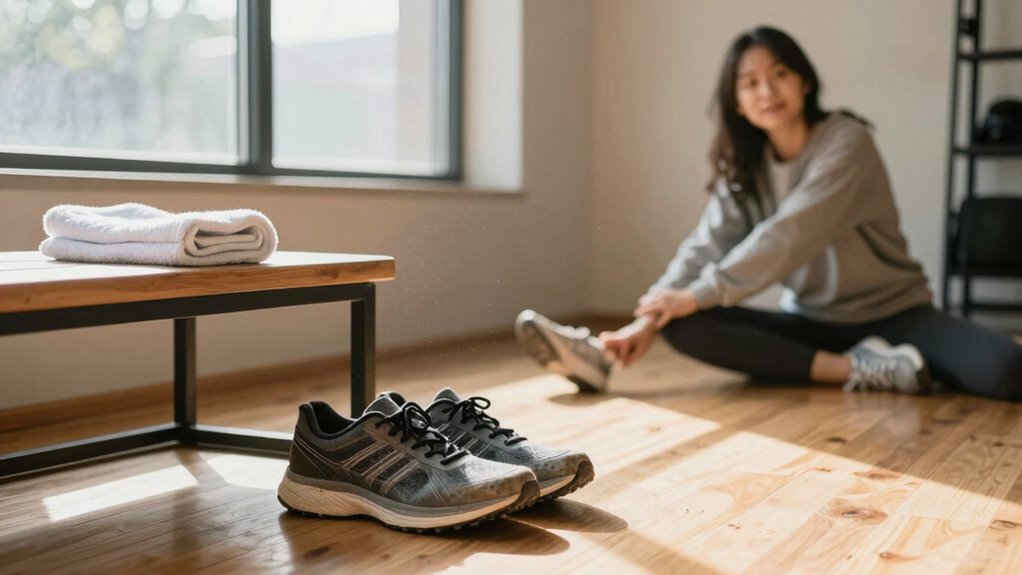

To start training again after years away, set realistic goals and focus on small, manageable milestones to boost confidence and stamina. Prioritize proper nutrition and hydration to support recovery, and incorporate warm-ups and cool-downs to prevent injuries. Use supportive gear like resistance bands and proper footwear, and begin with light workouts, gradually increasing intensity and duration. Consistency and patience are key—keep building steadily, and you’ll discover more ways to successfully restart your fitness journey.

Get workout gear delivered free — and shop member deals
- Fast, free delivery on millions of items
- Access to Prime Big Deal Days deals on October 6–7
- Prime Video, Amazon Music and more included
Key Takeaways
- Set realistic, small goals to rebuild confidence and prevent injury.
- Begin with low-intensity exercises and gradually increase duration and intensity.
- Prioritize proper nutrition, hydration, and rest to support recovery and muscle rebuilding.
- Use supportive equipment like resistance bands and proper footwear for safe training.
- Track progress consistently and listen to your body to adjust workouts accordingly.

Getting back into training after years away can feel overwhelming, but it’s entirely doable with the right approach. The first step is to set realistic goals. Don’t expect to jump back into your previous routine overnight. Instead, focus on small, manageable milestones that gradually build your confidence and stamina. This will help you stay motivated and prevent injury. When planning your return, think about your nutrition plans. Proper nutrition fuels your body and supports recovery, especially after a long break. Incorporate plenty of lean proteins, fruits, vegetables, and whole grains to give your muscles the nutrients they need to rebuild and strengthen. Hydration is equally important—drink water consistently throughout the day to stay energized and aid in muscle recovery.
Start slow, set small goals, and prioritize proper nutrition and hydration to rebuild strength safely.
Next, consider what workout accessories might help you ease back into activity. Simple items like resistance bands, a good pair of supportive shoes, or even a yoga mat can make a big difference. These accessories can help you modify exercises to your current fitness level while reducing strain. For example, resistance bands are excellent for low-impact strength training and can be used at home or in the gym. If you’re feeling unsure about how to start, a few basic workout accessories can make your workouts more comfortable and safe. Additionally, understanding the importance of power quality in your equipment can ensure your workouts are consistent and effective, especially if you’re using electronic or solar-powered devices. Improving your home setup with appropriate equipment can also enhance your overall training experience. Paying attention to ergonomic design can further prevent discomfort and injuries during exercise. Incorporating proper sauna safety tips, such as staying hydrated and listening to your body, can also support your recovery process. Remember that recovery techniques like stretching or foam rolling can significantly help reduce soreness and improve flexibility.
As you begin exercising again, listen to your body. Start with light intensity and shorter durations, then gradually increase as your strength and endurance improve. Incorporating warm-ups and cool-downs into every session is essential for injury prevention and recovery. Remember that consistency beats intensity, especially at the start. Even 10-15 minutes daily can make a difference. Tracking your progress can also keep you motivated. Use a journal or app to log what you do each day—this helps you see improvements over time and stay accountable.
Don’t forget the importance of rest and recovery. Your body needs time to adapt and repair itself after workouts. Rest days are essential, particularly when you’re just getting back into a routine. Combining your physical efforts with good sleep and stress management to optimize results. Over time, as you build strength and confidence, you can gradually increase workout duration and intensity. Starting slow and staying consistent is the key to making training a sustainable part of your life again. With patience, proper nutrition plans, and the right workout accessories, you’ll find yourself back on track in no time.
As an affiliate, we earn on qualifying purchases.
Frequently Asked Questions
Can I Train if I Have Existing Health Conditions?
Yes, you can train despite existing health conditions, but you should prioritize your safety. Start with personalized exercise plans tailored to your needs, and always get medical clearance from your healthcare provider before beginning. This guarantees your workouts are safe and effective. Listen to your body, progress gradually, and adjust your routine as needed. Taking these steps helps you build strength while managing your health conditions responsibly.
How Do I Stay Motivated Long-Term?
Staying motivated long-term might seem intimidating, but it’s achievable with the right mindset shifts and goal setting. You’ll want to continuously remind yourself why you started and celebrate small victories along the way. Keep your goals realistic and flexible, allowing for setbacks without losing momentum. As you develop consistency, you’ll discover that motivation isn’t constant—it’s built through commitment, progress, and the excitement of becoming your best self.
What Equipment Do I Need to Begin?
To start, you don’t need much equipment—just comfortable shoes and possibly a yoga mat for floor exercises. Focus on simple exercise routines like bodyweight workouts, walking, or cycling. Before diving in, do a fitness assessment to gauge your current level and prevent injury. As you progress, you can add resistance bands or dumbbells. Keep it simple, stay consistent, and listen to your body to build a sustainable routine.
How Often Should I Train Initially?
Start by training two to three times a week, focusing on exercise variety to keep things interesting and prevent boredom. Keep sessions manageable, around 20-30 minutes, and listen to your body. Incorporate recovery strategies like stretching and rest days to avoid burnout. As you build strength and endurance, gradually increase your frequency and intensity. Consistency is key, so stay patient and enjoy the process of re-establishing your fitness routine.
How Do I Prevent Injuries During Re-Entry?
You can dodge injuries like a ninja by prioritizing your warm-up routines and wearing proper footwear. Always start slow, gradually increasing intensity, and focus on dynamic stretches to prepare your muscles. Invest in good shoes that support your feet and cushion impact. Listen to your body, and don’t push through pain. These strategies will keep you safe and help you enjoy your re-entry into training without setbacks.
supportive workout shoes for men/women
As an affiliate, we earn on qualifying purchases.
As an affiliate, we earn on qualifying purchases.
Conclusion
Getting back into training is like planting seeds after a long winter—patience and gentle care will see them bloom again. Trust in your body’s resilience and celebrate each small victory as a new sprout pushing through the soil. Remember, every step forward is a brushstroke in your vibrant comeback masterpiece. Keep moving, stay consistent, and soon you’ll find yourself basking in the warm glow of progress, ready to embrace a healthier, stronger you.
As an affiliate, we earn on qualifying purchases.
As an affiliate, we earn on qualifying purchases.
Fall Picks
fall essentials
As an affiliate, we earn on qualifying purchases.