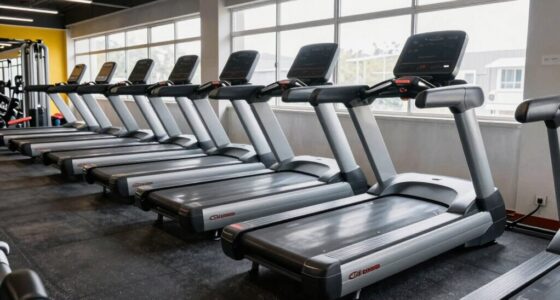
Aerobic training relies on oxygen to produce energy, supporting longer, moderate-intensity activities like running or cycling. In contrast, anaerobic training involves quick bursts of high-intensity effort without oxygen, such as sprinting or weightlifting, using energy systems like ATP-PC and glycolysis. Aerobic exercises boost endurance, while anaerobic workouts build strength and power. Understanding how each system works can help you tailor your workouts to meet your fitness goals—keep going to learn more about these energy systems and their benefits.

Get workout gear delivered free — and shop member deals
- Fast, free delivery on millions of items
- Access to Prime Big Deal Days deals on October 6–7
- Prime Video, Amazon Music and more included
Key Takeaways
- Aerobic training uses oxygen for sustained, moderate-intensity activities, while anaerobic training involves high-intensity, short-duration efforts without oxygen.
- Aerobic pathways primarily break down carbs and fats for long-lasting energy, whereas anaerobic pathways provide quick energy through ATP-PC and glycolysis systems.
- Aerobic exercise improves cardiovascular endurance and fat utilization; anaerobic exercise enhances strength, power, and muscle mass.
- During activity, the body initially relies on anaerobic energy for immediate effort, then transitions to aerobic systems for longer duration.
- Both systems work together during workouts, with anaerobic dominating short, intense bursts and aerobic supporting sustained effort.

Have you ever wondered what sets aerobic and anaerobic training apart? It all boils down to how your body produces the energy needed for movement, which involves different metabolic pathways and energy systems. When you engage in aerobic exercise, like jogging or swimming, your body relies on oxygen to generate energy. This process involves the aerobic metabolic pathway, where your body breaks down carbohydrates and fats with the help of oxygen to produce ATP—the energy currency your muscles use. Because this system is efficient and sustainable, it supports longer, moderate-intensity activities. You can keep going for extended periods because your body continuously supplies oxygen to meet the energy demand.
On the other hand, anaerobic training, such as sprinting or heavy lifting, depends on energy systems that don’t require oxygen. Instead, your body taps into anaerobic pathways—primarily the ATP-PC system and glycolysis—to quickly produce energy. These pathways are designed for short bursts of maximum effort. The ATP-PC system uses stored phosphocreatine to generate immediate energy but depletes rapidly, typically within 10 seconds. Glycolysis breaks down glucose without oxygen, producing ATP quickly but also creating byproducts like lactic acid, which can cause muscle fatigue. Because these systems provide rapid energy, anaerobic activities are intense but cannot be sustained for long.
Understanding the distinction between these energy systems helps you tailor your workouts to meet specific fitness goals. Aerobic training enhances your cardiovascular endurance and allows your body to efficiently utilize oxygen and fats for energy, making it ideal for longer sessions. Meanwhile, anaerobic training boosts your strength, power, and muscle mass by improving the capacity of your energy systems to produce quick bursts of energy. It’s important to recognize that both systems work together during different phases of physical activity. For example, when you start running, your body initially relies on anaerobic pathways for immediate energy, then transitions to aerobic pathways for sustained effort.
As an affiliate, we earn on qualifying purchases.
Frequently Asked Questions
Can You Combine Aerobic and Anaerobic Training in One Workout?
Yes, you can definitely combine aerobic and anaerobic training in one workout through interval training or mixed routines. For example, alternate between high-intensity sprints and steady-state cardio, or mix weightlifting with cardio bursts. This approach boosts your cardiovascular fitness and muscular strength simultaneously. It’s efficient and keeps workouts engaging, helping you improve overall fitness faster while preventing boredom. Just make certain you balance intensity and recovery to avoid overtraining.
Which Type Burns More Calories During Exercise?
Imagine you’re sprinting for 30 seconds; this anaerobic effort burns more calories per minute than steady jogging. Typically, anaerobic training results in higher immediate calorie expenditure because it demands intense energy output over a short period. In contrast, aerobic exercise like cycling burns calories steadily over time, but anaerobic workouts often lead to greater overall energy expenditure during and after exercise due to increased calorie burn and muscle engagement.
How Does Training Intensity Differ Between the Two?
In aerobic training, you typically work at lower to moderate intensity, allowing your body to efficiently use oxygen and energy systems over longer periods. Conversely, anaerobic training involves high-intensity efforts, pushing your muscles beyond their oxygen limits, relying on stored energy. This intensity variation means anaerobic workouts are short but intense, while aerobic sessions focus on sustained, moderate effort to improve endurance and cardiovascular health.
Are There Specific Health Benefits Unique to Each?
Yes, aerobic training boosts your heart health and enhances muscle endurance by increasing your cardiovascular capacity and stamina over time. On the other hand, anaerobic exercises strengthen muscles, improve power, and build muscle mass due to high-intensity efforts. Both types of training offer unique health benefits, so incorporating a mix into your routine can optimize your overall fitness, heart health, and muscle endurance.
How Quickly Can You See Results From Either Training Type?
You can start noticing results from aerobic training like steady-state cardio within a few weeks, especially in improved stamina and metabolic effects. For anaerobic exercise, such as high-intensity interval training (HIIT), you might see quick gains in strength and muscle tone in as little as two to four weeks. Both training types boost your metabolism, but interval training often leads to faster visible changes due to its intense metabolic effects.
high-intensity interval training equipment
As an affiliate, we earn on qualifying purchases.
As an affiliate, we earn on qualifying purchases.
Conclusion
Understanding the difference between aerobic and anaerobic training helps you tailor your workouts to meet your goals. Whether you’re aiming for endurance or strength, knowing when to push your limits or recover is key. Remember, “You are what you repeatedly do,” so choose your training wisely. By incorporating both types, you’ll build a balanced fitness routine that keeps you healthy and motivated. Stay consistent, and you’ll see progress in no time.
As an affiliate, we earn on qualifying purchases.
As an affiliate, we earn on qualifying purchases.
Fall Picks
fall essentials
As an affiliate, we earn on qualifying purchases.