Powerlifting barbells are built for maximum strength, featuring high-quality steel, aggressive knurling, minimal whip, and sturdy bearings for stability during heavy lifts. Training barbells are more versatile, with lighter designs, less aggressive knurling, and smoother rotation, making them suitable for various exercises and Olympic lifts. Your choice depends on your goals—if you want pure strength or a more flexible workout option. Keep exploring to discover which bar fits your needs best.

Get workout gear delivered free — and shop member deals
- Fast, free delivery on millions of items
- Access to Prime Big Deal Days deals on October 6–7
- Prime Video, Amazon Music and more included
Key Takeaways
- Powerlifting barbells are made from high-grade steel with minimal whip, designed for maximum stability during heavy lifts.
- Training barbells often feature more flexible designs and greater whip for Olympic lifts and dynamic movements.
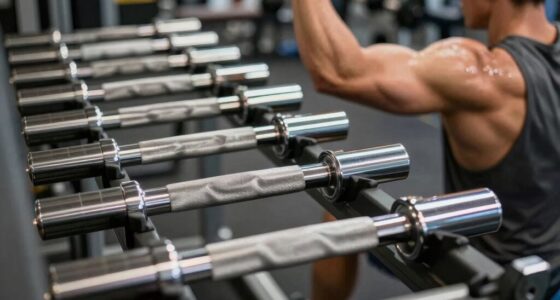
- Powerlifting bars have aggressive knurling for secure grip, while training bars may have less aggressive or smoother knurling for comfort.
- Powerlifting bars are optimized for stability and safety under extreme loads, unlike versatile training bars suitable for varied exercises.
- Material quality and design differences impact performance, safety, and suitability for specific lifting goals.

When choosing between powerlifting barbells and training barbells, understanding their distinctions can make a significant impact on your lifting performance. One key aspect to contemplate is the barbell material. Powerlifting barbells are typically made from high-quality steel, often with a hardened, tensile strength that guarantees durability under heavy loads. This robust construction allows them to withstand the immense forces generated during maximal lifts, like squats, deadlifts, and bench presses. Training barbells, on the other hand, may use various steel grades or even aluminum for lighter, more versatile options. These materials balance strength with flexibility, making them suitable for a broad range of exercises but not necessarily designed for the extreme stresses of powerlifting. Additionally, the choice of **barbell material** can influence the overall performance and safety during intense lifts. Grip types are equally important when selecting a barbell. Powerlifting bars usually feature knurling—those textured grips—designed to lock your hands securely during heavy lifts. The knurling on powerlifting bars is often more aggressive, providing maximum grip without slipping, which is vital when handling heavy weights. Some powerlifting bars also have a central knurling section to prevent the bar from slipping on your back during squats. Training barbells tend to have less aggressive knurling, or sometimes even a smooth surface, to cater to a wider variety of exercises and comfort levels. These bars often feature multiple grip options, such as different diameters or knurling patterns, giving you flexibility for various workout styles. Another difference lies in the bar’s rotation and whip. Powerlifting barbells typically have needle bearings or bushings that provide minimal rotation, ensuring stability during heavy lifting. The whip—the slight flex of the bar under load—is kept to a minimum to maximize control. Training barbells might include more flexible designs with bearings that allow more rotation, which can be beneficial for Olympic lifts but less ideal for pure powerlifting. Your choice should depend on your goals and the type of training you prioritize. If you’re focused on maximal strength and competing in powerlifting, investing in a barbell made from high-grade steel with a stiff, secure grip and minimal whip is essential. For athletes who also incorporate Olympic lifts or dynamic movements, considering barbell whip and flexibility becomes more important. Moreover, the material and design of the barbell can also impact training safety, especially when lifting at high intensities. Selecting a barbell with appropriate knurling pattern can also affect your grip security and comfort during lifts. If your training is more general, emphasizing variety and comfort, a versatile training bar with different grip options and less aggressive knurling might suit you better. Overall, understanding the differences in barbell material and grip types helps you select the right equipment to optimize your performance and safety.
powerlifting barbell high-grade steel
As an affiliate, we earn on qualifying purchases.
As an affiliate, we earn on qualifying purchases.
Frequently Asked Questions
Are Powerlifting Barbells Suitable for Olympic Lifts?
Powerlifting barbells aren’t ideal for Olympic lifts because their limited barbell flexibility makes quick, explosive movements harder. They’re built with high durability for heavy, slow lifts, but this can compromise the finesse needed for Olympic-style lifts. You’ll find that specialized Olympic barbells offer the right balance of flexibility and durability, enabling smoother lifts and reducing injury risk. So, for peak performance, stick with Olympic bars for those lifts.
How Does Barbell Knurling Affect Grip During Lifts?
Did you know that aggressive barbell knurling can increase your grip strength by up to 15%? Barbell knurling textures directly impact your grip during lifts, with sharper textures offering better grip security. Using grip enhancement techniques like chalk or grip pads, combined with ideal knurling, can prevent slips and improve lifting performance. So, choosing a bar with the right knurling texture is essential for maintaining control and safety during your lifts.
Can I Use Training Barbells for Powerlifting Competitions?
Yes, you can use training barbells for powerlifting competitions, but it depends on your equipment compatibility and the competition rules. Training barbells offer versatility, making them suitable for various lifts, but they might not meet the strict standards of a powerlifting meet. Confirm your barbells have the right specifications, like weight tolerance and knurling, to comply with competition requirements and optimize your performance.
What Maintenance Is Required for Specialized Powerlifting Barbells?
You’ll love maintaining your powerlifting barbell—just wipe off that inevitable barbell rust! Regular cleaning maintenance involves using a light oil or rust inhibitor to keep it smooth and rust-free, especially if you train in humid environments. Don’t forget to check the knurling for debris and tighten any loose collars. A little effort keeps your specialized barbell in peak condition, ensuring your lifts stay flawless and your equipment lasts longer.
Do Different Barbell Materials Impact Lifting Performance?
Different barbell materials can impact your lifting performance by influencing barbell weight and material durability. For example, steel bars are typically more durable and have a consistent weight, which helps with accuracy and longevity. Aluminum bars are lighter, making them easier to handle but sometimes less durable. Your choice depends on your training needs—if you prioritize durability for heavy lifts, steel is ideal, but if you want a lighter bar, aluminum might suit you better.
training Olympic barbell with smooth knurling
As an affiliate, we earn on qualifying purchases.
As an affiliate, we earn on qualifying purchases.
Conclusion
In the battle between powerlifting barbells and general training barbells, your choice depends on your goals. Powerlifting bars provide precision, power, and performance for peak performance, while training bars offer versatility, value, and variety for broader benefits. Decide whether you want to focus fiercely on strength or simply enjoy the journey of fitness. Remember, the right barbell can shape your strength, so select smartly, savor the session, and soar toward your strength goals with confidence.
heavy duty powerlifting barbell with minimal whip
As an affiliate, we earn on qualifying purchases.
As an affiliate, we earn on qualifying purchases.
versatile training barbell for multiple exercises
As an affiliate, we earn on qualifying purchases.
As an affiliate, we earn on qualifying purchases.
Fall Picks
fall essentials
As an affiliate, we earn on qualifying purchases.