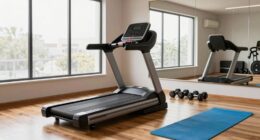

You can boost your stamina by mixing alternative cardio activities like cycling, swimming, or brisk walking, which are gentler on your joints and more sustainable. Incorporate strength training with exercises like squats, lunges, and resistance work to build endurance. Focus on balanced nutrition, staying hydrated, and getting enough sleep to support recovery. Vary your workouts regularly to stay motivated and prevent plateaus. Keep going, and you’ll discover even more ways to enhance your endurance effectively.
Key Takeaways
- Incorporate alternative cardio activities like cycling, swimming, or rowing to boost endurance without daily running.
- Focus on strength training exercises such as squats, lunges, and resistance bands to build stamina.
- Maintain a balanced diet rich in complex carbs, lean proteins, and healthy fats to support sustained activity.
- Ensure proper recovery through stretching, foam rolling, and adequate sleep to enhance stamina gains.
- Vary workout routines regularly to prevent plateaus and keep motivation high while improving endurance.

Improving your stamina doesn’t mean you have to run every day; there are plenty of effective alternatives that can boost your endurance without the monotony of daily jogging. One of the most impactful strategies involves making smart diet adjustments. Your body needs the right nutrients to perform well and recover quickly. Focus on fueling your workouts with a balanced intake of complex carbs, lean proteins, and healthy fats. Carbohydrates are your primary energy source, so incorporating foods like oats, sweet potatoes, and whole grains can help sustain longer activity sessions. Proteins repair and build muscle tissue, which is essential for maintaining stamina, so include sources like chicken, fish, beans, and nuts. Don’t forget hydration—staying well-hydrated improves your overall performance and helps prevent fatigue. Consider incorporating foods rich in antioxidants, such as berries and leafy greens, to reduce inflammation and speed recovery after workouts. Additionally, understanding how different projector contrast ratios influence image quality can be helpful if you’re incorporating visual elements into your fitness routine, like motivational videos or virtual training sessions.
Alongside diet adjustments, strength training plays a vital role in enhancing stamina. When you add resistance exercises to your routine, you increase muscle strength and endurance, making it easier to perform sustained physical activity. Strength training also improves your cardiovascular health indirectly by boosting circulation and oxygen delivery. You can start with bodyweight exercises like push-ups, squats, lunges, and planks, or incorporate free weights and resistance bands for added challenge. Aim for two to three sessions per week, focusing on different muscle groups to prevent fatigue and promote balanced development. As your strength improves, your body becomes more efficient at handling higher workloads, which translates into better stamina during aerobic activities. Incorporating progressive overload is essential for continual progress and preventing plateaus in your training. Regularly varying your workouts can also prevent plateaus and keep your motivation high, ensuring continual progress. Moreover, integrating smart fitness technology can help track your progress and optimize your training plans effectively.
Mixing these strategies with alternative cardio options can prevent boredom and keep your training engaging. Cycling, swimming, rowing, or even brisk walking can elevate your heart rate and build endurance without the repetitive impact of running. These activities are gentler on your joints and often more sustainable over time, especially if you’re recovering from injuries or looking to avoid overtraining. In addition, proper recovery techniques such as stretching, foam rolling, and adequate sleep are crucial for optimizing your stamina gains and preventing burnout. Consistency is vital—by integrating a variety of workouts, eating well, and incorporating strength training, you’ll notice gradual but steady improvements in your stamina. You might not see results overnight, but with patience and dedication, you’ll find yourself able to sustain longer, more intense sessions with less fatigue. This balanced approach ensures you’re building endurance safely and effectively, all while keeping your fitness routine fresh and motivating.

5-Level Resistance Bands for Working Out, Pull Up Assistance Bands
- High-Quality Elastic Material: Made of durable, slip-resistant TPE
- Full Body Muscle Training: Range of 5-125 LBS for comprehensive workouts
- Versatile Exercise Support: Ideal for pull-ups, squats, push-ups, and more
As an affiliate, we earn on qualifying purchases.
As an affiliate, we earn on qualifying purchases.
Frequently Asked Questions
Can Strength Training Boost Stamina as Effectively as Cardio?
Yes, strength training can boost stamina as effectively as cardio when you incorporate interval training. This approach challenges your muscular endurance and cardiovascular system simultaneously, leading to improved stamina. By alternating high-intensity sets with rest periods, you push your body beyond its usual limits, building resilience and energy levels. Over time, this method enhances overall endurance, making you more capable in various physical activities without relying solely on traditional cardio exercises.
How Does Diet Influence Stamina Development Without Running?
Imagine your body as a well-tuned engine, thriving on the right fuel. Your diet flexibility allows you to enjoy varied foods, fueling stamina without strict routines. Prioritize nutritional timing—eating carbs before activity for energy, protein afterward for recovery. This balance boosts your endurance naturally, making you feel energized and resilient, even without daily running. Mindful eating habits can create a steady flow of essential energy, enhancing your stamina over time.
Are There Specific Supplements That Enhance Stamina?
You can boost your stamina with specific supplements like B vitamins, iron, and omega-3s, which support energy production and blood flow. Combine these with effective hydration strategies to stay energized and maintain mental resilience during workouts. Staying hydrated helps prevent fatigue, while mental resilience keeps you focused. Remember, supplements work best when paired with a balanced diet and consistent training, helping you build endurance without daily running.
How Important Is Sleep for Improving Stamina?
Sleep is vital for improving your stamina because it directly impacts your sleep quality, which affects how well your body recovers. When you get enough restful rest, your muscles repair and strengthen, boosting your endurance over time. Prioritize consistent sleep routines and good sleep hygiene, as rest recovery is essential for sustained energy levels and overall stamina growth. Without proper rest, your progress slows, and fatigue builds up faster.
Can Yoga or Stretching Improve Endurance Levels?
Yes, yoga and stretching can boost your endurance. You might find that practicing flexibility exercises enhances your muscle efficiency, making it easier to sustain activity. Breathing techniques learned in yoga help improve oxygen intake, which fuels your stamina. As you incorporate these routines into your schedule, you’ll notice increased energy and resilience, turning a simple stretch into a powerful tool for building endurance naturally and enjoyably.

YOSUDA Exercise Bike, Brake Pad Stationary Bike for Home with Exclusive App, Magnetic Indoor Cycling Bike with 300 lb Weight Capacity, Low Noise, Tablet Holder and Fitness Courses for Weight Loss, Friction-Black
- Model: YOSUDA Friction Exercise Bike 002
- Brand Trust: Trusted by 3 million families
- Stability: 25 lbs flywheel and steel frame
As an affiliate, we earn on qualifying purchases.
As an affiliate, we earn on qualifying purchases.
Conclusion
Improving your stamina doesn’t mean you have to run every day. Incorporate activities like cycling, swimming, or brisk walking to build endurance while giving your joints a break. Did you know that just 150 minutes of moderate exercise weekly can boost your stamina considerably? So, mix up your routines, stay consistent, and watch your endurance grow. Remember, variety keeps you motivated and prevents burnout—making your fitness journey both effective and enjoyable.

TriggerPoint Grid 1.0 Foam Roller – 13" Multi-Density Massage Roller for Deep Tissue & Muscle Recovery – Relieves Tight, Sore Muscles & Kinks, Improves Mobility & Circulation – Targets Key Body Parts
- Enhances Muscle Recovery: Promotes tissue aeration and blood flow
- Comfortable Foam Construction: Distrodensity zones for sore muscles and soft tissue
- Customizable Massage Feel: Varying ridges and nodules for targeted relief
As an affiliate, we earn on qualifying purchases.
As an affiliate, we earn on qualifying purchases.

Smart Watch Fitness Tracker with 24/7 Heart Rate, Blood Oxygen Blood Pressure Monitor Sleep Tracker 120 Sports Modes Activity Trackers Step Calorie Counter IP68 Waterproof for Andriod iPhone Women Men
- Vibrant 1.58'' High-Res Display: Clear visuals with touch controls
- 24/7 Heart Rate & Health Monitoring: Real-time blood pressure, oxygen, and heart rate
- Sleep Tracking and Analysis: Tracks sleep stages and wake times
As an affiliate, we earn on qualifying purchases.
As an affiliate, we earn on qualifying purchases.