
You can easily turn household items into DIY workout equipment to stay active at home. Use resistance bands made from tights or elastic strips for strength exercises, fill water bottles or canned goods as makeshift weights, and use chairs or stairs for various cardio and strength moves. Towels can serve as sliders, and sturdy broomsticks help with stretching. Exploring creative ways to repurpose everyday objects is a cost-effective way to keep fit—you’ll find more ideas as you explore further.
Key Takeaways
- Create resistance bands from household items like tights or elastic strips for versatile strength training.
- Use water bottles, canned goods, or books as makeshift weights for a variety of exercises.
- Repurpose furniture such as chairs and stairs for dips, step-ups, or cardio routines.
- Utilize household items like towels and broomsticks to add resistance and support stretching or balance exercises.
- Combine household objects creatively to design diverse, cost-effective workout routines at home.

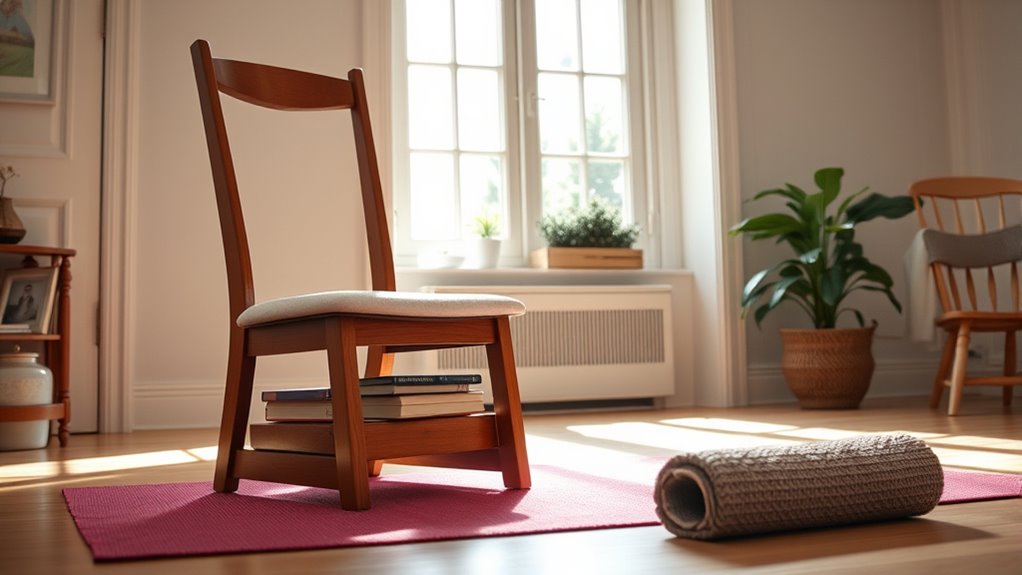
Creating your own home workout equipment is a practical way to stay fit without breaking the bank or sacrificing space. You don’t need expensive gym gear to get a good workout; simple household items can do the trick. For example, resistance bands are versatile tools that can be made from everyday materials or purchased cheaply. If you have old tights or durable elastic, you can cut strips to create makeshift resistance bands. These can help you perform a variety of strength exercises, from bicep curls to leg presses, providing resistance that challenges your muscles effectively. Resistance bands are lightweight, portable, and easy to store, making them ideal for home workouts. Plus, they come in different resistance levels, so you can tailor your workout intensity as you progress. Incorporating modern fitness tools like DIY resistance bands can enhance your routine with minimal cost. Makeshift weights are another smart solution when you’re looking to add resistance to your exercises without buying new equipment. You can fill empty water bottles or milk jugs with water, sand, or pebbles to create a variety of weights. Small bottles work well for arm exercises, while larger containers can serve as makeshift kettlebells or dumbbells for squats and deadlifts. Books, canned goods, or heavy household objects can also double as weights, depending on the exercise you want to do. Just be sure whatever you choose is stable and secure to avoid accidents. Using household items as weights is budget-friendly and allows you to customize your resistance levels. You might also consider using furniture or sturdy household items as part of your workout setup. Chairs, for example, are perfect for tricep dips, step-ups, or seated rows when paired with resistance bands or makeshift weights. Stairs can be used for cardio or step exercises, adding variety to your routine. Towels can serve as sliders for lunges or core work on hardwood floors, and even a sturdy broomstick can be used for stretching or balance exercises. The key is to think creatively about what you already have and how it can serve multiple purposes in your fitness routine.
Frequently Asked Questions
Are Household Items Safe for High-Intensity Workouts?
Household items can be safe for high-intensity workouts if you consider household item safety and avoid high-intensity risk. Make sure items are sturdy, stable, and free of sharp edges to prevent injuries. Avoid using fragile or unstable objects that might break or slip. Always listen to your body, and if an item feels unsafe or risky, stop immediately. Properly evaluating household item safety helps you enjoy effective workouts without unnecessary danger.
How Do I Ensure Proper Form Using DIY Equipment?
You guarantee proper form by focusing on your exercise technique and equipment stability. Start with slow, controlled movements to master each exercise, paying attention to posture and alignment. Use sturdy household items that won’t shift or wobble, and test their stability before fully committing. If anything feels unstable or uncomfortable, stop immediately. Watching online tutorials or consulting a fitness professional can also help you maintain correct form and prevent injuries.
Can I Build a Full Gym With Household Objects?
Yes, you can build a full gym with household objects. Studies show that 80% of people find alternative cardio and flexibility exercises effective at home. You can use stairs for cardio, chairs for resistance training, and towels for stretching. With creativity, you’ll cover strength, cardio, and flexibility, making your space versatile. Just guarantee safety, proper form, and variety to maximize your workout potential at home.
What Are the Best Household Items for Weight Training?
You can use household items like water bottles, canned goods, and backpacks filled with books for weight training. These items offer good DIY equipment durability and versatility, allowing you to perform exercises like curls, shoulder presses, and squats. Make sure the objects are stable and secure before lifting, and always prioritize safety. These versatile household items give you a practical, cost-effective way to build strength at home.
How Do I Prevent Injury With Homemade Workout Gear?
To prevent injury with homemade workout gear, focus on injury prevention and equipment maintenance. Always inspect your household items for signs of wear or damage before use, ensuring they’re sturdy and safe. Use proper form and start with lighter weights to avoid strain. Keep your gear clean and in good condition, replacing items if they become damaged. Listening to your body and taking breaks also helps minimize injury risk.
Conclusion
Now that you know how to transform everyday household items into effective workout tools, the power to stay fit is truly in your hands. Think of your home as a personal gym waiting to be opened—no secret passage needed. With a little creativity, you turn the ordinary into extraordinary, proving that the key to fitness isn’t fancy equipment but your resourcefulness. Embrace these DIY solutions, and watch your strength grow—proof that greatness often starts with a simple idea.