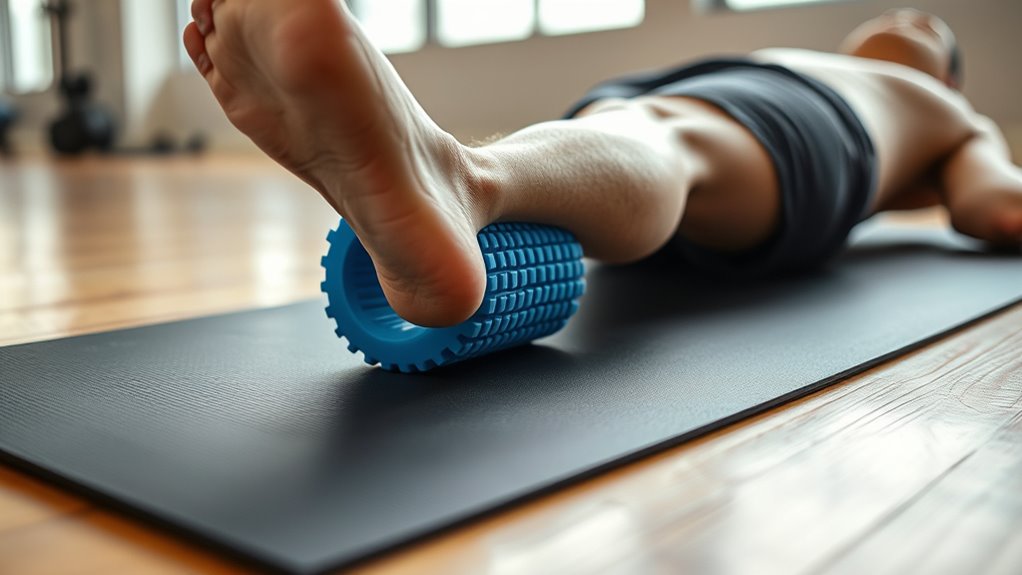

Foam rolling is a simple, effective way to boost your muscle recovery and reduce soreness. By applying controlled pressure to tight or sore areas, you break up adhesions and improve blood flow, enhancing flexibility. Choose a roller that fits your needs, stay hydrated, and focus on slow, deliberate movements. Avoid rushing or overdoing it, and pay attention to your body’s signals. Keep going, and you’ll discover how to maximize your recovery routine.
Key Takeaways
- Foam rolling relaxes tight muscles, improves flexibility, and reduces post-workout soreness by increasing blood flow.
- Choose a foam roller with appropriate density and size for your experience level and targeted muscle groups.
- Prepare your body with hydration and gentle stretching before foam rolling for optimal effectiveness.
- Use slow, controlled movements, pausing on tender spots, and avoid excessive pressure to prevent tissue irritation.
- Incorporate foam rolling regularly into your routine to support recovery, prevent injuries, and enhance muscle health.
Understanding the Benefits of Foam Rolling
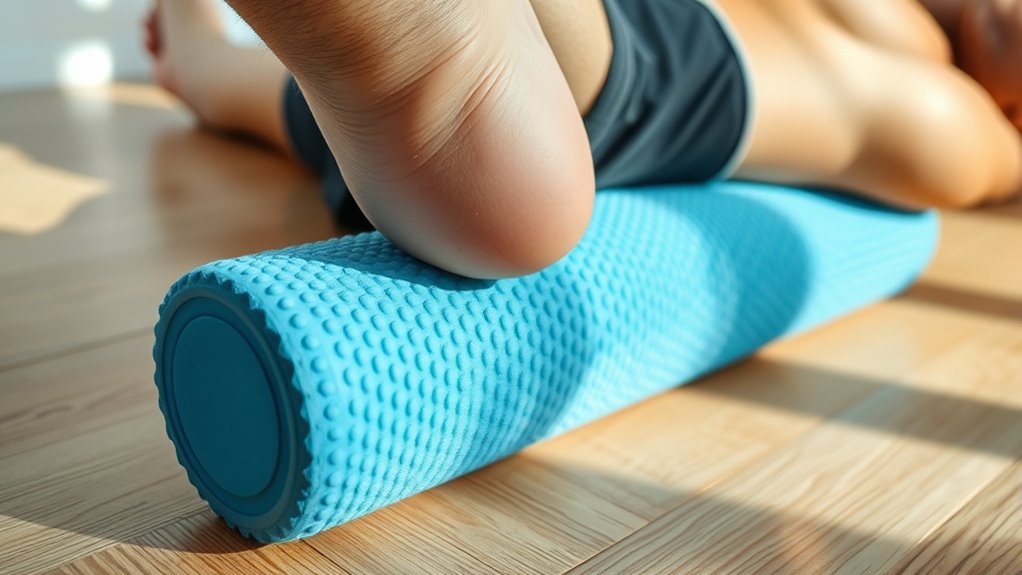
Foam rolling offers several benefits that can enhance your overall fitness and recovery routine. One key advantage is muscle relaxation, which helps loosen tight muscles and reduce soreness after workouts. By applying pressure, you break up adhesions and improve blood flow, leading to quicker recovery and less discomfort. Additionally, foam rolling plays a significant role in injury prevention. Regular use helps identify tight or overused muscles before they become problematic, allowing you to address issues early. This proactive approach reduces the risk of strains, pulls, or other injuries that could sideline you from training. Incorporating foam rolling into your routine supports both short-term recovery and long-term muscle health, making it an essential tool for maintaining a balanced, injury-free fitness journey. Proper technique and self-massage are crucial for maximizing benefits and avoiding potential harm. Using techniques such as myofascial release can further enhance the effectiveness of your foam rolling routine. Consistent practice can also improve flexibility, promoting better movement and performance over time.
Choosing the Right Foam Roller for Your Needs
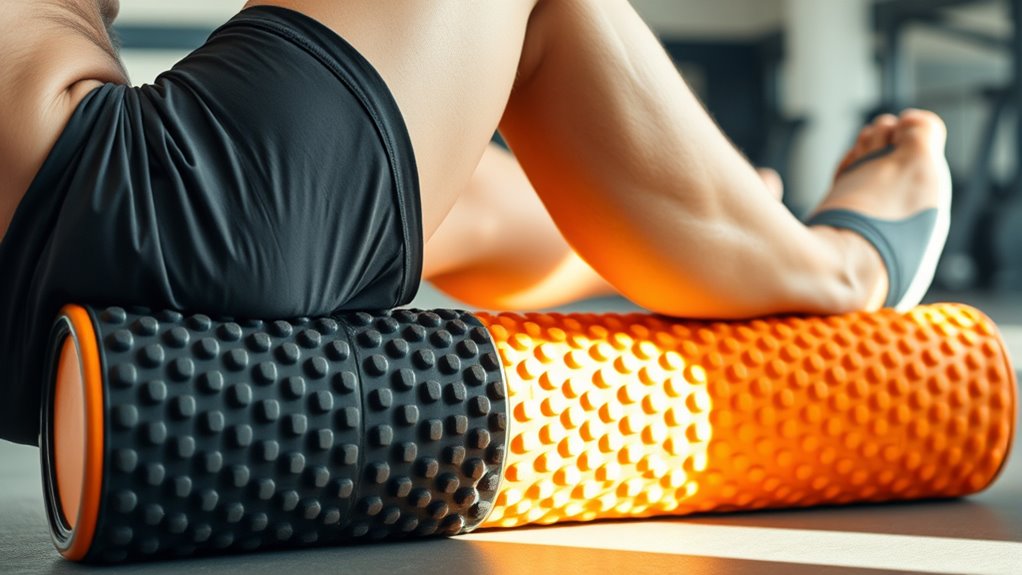
When selecting a foam roller, consider how density and firmness match your comfort and recovery needs. The size and portability also matter if you prefer a compact option or plan to take it on the go. Choosing the right combination guarantees you get the most effective and convenient foam rolling experience.
Density and Firmness
Choosing the right foam roller depends largely on its density and firmness, as these factors determine how much pressure you’ll feel during use. Density levels vary from soft to firm, affecting how the roller presses into your muscles. If you’re new to self-massage or prefer gentle pressure, opt for a softer foam roller with lower density. For deeper tissue work or if you have more muscular strength, higher density options provide more intense pressure. Firmness options allow you to customize your experience based on your comfort and recovery needs. Remember, a softer roller offers a gentle massage, while a firmer one delivers a more targeted, deep tissue release. Selecting the right density and firmness guarantees effective self-massage without causing discomfort or injury. Additionally, understanding home cinema trends can help you create a relaxing environment conducive to recovery and well-being. Incorporating the right foam roller into your routine can also support maximized space and organization by creating an area dedicated to recovery exercises and self-care. For optimal results, consider how ergonomic design can enhance comfort during use and prevent strain. Moreover, choosing a foam roller with appropriate size and shape can improve ease of use and effectiveness during your sessions. Using a foam roller with proper surface texture can also help maximize grip and control during your massage.
Size and Portability
Ever wonder how the size and portability of a foam roller can impact your recovery routine? Smaller, lightweight rollers are easy to carry, making them perfect for on-the-go use or fitting into your storage options at home. Travel-friendly designs often feature compact shapes and durable materials, so you can take your self-massage routine anywhere. Larger rollers provide a broader surface for more extensive muscle coverage but can be bulkier and harder to store. Consider where you’ll use your foam roller most—if you travel frequently or have limited space, a smaller, portable option is ideal. Conversely, if you mainly use it at home, size may be less of a concern. Choosing the right size guarantees your recovery routine fits seamlessly into your lifestyle.
Preparing Your Body for Self-Massage

Preparing your body for self-massage starts with a few simple steps to make sure your muscles are ready to benefit fully from the foam rolling session. First, focus on hydration tips; drinking water helps keep your muscles supple and reduces the risk of soreness. Incorporate gentle stretching routines beforehand to loosen tight areas and increase blood flow. Stretching also helps improve flexibility, making foam rolling more effective. Engaging in preparation techniques can optimize your body’s readiness by ensuring your muscles are conditioned for recovery activities. Additionally, understanding AI safety measures can help you stay informed about emerging tools and protocols that support safe and effective self-care practices. Proper muscle readiness is essential to prevent injury and enhance recovery outcomes. Avoid skipping this step, as unprepared muscles may feel more tender or uncomfortable. Confirm you’re in a comfortable, quiet space where you can relax and concentrate on your body. Taking these precautions, including community resilience, enhances your self-massage experience, reduces discomfort, and maximizes muscle recovery benefits. Proper preparation techniques ensure you get the most out of your foam rolling session. Remember, a little preparation goes a long way toward better results.
Step-by-Step Techniques for Effective Foam Rolling
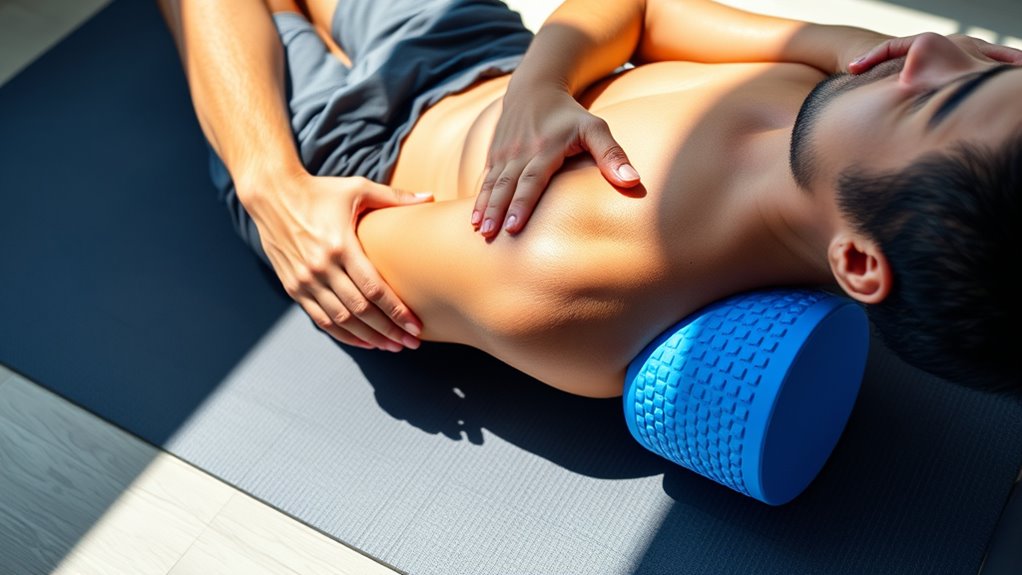
To get the most out of foam rolling, you need to focus on proper body positioning to target the right muscles effectively. Use controlled, steady movements to avoid unnecessary strain and make certain you’re rolling only on the intended areas. Pay attention to your form and pace, so your session remains safe and beneficial. Additionally, being aware of muscle recovery principles can help you optimize your foam rolling routine for better results. Incorporating automation technologies into your recovery routine can further enhance efficiency and consistency. Maintaining a calm and focused mindset during foam rolling can also improve your overall meditation practice, fostering relaxation and mental clarity.
Proper Body Positioning
Achieving proper body positioning is essential for effective foam rolling and preventing injury. Focus on maintaining good posture alignment to target muscles correctly and avoid strain. Keep your core engaged and your spine neutral throughout the process. Use steady, controlled breathing techniques to stay relaxed and enhance muscle relaxation. To guarantee proper positioning, visualize yourself:
- Sitting upright with shoulders relaxed and back straight
- Keeping the head aligned with the spine, avoiding craning or tilting
- Distributing your weight evenly across the foam roller
- Supporting your body with your hands or legs as needed for stability
- Moving slowly, maintaining control to target specific muscle areas accurately
- Being mindful of lifestyle factors that influence muscle recovery and overall wellness. Incorporating proper home ergonomics can further improve your foam rolling effectiveness and reduce discomfort. Additionally, paying attention to muscle engagement techniques can help maximize benefits and prevent compensatory movements. Practicing mindful body awareness can also enhance overall effectiveness during foam rolling sessions. Regularly checking your body alignment during exercises ensures optimal safety and targeted muscle release.
Controlled Rolling Movements
Controlled rolling movements are essential for maximizing the benefits of foam rolling while minimizing the risk of injury. You want to focus on steady, deliberate motions that target areas of muscle tension without applying excessive pressure. Start by placing the foam roller under the muscle group you’re working on, then roll slowly back and forth, pausing on tender spots. Keep your movements controlled to avoid overstretching or irritating tissues. Maintain consistent pressure to release muscle tension effectively, helping prevent injuries caused by tight muscles. Always listen to your body—if you experience sharp pain, ease up. Proper technique ensures you stimulate blood flow, promote recovery, and protect yourself from injury, making foam rolling a safe and effective addition to your muscle recovery routine. Incorporating body awareness during your foam rolling can help you better identify areas needing attention. Check the support hours of your local facilities to plan your recovery sessions accordingly.
Common Mistakes to Avoid During Self-Massage
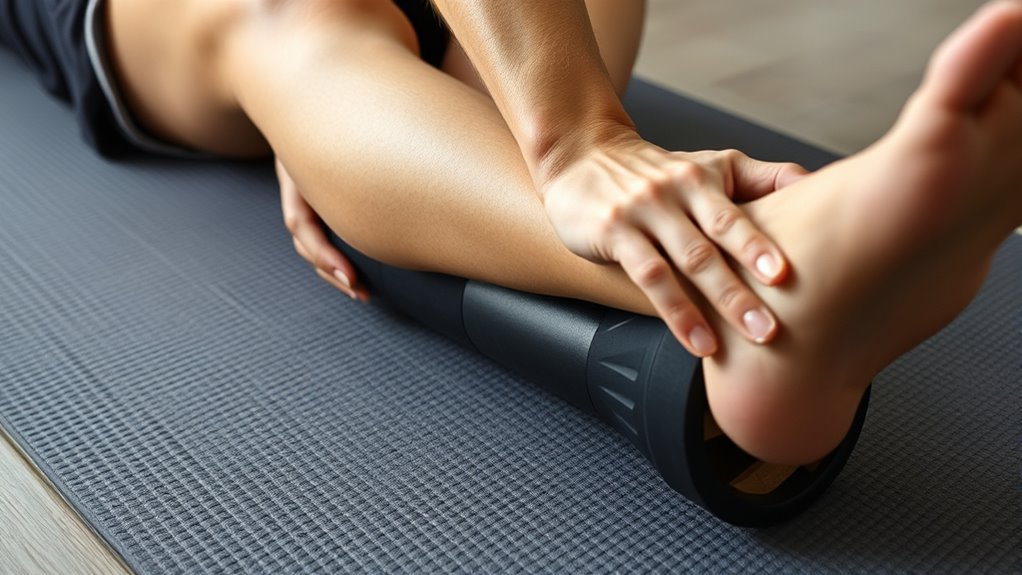
Even though self-massage with a foam roller can be highly effective, it’s easy to make mistakes that reduce its benefits or cause injury. One common error is over rolling, which can irritate muscles and cause bruising. Avoid neglecting hydration; drinking water before and after helps flush out toxins and supports recovery. Be careful not to focus on just one area for too long, which can lead to soreness or nerve compression. Rushing through sessions reduces effectiveness, so take your time. Also, don’t ignore pain signals—discomfort is normal, but sharp pain means you should stop immediately. Remember these pitfalls:
- Over rolling the same spot repeatedly
- Ignoring hydration needs
- Applying excessive pressure
- Spending too little time on each area
- Continuing despite sharp pain
Incorporating Foam Rolling Into Your Recovery Routine
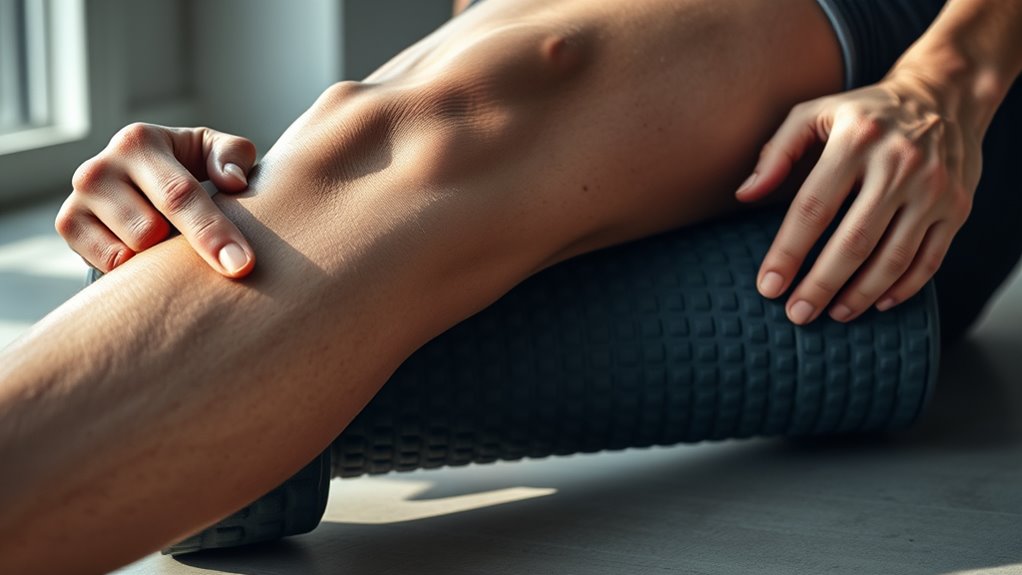
Incorporating foam rolling into your recovery routine can substantially enhance muscle flexibility, reduce soreness, and prevent injuries. To get started, schedule foam rolling sessions after workouts or during rest days, focusing on areas that feel tight or sore. Use slow, deliberate movements to target muscles and fascia, spending about 1-2 minutes per muscle group. Consistency is key—regular rolling helps maintain flexibility and eases soreness relief over time. Incorporate foam rolling as part of your warm-up or cool-down to maximize benefits. Remember to listen to your body; avoid rolling over painful spots, and adjust pressure accordingly. By making foam rolling a routine, you’ll support your muscles’ recovery, stay more flexible, and reduce the risk of strains and injuries.
Frequently Asked Questions
Can Foam Rolling Replace Professional Massage Therapy?
Foam rolling can’t replace professional massage therapy, but it offers helpful massage benefits like reducing muscle tension and improving circulation. While therapy techniques from a trained therapist target deeper tissues and specific issues, foam rolling provides a convenient, cost-effective way to maintain muscle health. Use foam rolling as a supplement, not a substitute, to maximize your recovery and overall well-being.
How Often Should I Foam Roll for Optimal Recovery?
You should foam roll 3 to 4 times a week for ideal recovery benefits. This frequency helps reduce muscle soreness, improve flexibility, and enhance circulation without overdoing it. Listen to your body—if you feel tenderness or discomfort, give yourself extra rest. Consistency is key, so incorporate foam rolling into your routine regularly to maximize recovery and prevent injuries.
Is Foam Rolling Safe for Pregnant Women?
Foam rolling can be safe for pregnant women if you follow proper pregnancy precautions. However, it’s essential to prioritize prenatal safety and consult your healthcare provider before starting or continuing any self-massage routine. Avoid sensitive areas and deep pressure, and listen to your body. With proper guidance, foam rolling can be a safe way to ease muscle tension during pregnancy, but always check with your doctor first—your health is the top priority!
What Are Signs of Overdoing Foam Rolling?
If you overdo foam rolling, you might notice increased muscle soreness and a higher injury risk. You could also feel persistent pain, swelling, or tenderness after sessions. To avoid this, limit rolling to 1-2 minutes per muscle group and avoid tender or injured areas. Listen to your body, and stop if discomfort worsens. Proper technique and moderation help prevent overdoing it and keep recovery safe.
Can Foam Rolling Help With Chronic Muscle Pain?
Think of your muscles like a tangled ball of yarn—foam rolling can help unravel it. Yes, foam rolling can ease chronic muscle pain by targeting trigger points and promoting fascia release. Regular use helps break down adhesions, reducing tightness and discomfort. However, stay gentle and consistent; overdoing it might worsen pain. If pain persists, consult a healthcare professional for tailored treatment.
Conclusion
While foam rolling can ease soreness and boost recovery, neglecting proper technique might lead to discomfort or injury. It’s easy to feel empowered by self-massage, but rushing through it can do more harm than good. Embrace patience and consistency—your body deserves gentle care. In the end, the relief you seek lies in mindful practice, reminding you that true recovery is a balance between effort and respect for your body’s limits.